





Every t-shirt starts with one choice: the fabric. It shapes how the shirt feels, how the print looks, and how long buyers keep wearing it.
This guide walks you through the best fabric for t-shirts in 2026 — cotton, polyester, blends, and the eco options worth trusting. You'll see what each one feels like, where it fits, and what trade-offs come with it. By the end, you'll pick fabric with confidence, not guesswork.
Key Takeaways
- Cotton suits daily wear, polyester wins on sublimation, blends handle mixed catalogs.
- Same fabric at different GSM or knit feels like a different shirt.
- Match the print method first — it locks half your fabric choice.
- Only GOTS cotton, Tencel, hemp, and linen back up eco claims safely.
- PrintKK supports eight print methods with no MOQ, from single orders to bulk.
7 Main T-Shirt Fabric Types
Every fabric has a soft side and a hard side. Below is the honest version — what buyers feel, and what sellers get burned by.
Quick Comparison:
| Fabric | Feel | Best for | Watch out for |
|---|---|---|---|
| Cotton | Soft, breathable, mid-weight | Daily tees, graphic prints | Wrinkles, shrinks, dries slow |
| Organic cotton | Same as cotton | Baby clothes, wellness brands | Costs more; needs real certification |
| Polyester | Smooth, light, holds shape | Sports jerseys, sublimation prints | Traps sweat smell |
| Cotton blend | Soft with light stretch | Fitted tees, retail basics | Doesn't feel like pure cotton |
| Tri-blend | Very soft, drapey, vintage look | Boutique tees, band merch | Pills under the arms |
| Modal / Tencel / Bamboo | Silky, cool, gentle drape | Premium basics, sleepwear | Bamboo viscose isn't really eco |
| Linen | Textured, airy, a bit stiff | Summer tees, resort wear | Wrinkles heavily |
1. Cotton
Cotton is the safe pick. It feels soft, breathes well, washes clean, and takes ink from most printing methods without fuss.
The trade-offs:
- Wrinkles out of the dryer
- Shrinks in high heat
- Slow to dry after a sweat
Seller tip: Pay a little more for pre-shrunk cotton. It cuts fit complaints in half.
You'll also see cotton sold under different spinning styles:
- Ring-spun — fibers twisted tighter, softer feel
- Combed ring-spun — short fibers removed, smoother surface
- Pima — extra-long fibers, silkier and holds color longer (Supima is the U.S.-grown, trademarked version)
- Slub — small bumps woven in for a vintage look
2. Organic Cotton
Organic cotton feels the same as regular cotton. What changes is how it's grown — no synthetic pesticides, no GMO seeds.
Two buyer groups care:
- Parents shopping for baby clothes
- Eco-minded shoppers willing to pay a bit more
Seller tip: Put the actual certification logo on your product page — GOTS, OEKO-TEX, or OCS. Just writing "organic" no longer earns trust; buyers have been burned too often.
3. Polyester
Polyester is spun from plastic. It's wrinkle-free, dries fast, and holds shape after heavy washing. The downside is breathability — it traps heat and holds onto sweat smell over time.
Where it wins: sublimation printing. The ink turns into gas and bonds inside the fiber, so prints stay bright and won't crack or peel. That's why sports jerseys and most POD all-over prints are polyester.
Seller tip: Don't use cotton printing methods on polyester. Colors come out dull, and you'll eat the reprint cost.
4. Cotton Blends (Cotton + Polyester, sometimes Spandex)
Blends mix cotton with polyester, often with a bit of spandex added for stretch. Common mixes are 65/35 cotton/poly, or something like 60/35/5 when spandex is in.
What you get:
- Less wrinkling
- Less shrinking
- Some stretch for a closer fit
- Lower cost than premium 100% cotton
Fitted tees, women's cuts, and workwear that has to look sharp on Monday all lean on blends.
Seller tip: Fitted styles on blend fabric get fewer size complaints than fitted styles on pure cotton — the stretch hides small fit issues.
5. Tri-Blend
Tri-blends mix cotton, polyester, and rayon (often around 50/25/25). The rayon adds drape, and the result is that soft, worn-in feel with a slightly heathered look.
The catch: tri-blends pill under the arms where there's friction. Fine for boutique tees, band merch, and festival wear. Bad for daily workwear.
Seller tip: Say "buttery soft" and "vintage feel" in the copy. Skip promises about durability — buyers who want a tank they can wear on a job site will return it.
6. Modal, Tencel, and Bamboo
These three are made the same way: plant pulp is dissolved into liquid and re-spun into thread. They all feel silky, cool, and gentle on the skin — a common pick for tagless tees, sensitive-skin lines, and sleepwear.
The eco story is where they split apart:
- Modal — made from beech tree pulp, softer and stronger than plain rayon
- Tencel Lyocell — usually from eucalyptus; the factory captures and reuses most of the chemicals it needs, so very little waste leaves the plant
- Bamboo viscose — sounds green, but it's rayon made with harsh chemicals
Seller tip: If you're making eco claims, stick to Tencel or Lyocell with a certificate to back it up. Labeling bamboo viscose as "sustainable" gets flagged by careful buyers and by regulators in the U.S. and U.K.
7. Linen
Linen comes from the flax plant. It's textured, breathable, and pulls sweat away from the skin — great for hot weather. It also creases the moment you sit down.
The wrinkled look is part of the sell. Coastal brands, resort wear, and summer tees all lean into it.
Seller tip: Add a line to your product page like "Wrinkles are part of the look." It sets expectations before checkout and saves you from complaints later.
Read More:
- Polyester vs Cotton Shirts: Which Is Better T-Shirt Fabric?
- Best Hoodie Materials: The Ultimate Fabric Guide
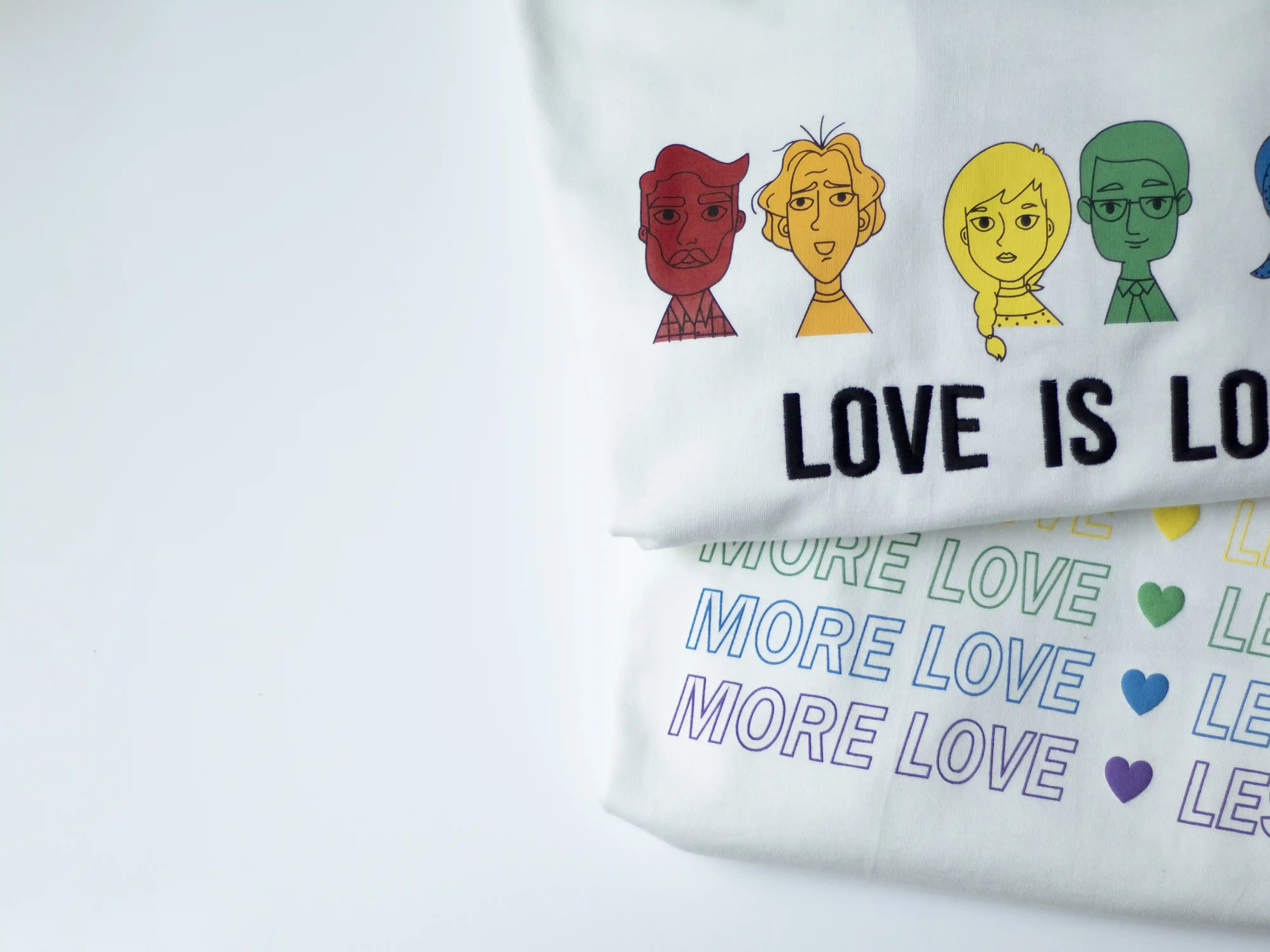
How Fabric Choice Affects Print Quality
Screen Printing
Thick ink pushed through a mesh, one color at a time. The workhorse behind band tees and bulk merch drops.
- Best fabric: 100% cotton. Ink cures clean with strong color.
- Also works: cotton-heavy blends like 50/50, with the right ink.
- Skip it on: pure polyester with regular plastisol ink. Color from the shirt bleeds up into your print as it cures — a white design on a red poly tee turns pink. This is dye migration. The fix is a low-cure ink or a poly-specific ink with a blocker.
Direct-to-Garment (DTG)
An inkjet printer aimed at a shirt. Great for photo-style art and full-color designs.
- Best fabric: 100% cotton with good pre-treatment. Ring-spun (from the fabric section) holds detail a touch better than the cheaper open-end cotton you'll see in bargain blanks.
- Also works: cotton-heavy blends, though colors come out softer.
- Skip it on: polyester and tri-blends. The ink has nothing to grab onto and washes out fast.
Direct-to-Film (DTF)
Design prints onto a film, then heat-presses onto the shirt. The most fabric-flexible method — the print sits on top, so what's underneath matters less. Hand feel is a bit plasticky compared to DTG.
- Best fabric: almost anything. Cotton, poly, blends, tri-blends, even some nylon.
- Watch out for: heavy spandex blends — the print can crack when the shirt stretches more than the film flexes.
Sublimation
Ink turns to gas with heat and bonds inside the fiber. The print becomes part of the shirt, so it won't crack or peel like surface prints do.
- Best fabric: 100% white or light polyester. The only method that gives true all-over prints that stay bright.
- Skip it on: cotton, and dark polyester (the gas can't lighten a dark base).
Quick Match-Up
| Printing method | Go-to fabric | Fabric to avoid |
|---|---|---|
| Screen printing | 100% cotton | Pure polyester (without the right ink) |
| DTG | Ring-spun cotton | Polyester, tri-blends |
| DTF | Almost anything | Heavy spandex blends |
| Sublimation | White 100% polyester | Cotton, dark polyester |
You've probably ordered two shirts with the same fabric label and wondered why one feels like a cloud and the other like a napkin. The label only tells you what the fabric is — not how it was made. Two things change the feel: the knit and the weight.
Jersey vs. Interlock: Fabric Weight and Knit
Knit: Jersey vs. Interlock
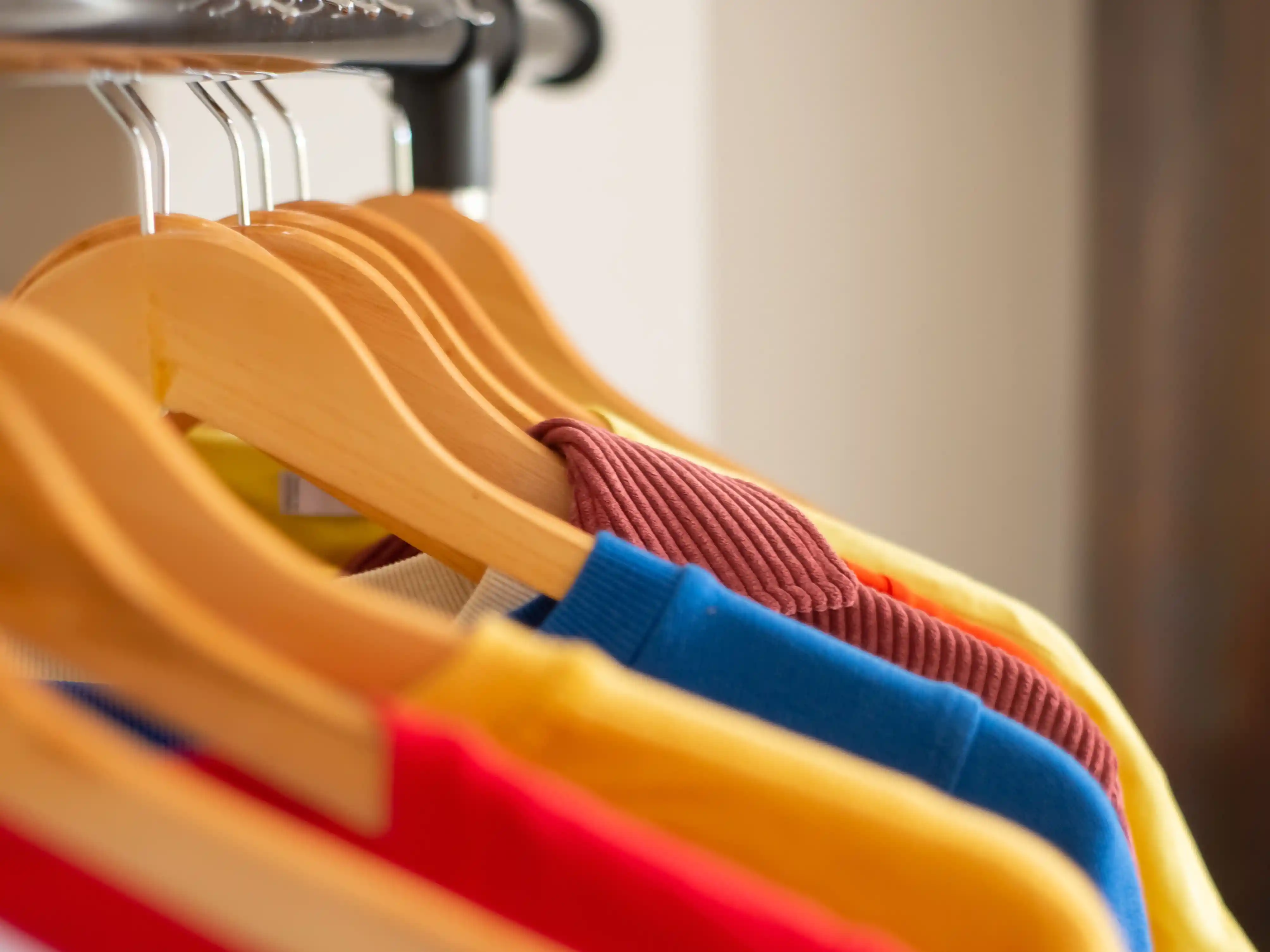
Jersey is the classic t-shirt knit — smooth front, looped back. Lightweight, drapey, breathable. Almost every POD blank you'll ever touch is jersey.
Interlock is jersey knitted twice and layered together. Both sides look the same, and the fabric feels thicker and more opaque. You'll see it on polos, kids' tees, and premium basics — but rarely in POD catalogs, since most suppliers only stock jersey.
Bottom line: if you're sourcing POD, assume jersey. If you're going custom-manufactured, interlock is worth asking about for a more premium hand.
Weight: How GSM Changes the Same Fabric
Two shirts can be 100% cotton and feel completely different. That's weight.
GSM means grams per square meter — how heavy the fabric is per patch of cloth.
| GSM range | Feel | Best for |
|---|---|---|
| 120–150 | Thin, light, semi-sheer | Summer tees, women's fashion cuts |
| 160–190 | Standard weight | Everyday tees, most POD orders |
| 200–240+ | Thick, heavy, structured | Premium tees, streetwear, boxy fits |
Seller tip: Put GSM in your product description. Buyers who've been burned by see-through cheap tees look for this number now.
How to Choose the Best Fabric for Your T-Shirt Design
Skip the fabric charts for a second. The fastest way to land on the right material is to answer four questions in order — each one narrows your options before you look at a single blank.
1. What's Your Print Method?
You saw why in the print quality section above (dye migration on poly, DTG needing cotton, etc.). The short version:
- Cotton — DTG, screen printing, embroidery
- Polyester — sublimation only
- DTF — mixed catalogs, works on both
One cost note the last section didn't cover: screen printing only makes sense at 50+ pieces per design. DTG, DTF, and embroidery are single-unit friendly. For one-off drops, cotton + DTG is the default.
For stitched logos on chest or sleeve, PrintKK's Gildan Embroidered Cotton Tee comes pre-set for embroidery in those spots.
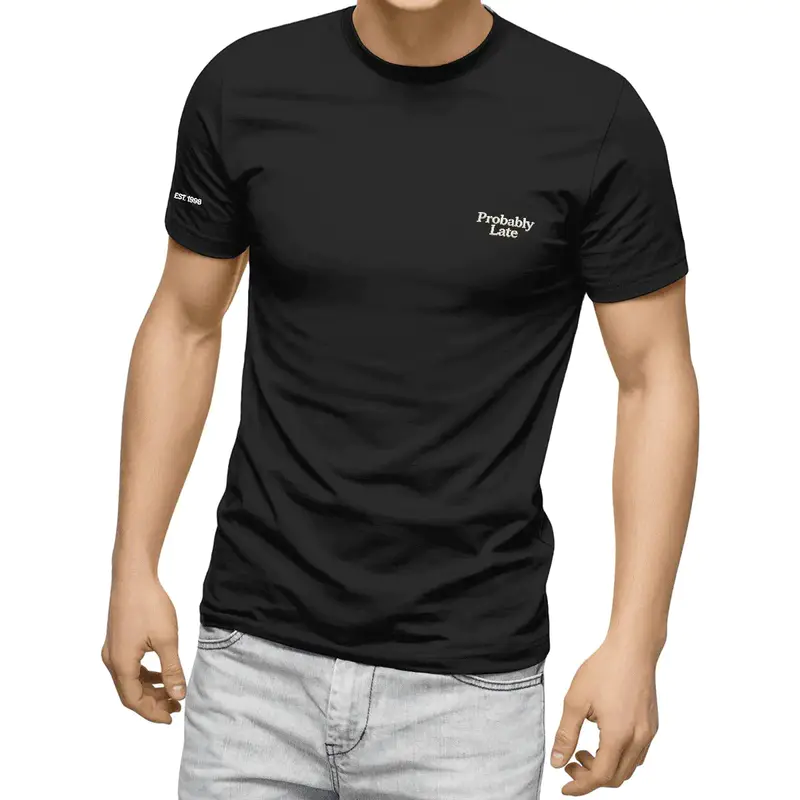
Custom Printed on Demand Gildan Embroidered Men's Cotton Tee - Men's Clothing - PrintKK
2. What's Your Target Price Point?
Fabric quality tracks retail price more than most sellers realize.
- Under $15 — mid-weight cotton or a 60/40 blend. Industry standard: Bella+Canvas 3001, Gildan 64000. Sellers' pick on PrintKK:
Custom Unisex Cotton T-Shirt | Gildan 5000 (Made in USA) - Print on Demand Fulfillment - PrintKK
- $15–25 — ring-spun cotton, tri-blends, heavier GSM (200+). Where most streetwear sits.
- Over $25 — Supima, Pima, modal blends, Tencel. The hand feel is what buyers pay for.
If your target price and your fabric don't match, one of them is wrong. A $12 tee in Supima loses margin; a $30 tee in basic cotton gets returned.
3. Who's Wearing It?
Ask this before you finalize the blank.
- Kids, baby, sensory-sensitive → modal, Tencel, Supima. Skip stiff poly blends and sewn-in tags. Look for tagless (printed) labels and flatlock seams.
- Athletes, gym → polyester or poly-heavy blend
- General audience → cotton or cotton blend, safe middle
- Hot climate → linen or lightweight cotton under 150 GSM
Even if sensory-safe isn't your main lane, adding "no interior tags, flatlock seams" to the product description picks up a loyal search audience most competitors ignore.
4. Do You Need an Eco Claim?
If yes, be strict — vague eco claims now hurt more than they help.
- Only use GOTS-certified organic cotton, Tencel Lyocell, hemp, linen, or verified rPET
- Don't call bamboo viscose sustainable (the plant is, the processing isn't)
- Put the actual certificate logo on the product page, not just the word "sustainable"
Rough environmental footprint, best to worst (LCA studies vary, this is one common view): hemp, linen, Tencel → organic cotton → recycled polyester → conventional cotton → bamboo viscose → virgin polyester.
The Short Version
Print method locks the fiber family. Price point locks the quality tier. Audience locks the hand feel. Eco claim locks the certification. Answer them in that order and the fabric picks itself.

Start Printing on the Best Fabric for T-Shirts With PrintKK
You've read the theory. Here's the short version of getting a shirt made.
The Fabric Options
PrintKK covers the fabrics most sellers actually reach for:
- 100% cotton — the safe default for everyday tees, graphic prints, and embroidered logos
- Polyester — for sports drops, sublimation prints, and all-over patterns
- Cotton blends — softer hand than pure poly, less shrinkage than pure cotton, good for fitted retail styles
Print Methods on One Platform
Eight decoration methods under one roof, so you don't have to juggle suppliers as your catalog grows:
- DTG Printing — full-color, photo-style art on cotton. Best for detailed designs.
- DTF Printing — works on almost any fabric. The safe pick for mixed catalogs.
- Sublimation — bonds ink inside polyester. The only route to true all-over prints that won't crack.
- All-Over Print (AOP) — full-garment coverage, edge to edge, no blank spots at the seams.
- Embroidery — clean stitched logos on cotton or blends. Best for premium merch.
- UV Printing, Screen Printing, Laser Engraving — also available for accessories and specialty items.
How It Works
The flow is short:
- Upload your design to the product you picked
- Order a sample — worth doing before you list a shirt at scale
- Sell one at a time through Shopify, Etsy, or TikTok Shop — PrintKK prints and ships each order for you
- Or place a wholesale order when you're running a bulk drop or event merch
No MOQ. Sell one shirt or five hundred with the same setup.
Sample first, scale second. A sample order beats a bulk drop of shirts you can't sell.
Expert Tips
The best fabric for t-shirts isn't one answer. It's the one that fits your print method, your price point, your buyer, and your eco promise. Cotton stays the safe default. Polyester wins on sports and sublimation. Blends handle mixed catalogs. Modal and Tencel earn their premium when hand feel matters.
Answer the four questions in order — print, price, audience, eco — and the fabric picks itself. Order a sample before you scale. Match the label to the buyer. Do that, and your next drop starts with the fabric working for you.
FAQs
What is the best fabric for t-shirt printing?
Cotton is the safest pick for most print methods. Polyester wins on sublimation. If your catalog mixes fabrics, DTF on either one keeps your setup simple and your prints sharp.
What fabric is coolest for t-shirts in summer?
Linen and lightweight cotton under 150 GSM breathe best in heat. Modal and Tencel also feel cool against the skin. Skip heavy polyester — it traps sweat and holds smell.
Is 100% cotton or a cotton-polyester blend better for everyday t-shirts?
Pure cotton feels softer straight out of the bag. Blends wrinkle less, shrink less, and hold shape longer through the wash. Pick based on which trade-off bothers you more.
What is the most durable fabric for t-shirts?
Polyester takes the win on toughness — it resists shrinking, fading, and pilling for years. Cotton-poly blends come close and feel more natural. Pure cotton wears in fastest.
What GSM weight makes a good quality t-shirt?
160 to 190 GSM hits the sweet spot for most buyers — the mid-weight range where standard tees live. Under 150 feels thin. Over 200 moves into streetwear territory — heavier, boxier, and pricier to ship.



 Global Shipping