






So how much money can custom t-shirts make? The honest answer: it depends on what you keep, not what you sell. A $1,500 month can leave you $90 or leave you in the red. The gap is costs most guides skip, ads, returns, fees, and cash flow.
This guide walks through all of them. You'll see the real numbers, learn to price for profit, and know what to expect before you start.
Key Takeaways
- How much custom t-shirts make comes down to what you keep per sale, not what you sell.
- A $1,500 month can leave $90 or a solid profit, depending on how you handle costs.
- Most sellers keep around $8 a shirt, more once they price for ads, fees, and returns.
- You keep more by pricing from true cost, a return buffer, and your ad share, not a flat markup.
- PrintKK starts with no minimums, so you can test without upfront risk.
4 Custom T-Shirt Business Models, and How Much Each Makes
How much you make depends a lot on which path you pick. Some models start with almost no money but pay less per shirt. Others need cash up front but keep more. Here are the four main ways, from the easiest start to the most hands-on.
| Model | Startup Cost | Profit per Shirt | Best For |
|---|---|---|---|
| Print-on-Demand | Very low | Lowest, but near-zero risk | Testing designs, total beginners |
| Private Label | Higher (buy stock up front) | Higher, if it sells | Proven designs, brand building |
| In-House Production | High (your own gear) | Highest per shirt | Hands-on makers, local orders |
| Wholesale / B2B | Varies | Small per unit, high volume | Sellers with sales skills |
Print-on-Demand
Print-on-demand is the easiest way in. A seller uploads a design, and a supplier prints and ships each shirt only after it's ordered. There's no stock to store and no waste if a design flops.
The catch is profit, since the supplier takes a share of every sale. For beginners, or anyone testing designs to see what sells, it's hard to beat.
Private Label
This model starts with blank shirts bought in bulk. Each one gets a custom print and neck tag, then sells under the seller's own brand. All of that gets paid for before a single shirt sells.
When a design takes off, the profit per shirt is much higher. When it doesn't, the leftover boxes have to be cleared out somehow. Private label makes the most sense once you know what your customers like and want to focus on brand building.
In-House Production
Some sellers want full control, so they buy a heat press, DTG printer, or screen printing setup and run it from home or a small shop. The gear isn't cheap, and it eats up space and time.
Once it pays for itself, though, every shirt earns more because nobody else takes a cut. In-house production suits people who like hands-on work, along with shops that take local orders for teams, schools, and events.
Wholesale / B2B
Wholesale means selling 50 or 500 shirts at once to a store, a company, or an event planner. Startup cost depends on whether the printing happens in-house or gets outsourced.
Each shirt brings in less, but bulk orders add up fast. If you're comfortable pitching to businesses and following up, this path can lead to steady repeat work.
What One Custom T-Shirt Actually Costs to Make
Before you can figure out profit, you need to know where your money goes on every single shirt. The price of a tee isn't one number. It stacks up from a few places, and skipping any of them is how sellers end up surprised at month's end.
Production Costs
This is your biggest cost, and it swings based on how you print. With print-on-demand, the platform rolls the blank shirt, the printing, and the labor into one price. It's hands-off, but you pay for that ease, so each shirt costs more.
Make the shirts yourself and the per-unit cost drops, especially when you buy blanks in bulk, but you take on the gear and the hours. Either way, production is the floor everything else sits on.
Shipping Costs
Shipping is the sneaky one. You either eat it yourself or pass it to the buyer, but pile it on at checkout and shoppers bail. Many sellers bake part of it into the product price so the sticker shock stays low.
Rates also climb with weight and distance, so a heavy hoodie or an overseas order costs more to send than a single local tee. Don't forget the mailer or box each shirt ships in, either, small per order, but it adds up.
Transaction and Platform Fees
Every sale gets two small bites taken out. First, the payment processor charges a percent of the sale plus a flat fee to run the card. Second, if you sell on a marketplace like Etsy, there's a listing or platform fee on top. Alone they look tiny. Across every order, they quietly shave your margin.
But even all of this isn't the full picture. The costs that catch most beginners off guard don't show up on any single shirt, and that's exactly where real profit slips away.

Why Your Real Profit Is Smaller Than It Looks
Gross margin, what a shirt costs to make versus its selling price, isn't real profit. Take-home is smaller, because big costs sit outside the price of the shirt.
The Costs That Turn Profit Into Loss
Take a shirt that sells for $30 and costs $15 to make. That's a $15 gross margin. Then real costs start taking bites.
The biggest is ads. In apparel, landing one paying customer through Meta, TikTok, or Google often runs $50 to $120, and even the cheapest channels rarely dip below $15. A $15 margin can't survive that, one paid sale can wipe out the profit from several organic ones.
That's why the number that matters isn't gross margin, it's what's left after marketing, and why leaning on free traffic early is what keeps a store alive.
Next is software. A store runs on monthly tools, a selling platform, design apps, email. At low volume, those fixed fees eat the profit before a single ad runs.
Then returns. Clothes get sent back often, usually over sizing, and a returned custom shirt often can't be resold, so the seller eats the base cost and fees. Two fixes: build a small return buffer into the price, and add a clear sizing chart with real measurements to stop returns at the source.
Add it up for a new POD store's first month:
| Line Item | Amount |
|---|---|
| Revenue (50 shirts @ $30) | $1,500 |
| Production & shipping ($15/shirt) | –$750 |
| Payment fees ($1/shirt) | –$50 |
| Platform fees | –$150 |
| Software | –$60 |
| Returns buffer (20%) | –$150 |
| Ad spend | –$250 |
| Net take-home | $90 |
$1,500 in sales. $90 kept. That's why total sales alone reveals almost nothing.
(This assumes about half of sales come from free traffic like SEO and social, which is what keeps the margin healthy. Leaning on organic is how POD sellers protect this number.)
Cash Flow: Profit on Paper Isn't Cash in Hand
When money moves matters as much as how much. Bulk printing means fronting $2,000 to $5,000 for a first run before earning a cent. POD skips that, but platforms often hold payouts on a rolling reserve, with new accounts waiting 7 to 14 days for a first payout (Shopify, Stripe).
Cash goes out before it comes in. Covering the first 90 days takes enough starting cash, or a strong month can still end short when a bill lands before a payout.

How to Price Your T-Shirts for Profit
These five steps turn a guess into a price that actually clears a profit.
Step 1: Find Your True Cost per Shirt
Start with the real floor, everything one sale burns, not just the blank. A POD shirt's true cost usually looks like this:
Blank + printing + shipping + payment fee = true cost.
Plugging in sample numbers, a $12 blank, $3 shipping, and about $1 in payment fees puts the real floor near $16, not the $12 on the invoice. Swap in the actual costs from a chosen platform, and price up from that number, fee included.
Step 2: Add a Buffer for Returns and Ads
True cost isn't just fulfillment. Two costs hit after the sale and still have to live in the price:
- Returns: spread the expected loss across every shirt as a small buffer, often $2–3 per unit.
- Ads: if paid traffic is part of the plan, the cost to land each sale has to sit inside the price, not beside it.
Skip this step and the price looks profitable while the store quietly loses money, the same $90-to-red gap from the last section.
Step 3: Price by the Margin You Need, Not a Flat Markup
Here's the formula that ties it together:
Price = (true cost + return buffer + target profit) ÷ (1 − ad share)
Using the sample numbers, a $16 true cost, a $2 buffer, an $8 target profit, and ads eating 20% of the price: ($16 + $2 + $8) ÷ (1 − 0.20) = $32.50.
That's the price the math actually requires. Selling at $30 instead, the round number that feels right, is exactly how the earlier $90 month lost its cushion: the price was set before the costs were counted.
Step 4: Let the Niche Set the Ceiling
Cost sets the floor; the audience sets how high above it a price can go. A plain tee and a niche design with a loyal following cost the same to print but sell miles apart, a pun tee for nurses or a hobby graphic carries a price a generic blank never could.
Research what the target buyer already pays, then price toward the top of that range, not the bottom.
Step 5: Reprice When the Numbers Move
A price set once goes stale. Blank costs rise, ad rates climb, a design's return rate creeps up. Recheck the real take-home per shirt every month, run it back through the Step 3 formula, and adjust before a rising cost turns a winner into a loss. Sellers who hold their margin aren't lucky, they reprice on a schedule.
Read More:
- How to Price Custom Shirts: Maximize Your Profit
- How Much Does It Cost to Print a Shirt: Key Price Factors
Keep More of Your T-Shirt Profit With PrintKK
Everything above points to one lesson: profit is won or lost on costs and risk, not on selling price alone. That's where the right platform earns its keep. Here's how PrintKK lines up with the math in this guide.
Start Without the Cash Risk
The cash-flow section showed the danger of paying up front. PrintKK runs on no minimums, so one shirt is as welcome as a hundred. A design can be tested on a real shirt before a dollar goes into a bulk run, which keeps the first-90-days money pressure off a new store.
Match the Print to the Design
A left-chest logo and a full-bleed graphic don't print the same way. PrintKK covers DTF, DTG, UV, sublimation, and all-over print, so each design gets the method that fits it. Crisp detail stays crisp and edge-to-edge art isn't forced onto the wrong process, so the shirt that reaches the buyer matches the mockup that sold it.
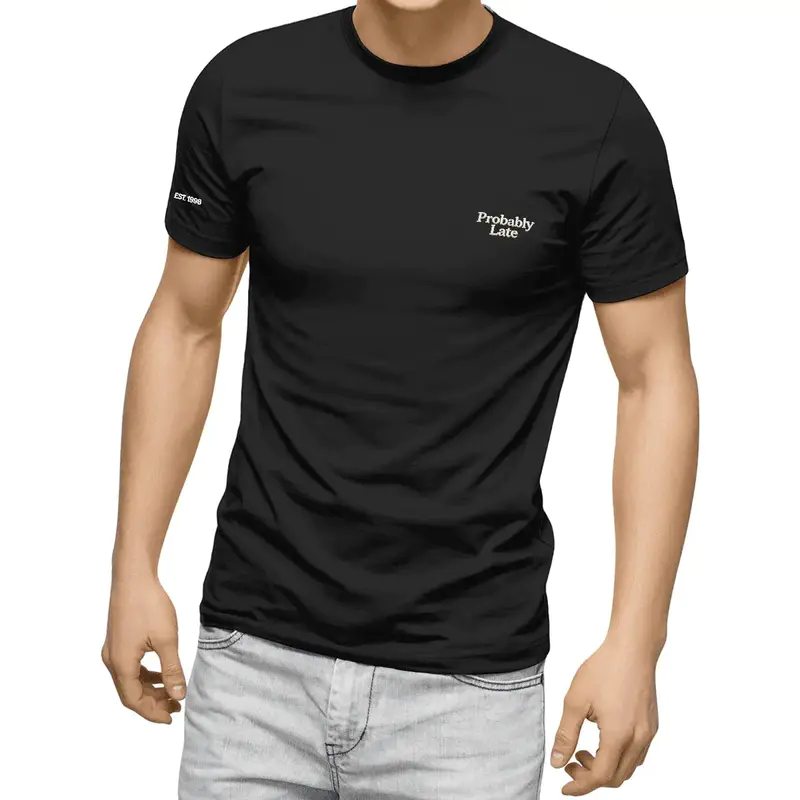
Custom Printed on Demand Gildan Embroidered Men's Cotton Tee - Men's Clothing - PrintKK
Offer the Sizes Buyers Expect
Most returns come from fit. The custom t-shirts come in crewnecks, V-necks, long sleeves, fitted women's cuts, youth, and oversized styles, so buyers can pick the shape and size they actually want. A wider size range plus a solid sizing chart is how a store keeps fit-related refunds from eating the margin.
Build the Brand Without Bulk Costs
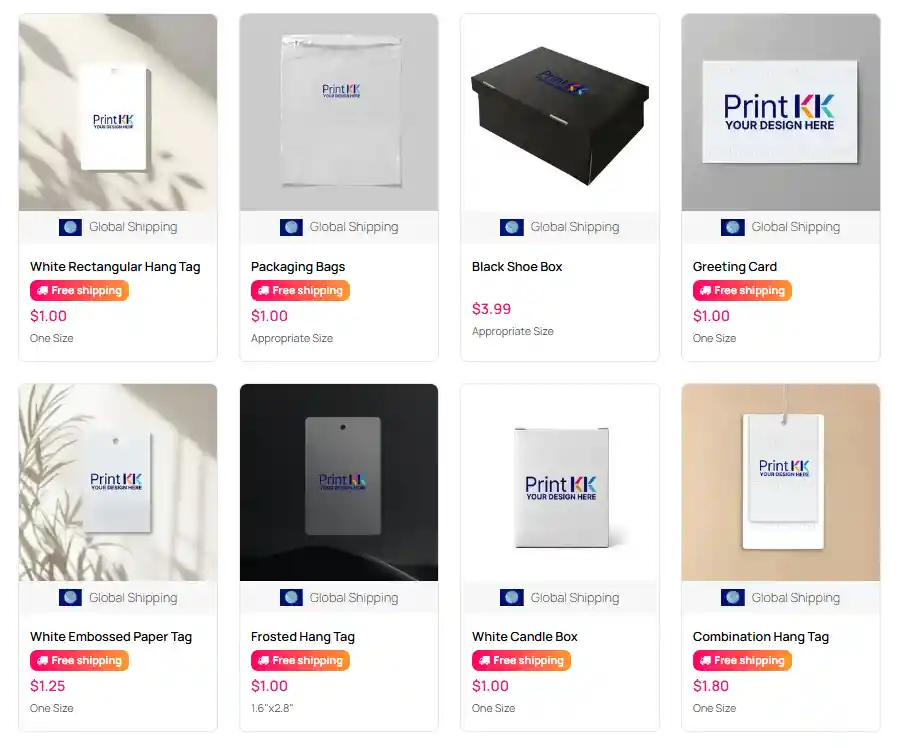
Branding used to mean a big order. On PrintKK, custom hang tags and packaging are available without a warehouse of stock, so a store can look like a real brand from order one, a way to raise perceived value while still starting lean.
Design and Sell in One Place
PrintKK plugs into the major sales platforms and builds the design step in, start from a template or let the AI design tool generate the artwork, then see it on the shirt before ordering. Fewer separate tools means fewer of those fixed monthly fees that trim profit.
Start with one shirt. Pick a blank, drop on a design, and see the real take-home before scaling, no minimum, no upfront run, no risk to test what sells.
Expert Tips
So how much money can custom t-shirts make? It depends on your costs, not just your sales. Track the real ones, ads, fees, returns, and cash flow. Price to cover them all. Start small to test what works before you scale.
The sellers who win aren't the ones with the most sales. They're the ones who keep the most of each sale. Now you know how to be one.
FAQs
How much profit do you make on a custom t-shirt?
Most sellers keep around $8 per shirt before marketing and returns. After those, a busy first month often nets far less, sometimes just a couple of dollars a shirt while you find your footing.
How much profit can I realistically make selling custom t-shirts as a beginner?
In your first months, expect $200 to $1,000 a month. Sales stay slow while you learn design and marketing, but steady work builds your numbers over time.
How many t-shirts do I need to sell to make $100,000?
At about $8 profit per shirt, you'd need roughly 12,500 sales a year, or about 34 a day. Higher prices or bulk orders bring that number down fast.
What's the difference between profit margin and markup?
Markup is what you add on top of your cost. Margin is the share of the final price you keep. A $10 shirt sold for $20 has 100% markup but 50% margin.
Should I start with print-on-demand or bulk manufacturing?
Start with print-on-demand. It costs almost nothing upfront and skips inventory. Switch to bulk once your sales are steady and you want bigger margins per shirt.



 Global Shipping