






You already make things people like. Friends ask where you got that candle or those earrings. The next step is turning that skill into steady income. The good news is that you don't need a big budget or a lot of tech skills to start.
This guide walks you through how to sell crafts online for profit. You'll learn what to make, where to list it, how to set fair prices, and how to find your first buyers. Each step is simple and easy to follow.
Key Takeaways
- Personalized gifts, home decor, jewelry, and seasonal items are the crafts that sell best online.
- Start with one platform, then add one or two channels once sales are steady.
- A profitable price covers materials, packaging, platform fees, and an hourly wage for your time.
- Small boxes keep shipping costs down, since carriers bill big, light packages by size.
- PrintKK lets makers add print-on-demand products with no minimum order and nothing to pack.
What Crafts Sell Best Online
Personalized and Custom Gifts
Adding a buyer's name or a pet's face turns a plain item into a gift no store sells. A name necklace, for example, works for almost any occasion, so custom gifts sell all year. Each order takes extra time, though, since every piece has to be made to the buyer's details. That gets hard to keep up with once orders grow.
Custom Memorial Necklace - Print on Demand Fulfillment - PrintKK
Home Decor and Wall Art
Home decor has two kinds of buyers: people fixing up their own place and people shopping for gifts. A scented candle works for both. Decor shops sell best when they stick to one style. If every piece looks like it came from the same maker, a buyer who likes one item will often look at the rest.
Custom Frosted Jar Scented Candle with Lid (6oz) - Print-On-Demand - PrintKK
Jewelry and Accessories
Handmade jewelry fits in a small mailer and weighs almost nothing, so shipping is cheap. Earrings, beaded bracelets, and hair clips also land in that easy gift price range. The problem is how many people sell it.
Search "silver hoop earrings" on any marketplace and the results go on for pages. A signature look helps, whether that's a certain stone, a color mix, or a shape. Stick with it across the whole shop so buyers start to recognize the work.
Custom Leather Star Earrings - Print-On-Demand - PrintKK
Seasonal and Holiday Items
Ornaments, fall wreaths, Halloween decor, and Valentine's cards have a short selling window. The upside is that buyers are already looking for them. Listings need to go up early, since people shop weeks before the holiday. Keep some year-round products in the shop too, so seasonal items aren't the only thing paying the bills.
Print on Demand Vertical Greeting Cards (Pearl Paper) - Home Decor - PrintKK
7 Best Places to Sell Crafts Online
Etsy
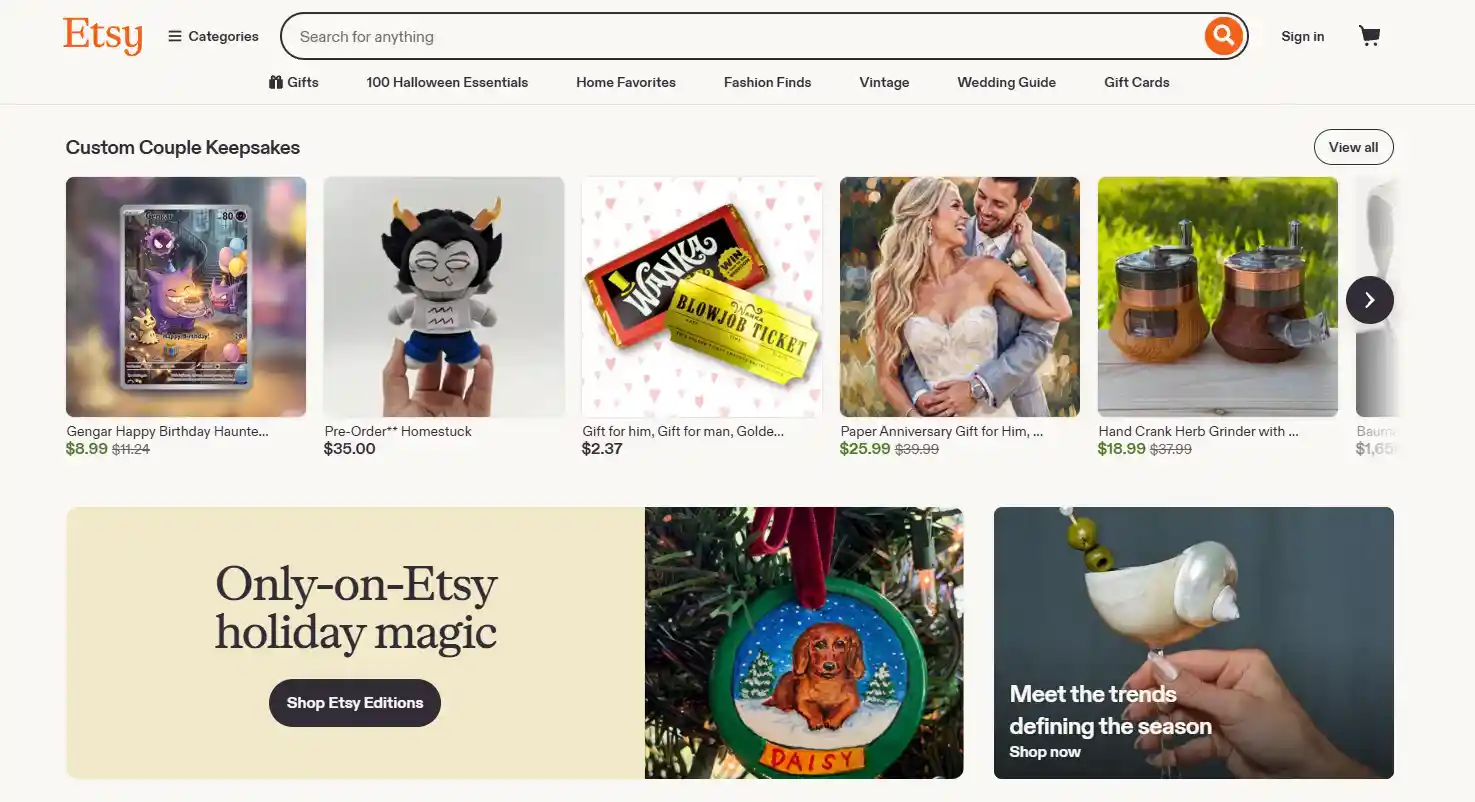
People go to Etsy because they want handmade things, which is the main reason to sell there. You pay a small fee for each listing, and Etsy takes a cut of every sale. Getting noticed is harder.
A new listing can sit for a while with hardly any views, and Etsy changes its fees and search rules from time to time. A lot of sellers get their first visitors by sharing their shop link on social media.
Amazon Handmade
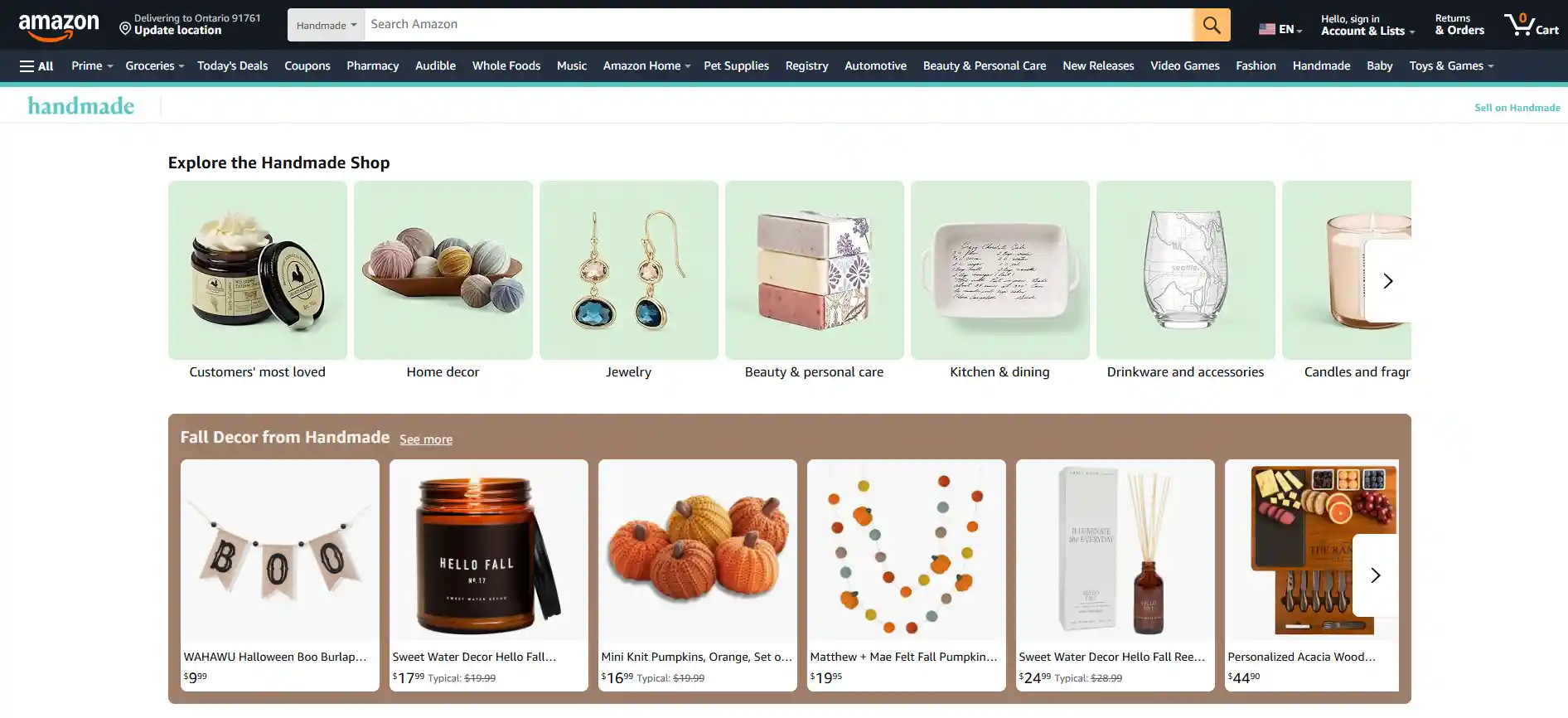
Amazon Handmade works for makers who can keep up with steady orders. There's an application first. Approved sellers pay the Professional plan fee for one month, and after that it's waived.
From then on, Amazon only takes a referral fee when something sells. The shoppers are already there, buying from Amazon every day. What's missing is branding. A Handmade shop looks a lot like every other Amazon page, so buyers rarely remember who made what.
eBay
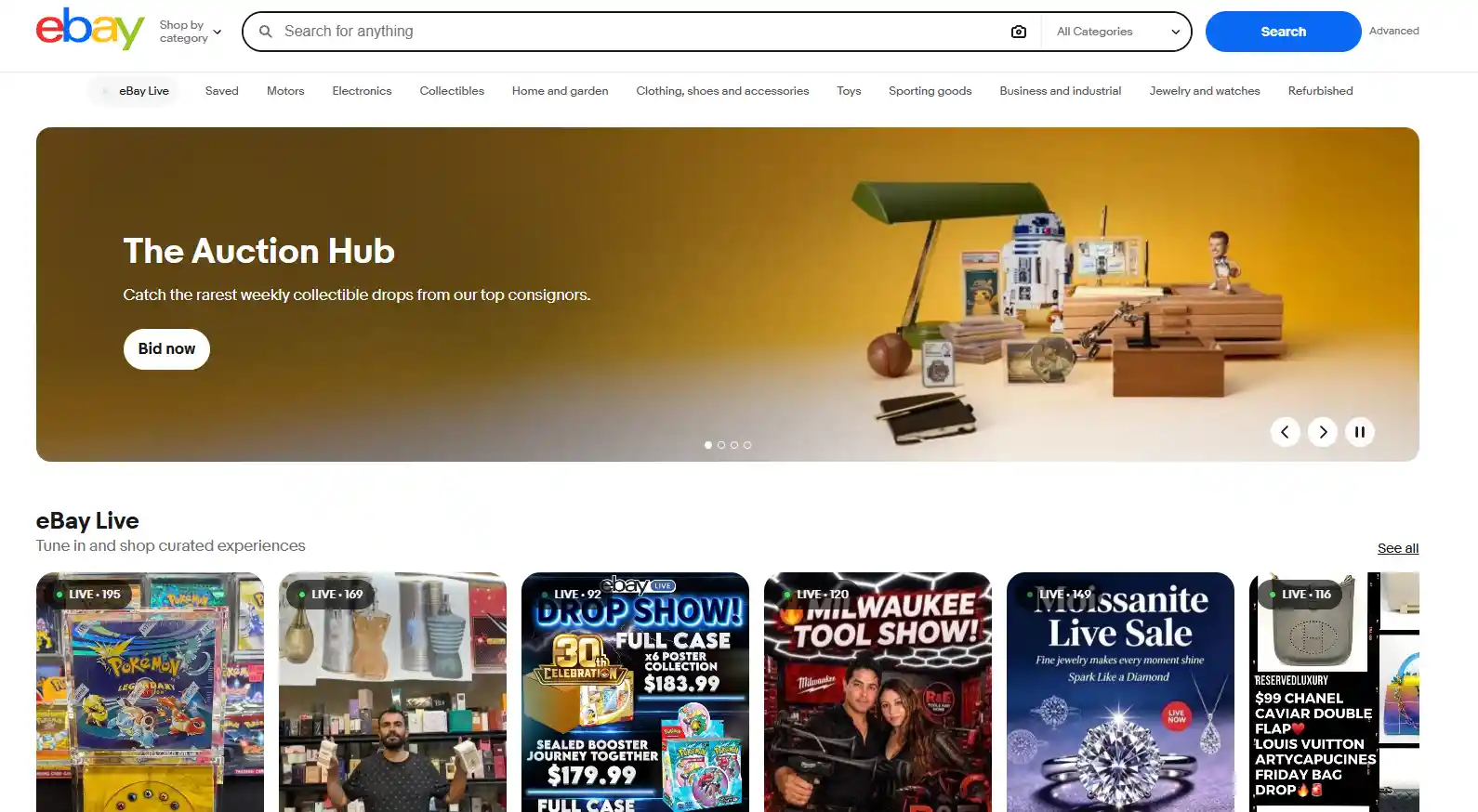
eBay is better as a second shop than a first one, and it suits one-of-a-kind pieces best. A set number of listings are free each month, so trying out a few products costs almost nothing. Most eBay shoppers come for resale, though, and handmade work can get buried under used and brand-name items. New sellers also deal with listing limits and short payment holds at first.
Facebook Marketplace and Groups
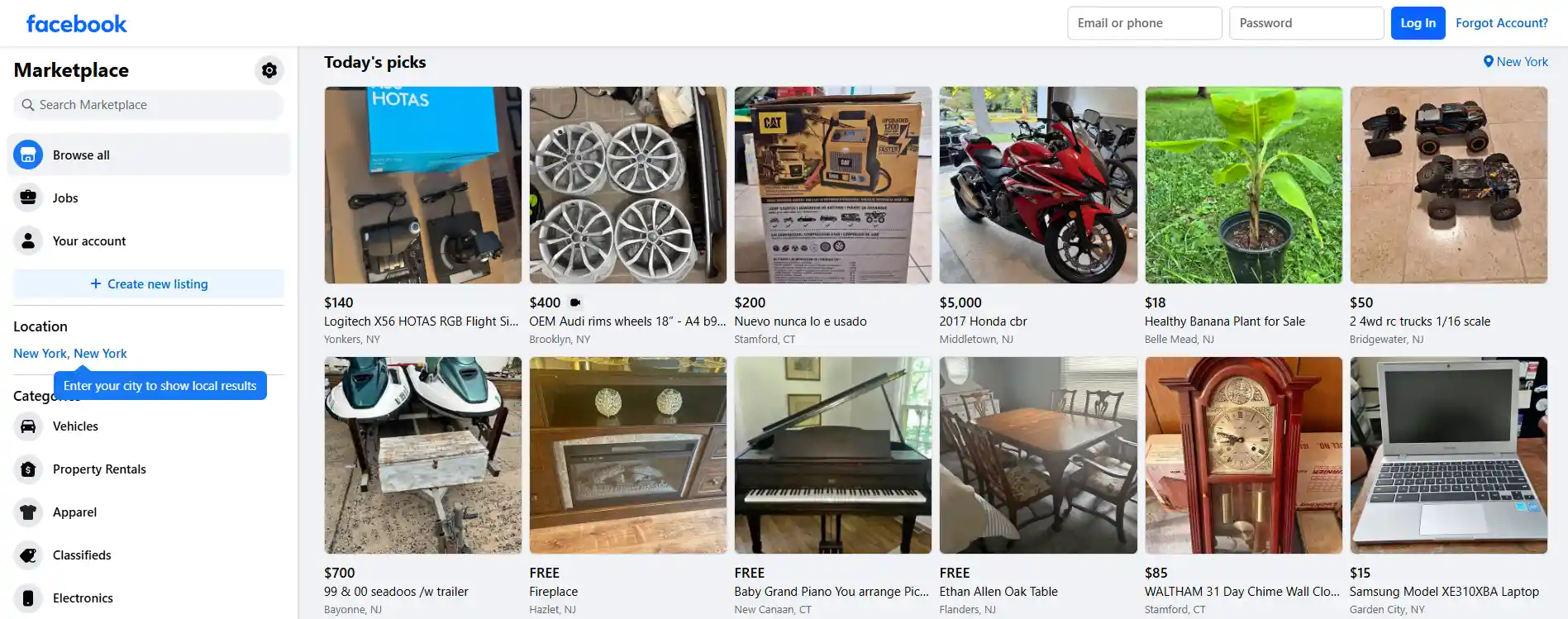
Facebook is the easiest place to sell big, awkward items like furniture or large wreaths, since buyers come to you. Local pickup is free. Shipped orders carry a selling fee. Local buy-and-sell groups and craft groups are worth joining too. Expect people to haggle, and put a firm price right in the listing to save a lot of back-and-forth.

Instagram rewards a strong visual style. There's no fee to sell. Buyers tap a shop link or send a direct message to order. It's also a good way to get in front of local boutiques and consignment shops, which often reply to DMs. The downside is that reach drops when posting slows, and taking payments through messages gets messy once orders pick up.
TikTok Shop
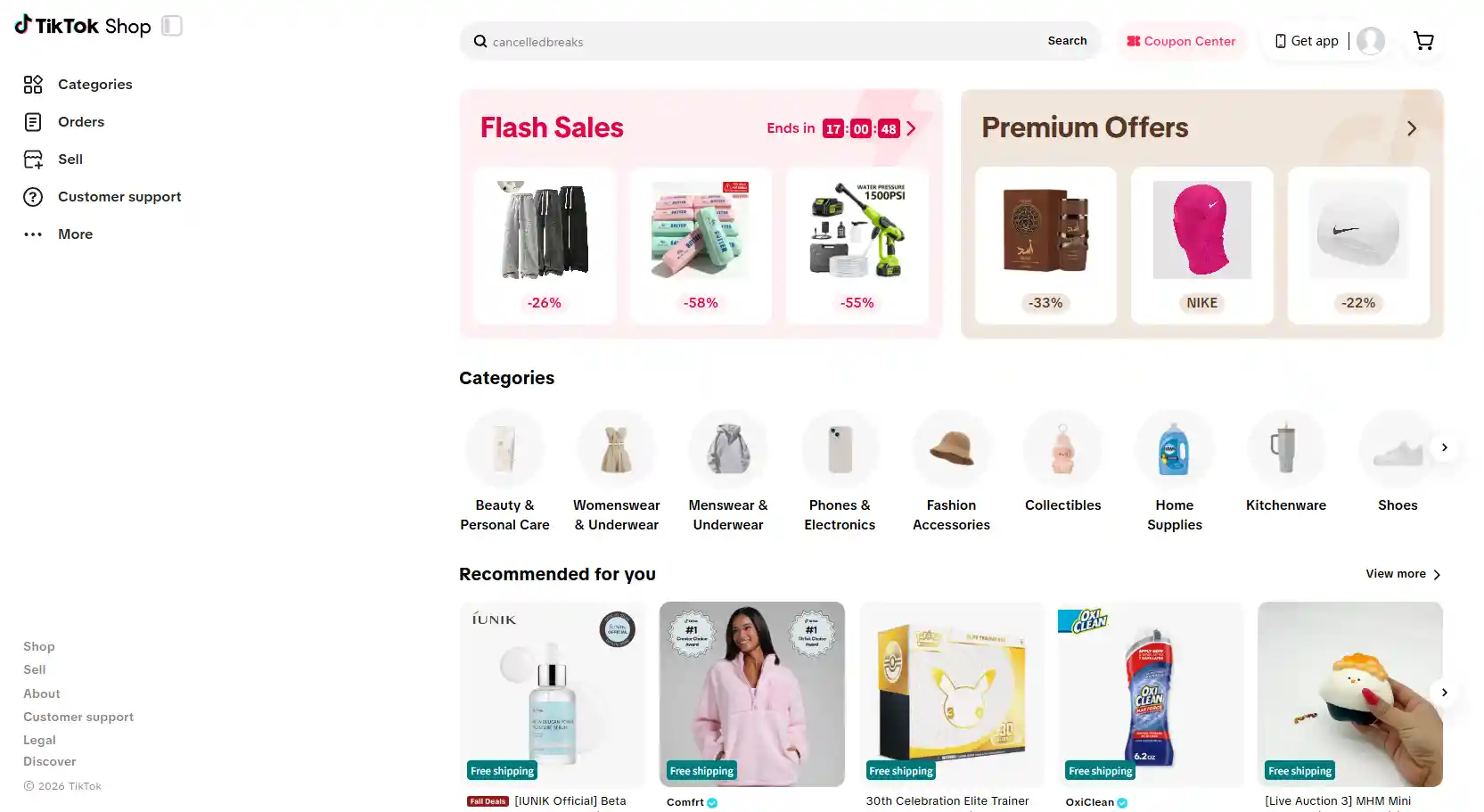
If being on camera doesn't bother you, TikTok Shop is worth a look. Short process videos, like a candle being poured or a ring being shaped, do well there. Buyers can check out without leaving the video, and posts can reach people who've never seen the account.
TikTok takes a referral fee on each order, and most US sellers now ship through its shipping programs. The real cost is time, plus whatever goes to creators who promote the product.
Your Own Website
Once you have repeat buyers who'd rather order from you directly, a website starts to make sense. Shopify and similar builders charge a monthly plan plus payment processing fees. Square Online and Big Cartel are simpler if you're just getting started.
In exchange, the maker sets the prices, owns the look, and keeps every customer email, with no commission. Nobody stumbles onto a new site, though. Local keywords like "handmade candles in Denver" help nearby buyers find it.
Here's how the fees compare:
| Platform | Selling Fees | Monthly Fee |
|---|---|---|
| Etsy | $0.20 per listing, 6.5% per sale, plus payment processing | None |
| Amazon Handmade | 15% per sale (min. $0.30) | $39.99 for the first month, then waived |
| eBay | About 13.6% per sale plus a per-order fee; 250 free listings a month | None |
| Facebook Marketplace | Free for local pickup; fee on shipped orders | None |
| Free | None | |
| TikTok Shop | Referral fee per order | None |
| Your Own Website | Payment processing per sale | Varies by plan |
How to Sell Crafts Online for Profit in 6 Steps
Step 1: Pick a Niche with Steady Demand
Pick one kind of product and build your shop around it, like dog-themed ceramics or wedding signs. Buyers find a focused shop more easily, and they're more likely to remember it next time.
Don't make a big batch yet, though. Lots of shops selling something doesn't mean it's selling well. A quick way to check is to search for the item on eBay and turn on the "Sold items" filter. You'll see what actually sold lately and what it went for. On Etsy, look at how many reviews similar listings have and whether there's a note about how many people have it in their cart.
Once you have a rough idea, list a few versions and watch what happens. Keep the ones that get views and sales. Drop the rest.
Step 2: Count Your Real Costs and Time
It's easy to count supplies and stop there. A real price needs more:
- Materials, including the small stuff like paint, glue, or ribbon
- Packaging and gas for post office runs
- Time, and not just making time. Prototypes, failed batches, packing, photos, and messages all count.
For one week, track every hour and divide by the number of items made. That's the real time per item. Then pick an hourly rate and build it in. A shop that doesn't pay its maker is a hobby that costs money.
Here's the formula:
Materials + (Hours × Hourly Rate) + Packaging + Platform Fees + Profit = Price
Say a piece uses $6 in materials, takes 30 minutes at $18 an hour, and needs $1.50 in packaging. That's $16.50 before fees or profit. Price it at $20 and there's almost nothing left.
Step 3: Account for Platform Fees
Every sale has fees taken out, so they need to be in the price from day one. On Etsy, a $25 item with free shipping costs:
- Listing fee: $0.20
- Transaction fee (6.5%): $1.63
- Payment processing (3% + $0.25): $1.00
That's $2.83, about 11% of the sale.
Offsite Ads can change that a lot. If the sale came from an Etsy ad on another site, Etsy takes another 15%, which is $3.75 here. Now the total is $6.58. Shops with under $10,000 in sales over the past year can opt out. Above that, it's required, at a lower 12% rate.
The transaction fee also applies to shipping the buyer pays, which is one reason many sellers roll all fees into the item price. Every marketplace does this a bit differently, so run the numbers for each one.

Step 4: Take Better Photos and Write Clear Listings
Shoppers online can't pick anything up. All they have to go on is the photos. Window light is the easiest place to start, and a plain background keeps the eye on the piece. Get at least one picture that shows how big it is. Someone holding it works, or it sitting on a shelf. Then go in close on the texture and the little details.
Write the listing the way you'd talk to someone at a craft fair. They'd want the size and the materials first. Care and shipping time tend to come up right after. It's also worth a sentence or two on how it was made, because a big-box store has nothing like that to offer.
Step 5: Set Up Shipping and Packaging
Weight isn't the only thing carriers charge for. They also use dimensional weight, which bills a big, light box like a heavy one. The formula is length × width × height ÷ 139. USPS applies it to boxes over one cubic foot. UPS and FedEx apply it to every package. So a 3-pound candle in a 14 × 14 × 14-inch box gets billed as 20 pounds.
A few habits keep shipping costs in check:
- Weigh and measure a packed sample of each product
- Check the carrier's rate calculator before setting a shipping price
- Use the smallest box that still protects the item, especially for candles, ceramics, and big signs
- Go easy on tissue paper and filler, since every layer adds weight
Step 6: Promote Your Craft Shop
Ads rarely pay off on low-priced crafts. Say a $20 item leaves $5 in profit, and it costs $6 in ads to land one buyer. That's a $1 loss on every sale. Free traffic is the safer place to start.
- Use the words buyers type into search in titles and tags. "Personalized dog bowl" gets found. "Cute bowl" doesn't.
- Post products on Pinterest. People go there to save gift and project ideas.
- Film short clips of an item being made. Seeing the hours behind it makes the price easier to accept.
- Send a free piece or a discount code to a small creator who posts about the same kind of craft.

Common Mistakes That Cut into Your Profit
Skipping Records and Taxes
Craft money is taxable, even from a side hustle. Under current IRS rules, Etsy or eBay only has to send a Form 1099-K once a seller passes $20,000 in payments and 200 transactions in a year. Staying under that line doesn't make the money tax-free. It just means the platform doesn't report it.
The easy fix is one spreadsheet, started on day one, with every sale, supply receipt, shipping label, and fee. Those costs can bring the tax bill down later.
Relying on One Platform
One shop is a fine place to start. Staying there forever is the risk. A search update can cut traffic fast, and a suspended account stops sales cold. Once the first shop runs smoothly, add one or two more sales channels, like a local Facebook group or an Instagram account.
Collect buyer emails through a personal website or at craft fairs, so there's always a way to reach customers. Don't add marketplace buyers to a mailing list, though, since Etsy and Amazon limit how sellers can use that contact info.
Pricing Low to Win Bargain Hunters
When sales are slow, dropping prices is tempting. But it cuts into the hourly wage from Step 2, and it pulls in buyers who haggle, ask for discounts, and message for days without ordering. Handmade work was never going to win on price. There are better ways to reach shoppers on a budget:
- A small, lower-priced item, like a keychain or a mini version of a best seller
- Bundles, since a set of three brings in more per order than one piece

How to Grow Without Making Every Item by Hand
Move from Custom to Semi-Custom Designs
Fully custom orders take a lot of back-and-forth, and one small mix-up can mean starting over. But scroll through old orders and a pattern shows up fast. People keep asking for the same things, like a pet's name on a bowl or a wedding date on a sign.
Turn those into semi-custom listings with two or three choices, such as a font and a color. Get the parts that never change ready ahead of time, like pre-cut blank signs or saved templates, so each order only needs the name or date. Fully custom work can stay on the menu, just at a higher price and with a few spots each month.
Batch Your Production
Batching means doing one task for a whole group of items before moving on, instead of making each piece start to finish. A week might look like this:
- Monday: cut wood or fabric
- Tuesday: assemble
- Wednesday: paint or finish
- Thursday: pack orders
Pack in the same setup every time. Print all your shipping labels in one go, and keep your packing supplies together so you're not hunting for them.
Add Print-on-Demand Products
Another way to grow is to let someone else do the making. One crafter shared how her daughter puts original artwork on phone cases, canvas prints, wall tapestries, and T-shirts, so one drawing became a whole product line. That's the idea behind print on demand: a supplier prints and ships each item after a customer orders it. There's no stock to buy upfront, and nothing to pack.
PrintKK has no minimum order, so a new design can go up without buying a batch first. There are 1,300+ products, which makes it quick to turn one piece of artwork into several listings. It also connects to major e-commerce platforms like etsy and ships free to some parts of the US, so print-on-demand items can sit right next to handmade ones in the same shop.
Read More:
- How to Sell Your Art Locally and Attract Stable Buyers
- Best Print on Demand Sites for Artists [ Excellent Utility ]
Expert Tips
Figuring out how to sell crafts online for profit takes some trial and error, but most successful sellers keep things simple at the start. They make products buyers want, ideally ones they enjoy making, since the same item may get made dozens of times.
They stick with one platform until it feels familiar and set prices that cover every cost, including the hours behind each piece. Clear photos and plain, honest listings help, and so does posting where buyers already spend time.
Sales usually start slow, and that's normal. Each order shows a little more about what buyers like, and that's how a craft shop grows.
FAQs
Do I need a business license to sell handmade crafts from home?
It depends on the city and state. Some require a business license even for small home sales, and some don't. A quick check on your city hall or state website before you start will tell you.
Do I have to pay taxes on crafts I sell online?
Yes. Craft sales count as income, whether or not the platform sends a 1099-K. Some states also require a permit to collect sales tax, especially for sales through your own website. A local tax professional can sort out the rules.
How much money can you make selling crafts online?
It comes down to profit per item times the number of sales. If each item clears $5 after costs, it takes 200 sales a month to make $1,000. Raise the profit per item or sell bundles, and you need fewer orders.
How long does it take to start making a profit from selling crafts?
There's no set timeline. Many new sellers spend the first few months testing products and prices. Keeping startup costs low gets a shop to profit sooner, with less money at risk.