







Memberful works for a lot of creators, but it's built narrowly—a paywall bolted onto a website you already own. If you need a real community, native courses, a branded mobile app, or lower fees than 4.9%, you'll hit its limits fast.
The good news: the market has caught up, and the memberful alternatives worth your time have never been stronger.
This guide compares 12 of them across pricing, features, business fit, and the real cost of switching—so you can pick the platform that actually matches what you're building, not just the one that shows up first.
Key Takeaways
- Memberful works best as a simple paywall—not for courses, community, or branded apps.
- Ghost and self-hosted WordPress plugins charge zero platform cut on revenue.
- Circle and Mighty Networks win when community engagement is the actual product.
- Match the platform to your business model, not to a generic top-10 ranking.
- Switching only pays off when saved fees clearly beat migration costs within a year.
What Is Memberful
Memberful is a membership tool owned by Patreon that lets creators charge for access to gated content. It's built for people who already have a website and just want to add a paywall on top of it.
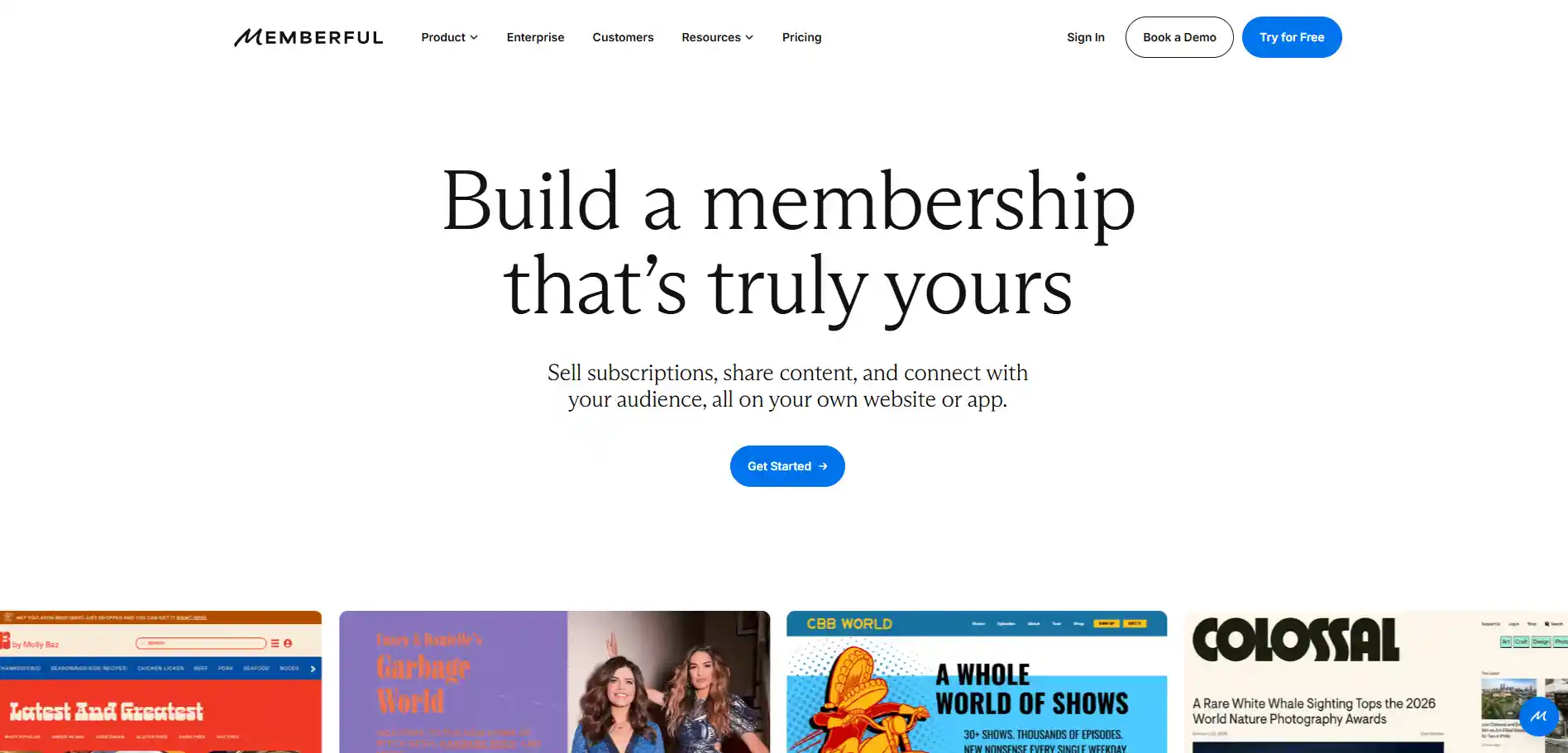
Here's what it does:
- Stripe payments for one-time and recurring subscriptions
- WordPress integration through a lightweight plugin
- Email handling for welcome messages, receipts, and renewal reminders
- Member management with a basic dashboard for signups, cancellations, and refunds
Most users are bloggers, podcasters, and independent publishers who want a paywall without rebuilding their whole site.
Pricing is $49/month plus a 4.9% transaction fee, or custom Enterprise pricing for larger operations. It's a focused tool—good at what it does, limited outside of it.
Why Creators Are Outgrowing Memberful
No native courses or community. Memberful gives you a paywall, not a place to teach or gather. If you want to sell a course or run a members-only forum, you'll be stitching together third-party tools on top of it.
No dedicated member app. Members read your content in a browser, and that's it. Creators who care about mobile engagement or push notifications have nowhere to go inside Memberful.
Transaction fees stack on top of the subscription. On a $1,000 revenue month, the 4.9% cut is another $49 on top of the $49 plan—close to $100 before Stripe takes its own processing fee.
Too tied to WordPress. If you don't already run WordPress, setup gets clunky fast. And if you're not technical, customizing the checkout or member area means hiring someone.
Limited branding. The checkout and member pages look the same across every Memberful site. There's not much room to make your membership feel like your brand instead of Memberful's.
12 Best Memberful Alternatives for 2026
1. Mighty Networks
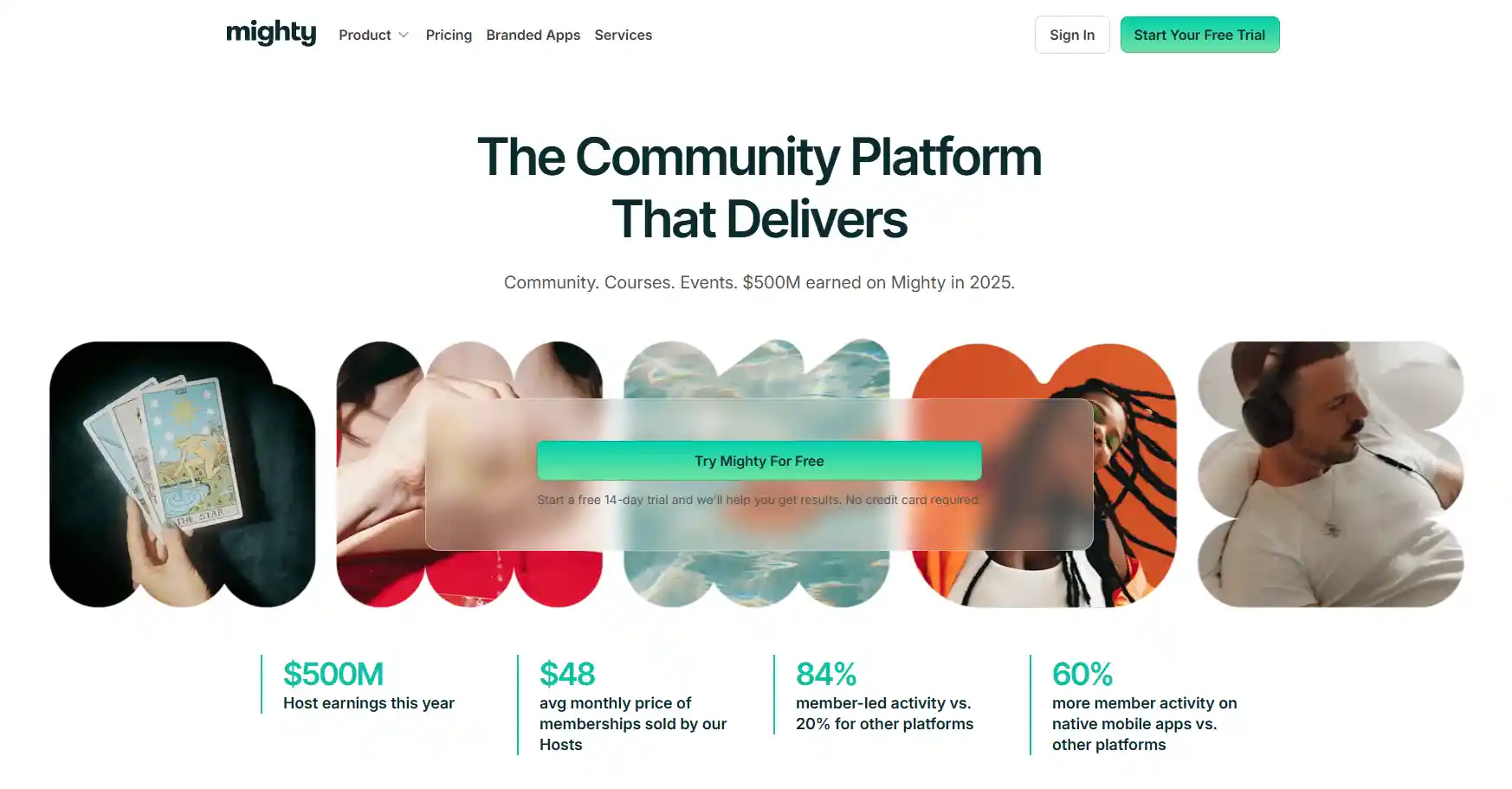
Mighty Networks treats community as the product, not a bonus feature. Courses, events, chats, and payments all live in one branded space, built so members show up daily instead of just logging in. Pricing starts at $79/month (Launch plan, or $950/year), with Scale at $179/month; the branded mobile app is part of Mighty Pro, which is custom-priced.
Pros: Community, courses, and payments in one place. Clean member experience across web and app.
Cons: The white-label app costs a big jump. Discovery inside Mighty's own network is limited.
2. Podia

Podia covers memberships, courses, and digital downloads from one dashboard. It's less community-heavy than Mighty but easier to set up. Mover starts at $29/month billed annually ($42 monthly) with 5% transaction fees; Shaker at $69/month annually drops fees to 0%.
Pros: One platform for multiple product types. Simple setup.
Cons: The 5% fee on Mover means creators pay twice—monthly subscription plus a cut of revenue—until they upgrade. Community features are basic. Course tooling is thinner than Kajabi.
3. Ghost

Ghost is the closest replacement for paid newsletter creators. It's open-source, ships with memberships built in, and takes zero cut beyond Stripe's fees. Self-hosted is free; Ghost Pro starts at $15/month (Starter, billed annually). Creators keep full ownership of the list, the content, and the customer relationship.
Pros: No cut on revenue. Full ownership of the audience.
Cons: Member dashboard is minimal—no fancy portal, just posts and account settings. No native community or courses.
4. Kajabi
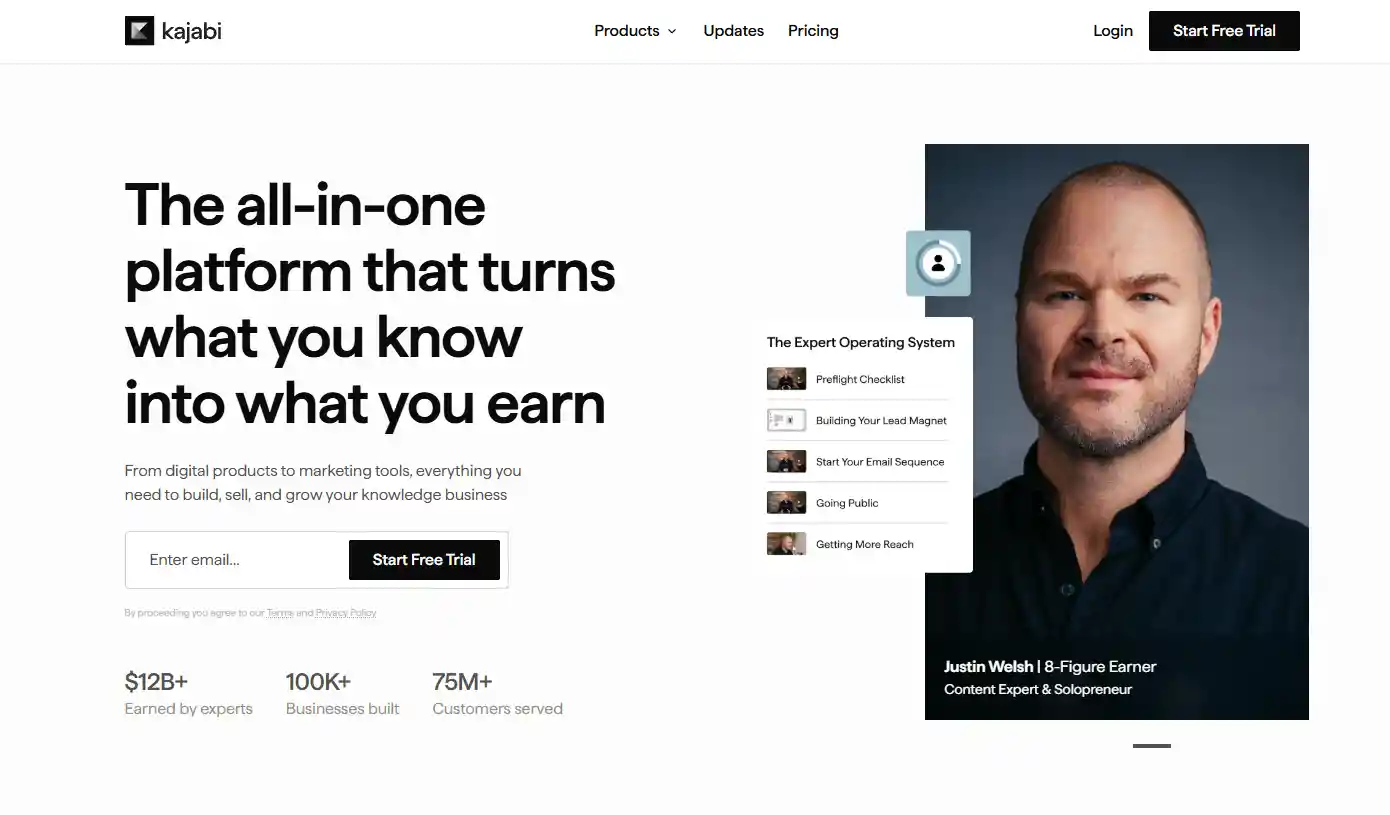
Kajabi is the all-in-one heavyweight for creators whose main income is courses and coaching. Memberships sit alongside funnels, email, and landing pages. Basic is $143/month billed annually ($179 monthly), with Growth at $199 and Pro at $399.
Pros: Truly all-in-one—no stitching tools together. Branded mobile app included on the Pro plan.
Cons: Checkout has extra steps, and creators regularly complain about conversion drops. Expensive for a simple paywall.
5. Circle

Circle is where a lot of paid communities have migrated. It looks modern, feels fast, and treats community as the reason people pay—not content gating. Pricing starts at $89/month (Professional); the branded app is part of Circle Plus, which is custom-priced.
Pros: Best-in-class community UX. Members actually stay engaged.
Cons: Subscription management for members is buried—canceling or updating billing takes several clicks. Overkill when the product is mostly content.
6. MemberPress
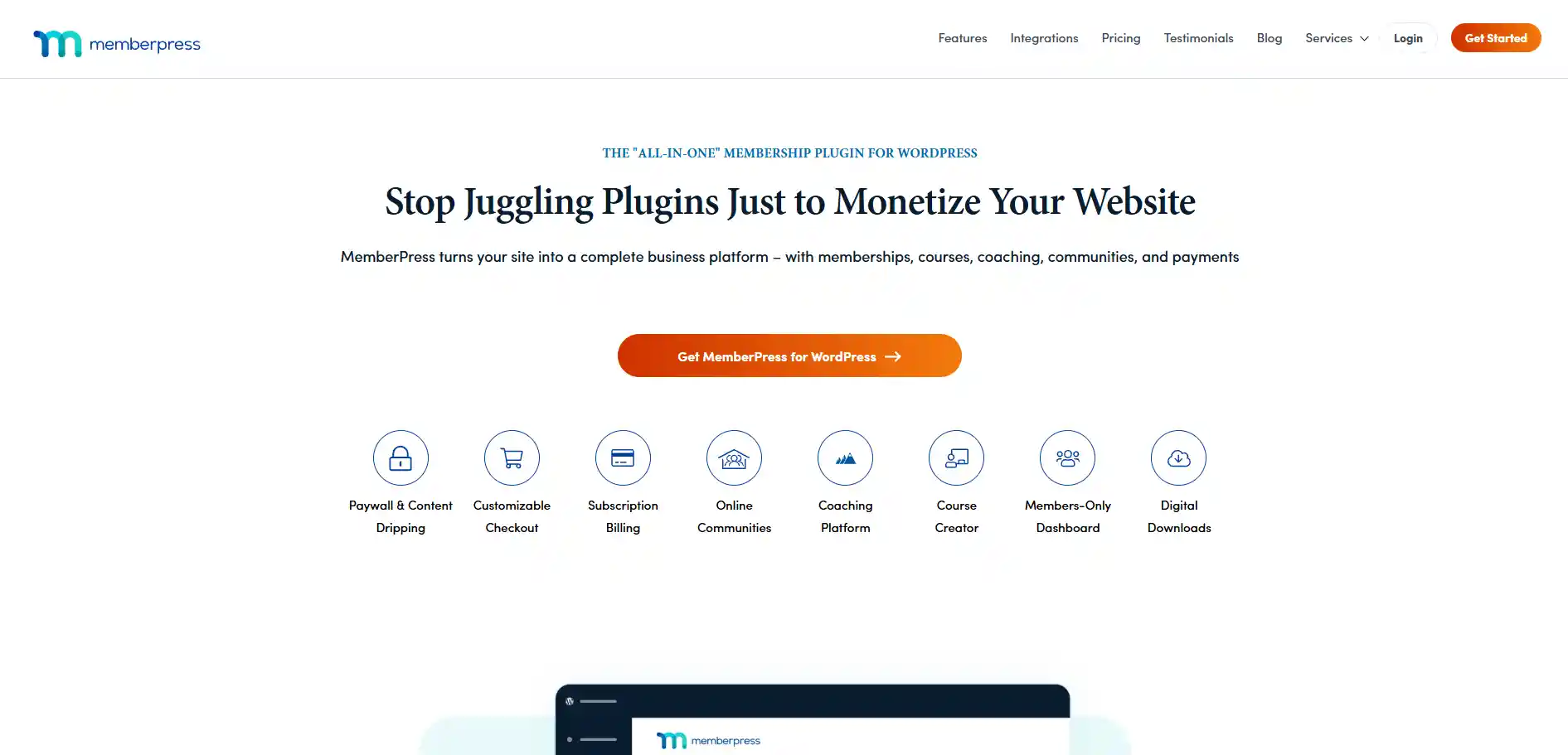
MemberPress is the most-used membership plugin for WordPress. It's the natural next step for Memberful users who want to keep everything on an existing site instead of moving platforms. Launch is $199.50/year (renews at $399) with a 4.9% transaction fee; Growth ($349.50/year, renews at $699) and Scale ($499.50/year, renews at $999) remove that fee.
Pros: Annual pricing means no monthly platform fees. Deep control over access rules.
Cons: Launch plan still charges 4.9%, so switching just for fees only pays off at Growth or above. Setup takes real time.
7. Teachable

Teachable is one of the oldest course platforms and still one of the most reliable. Memberships work here but aren't the main event. Starter is $29/month billed annually ($39 monthly) with a 7.5% transaction fee; the Builder plan at $69/month annually drops that to 0%.
Pros: Strong course structure and student experience. Handles international payments well.
Cons: The transaction fee on Starter eats into small revenue fast. Community features are minimal.
8. MemberSpace
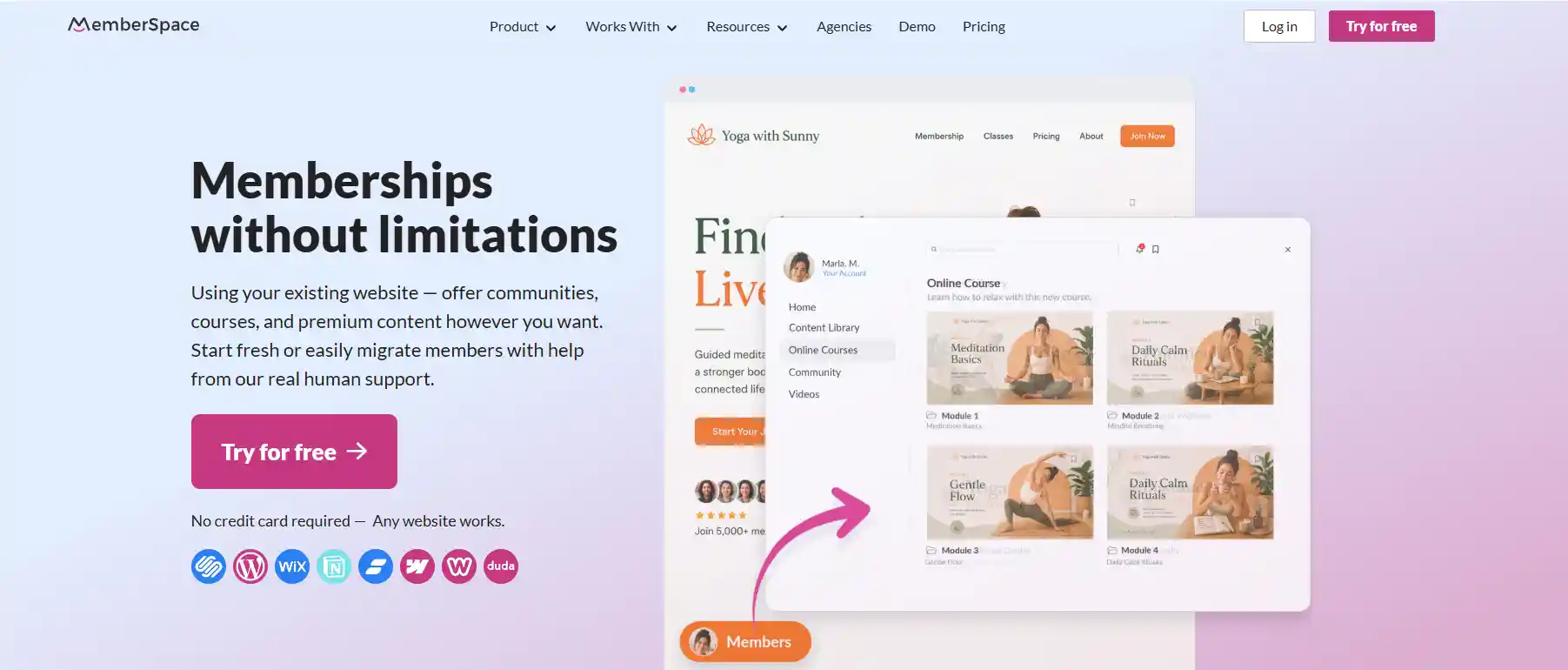
MemberSpace sits on top of an existing website—Squarespace, Webflow, WordPress, Wix—and locks pages behind signup. It's the closest philosophical match to Memberful. Starter is $24/month billed annually (currently 38% off from $39) with 5% transaction fees; Growth at $99/month drops that to 2%.
Pros: No need to change the underlying website. Setup is simple even for non-technical creators.
Cons: Login redirects feel disjointed—members bounce between the main site and MemberSpace's hosted pages. And Starter's 5% fee is slightly higher than Memberful's 4.9%—the real savings come at Growth ($99/mo, 2% fee) if your revenue is high enough.
9. Patreon

Patreon is the ancestor of modern membership platforms and still one of the biggest—and it's actually Memberful's parent company, having acquired it in 2018. It's a trade: some ownership goes to Patreon in exchange for a built-in audience. Free to open; takes a flat 10% of income, plus payment processing, currency conversion, and payout fees.
Pros: Instant credibility with fans already on Patreon. No monthly fee to start.
Cons: Canceling is one tap for members, which makes retention harder than on platforms with more friction. Creators don't own the customer relationship.
10. Paid Memberships Pro
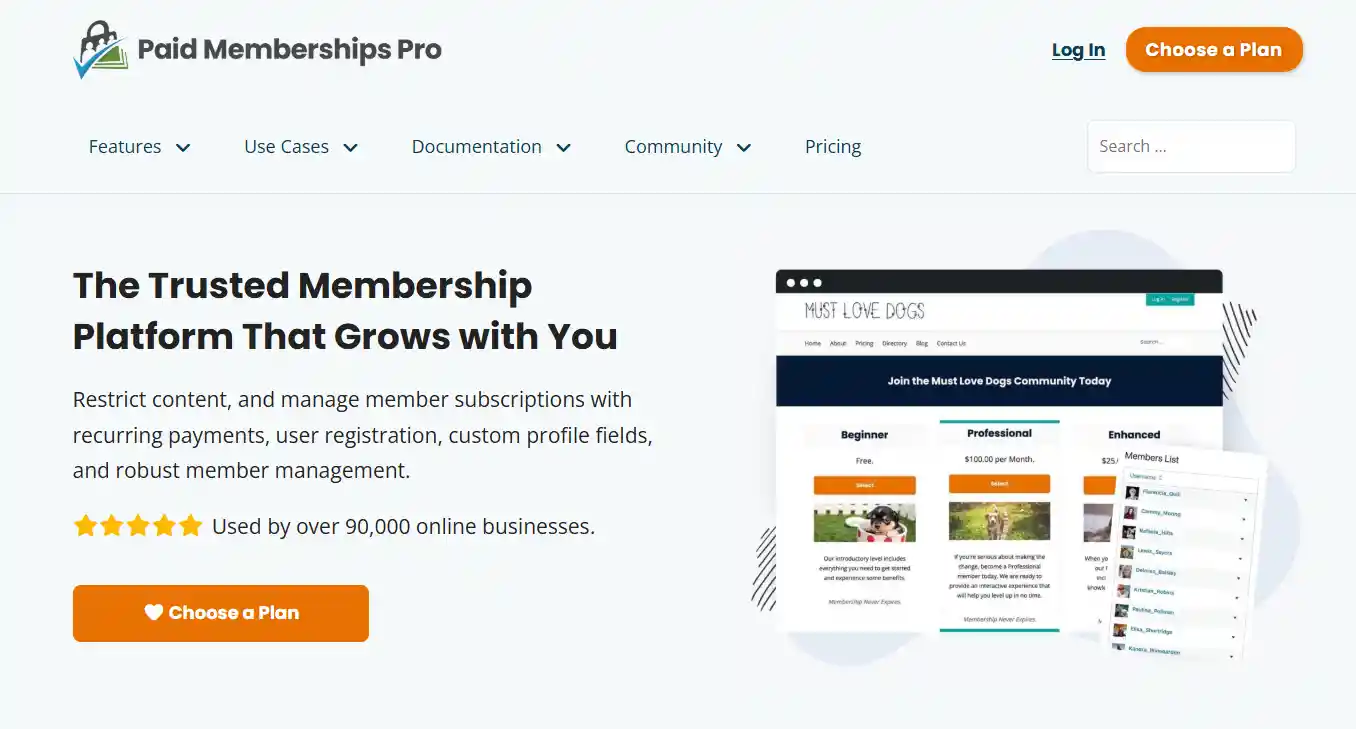
Paid Memberships Pro is a free, open-source WordPress plugin that covers most of what MemberPress does—for creators willing to configure it themselves. Core plugin is free; Standard is $49/month for premium add-ons and support on one site, and Max plans ($99–$299/month) add managed hosting and done-for-you implementation.
Pros: Genuinely free for the basics. Full ownership of everything.
Cons: Member account management is functional but plain—no polish out of the box. The free version leaves gaps that paid add-ons eventually fill.
11. BuddyBoss
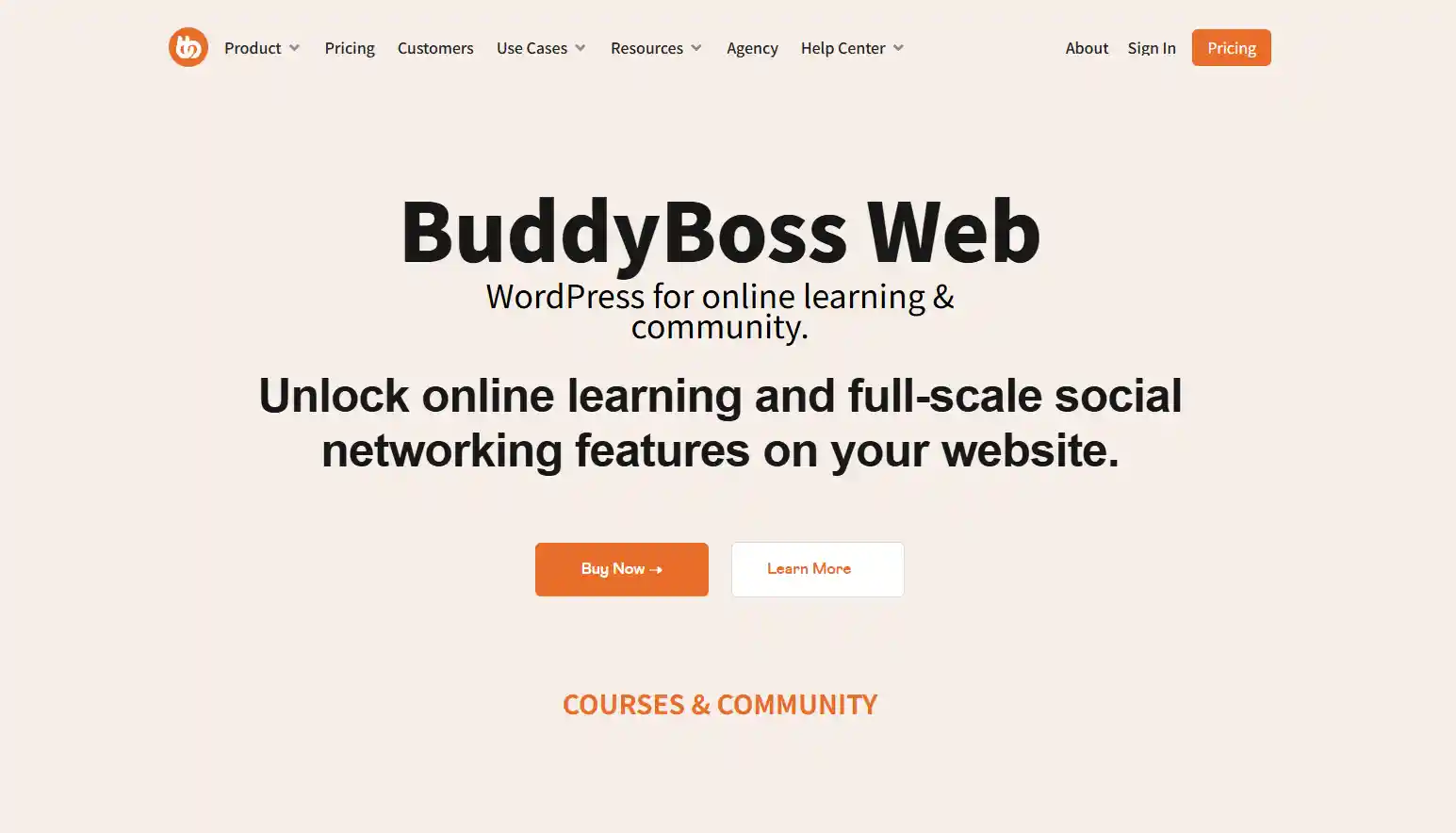
BuddyBoss turns a WordPress site into a private social network. Combined with LearnDash, it becomes a full community + course platform. Start is $99/year (renews at $199), Launch is $199/year (renews at $399), and Scale is $349/year (renews at $699), all currently at 50% intro pricing.
Pros: Strong community features out of the box. Annual pricing means no monthly platform fees.
Cons: Start plan has 2.9% fees on memberships and courses; 0% only kicks in at Launch. Hosting, updates, and security fall on the creator.
12. Substack
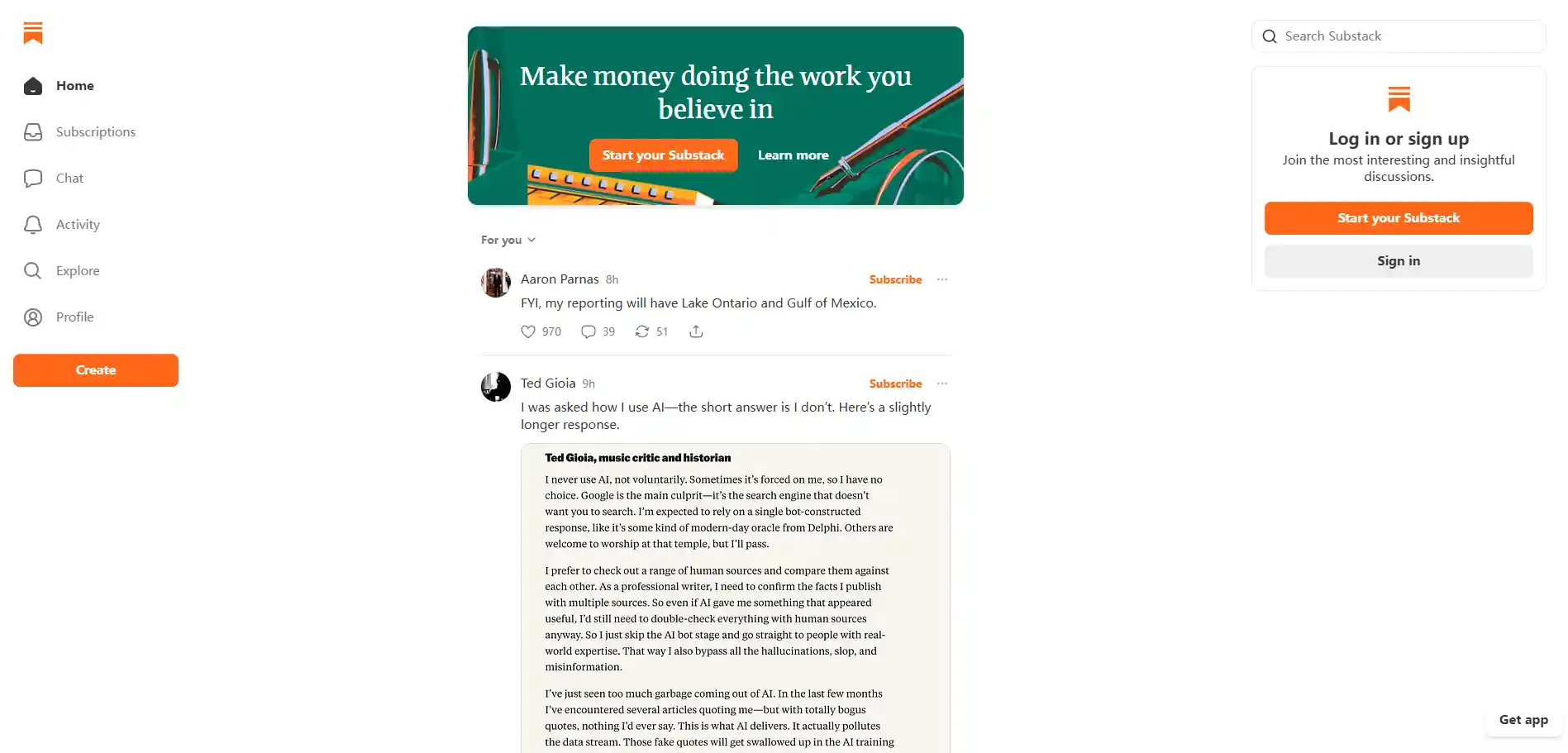
Substack does one thing—paid newsletters—and does it very well. It's not really a membership platform in the traditional sense, but for many Memberful users it's the honest answer. Free to open; takes 10% of paid subscriptions plus Stripe fees.
Pros: Zero setup, live in minutes. Discovery inside Substack drives real signups.
Cons: The customer relationship belongs to Substack, not the creator. No courses, no real community, no content tiers beyond free/paid.
Read More:
How to Match the Right Platform to Your Membership Model
Ranking twelve platforms overall isn't very useful. "Best community platform" and "best newsletter platform" are answering different questions, and stacking them into one list forces a comparison that shouldn't exist.
Matching them to a specific business model works better. The twelve options above sort roughly into these matches:
- Mighty Networks — Creators leaving Memberful because they want members to actually hang out, not just log in
- Podia — Creators selling a course, a membership, and maybe an ebook without paying for three tools
- Ghost — Writers running a paid newsletter without giving up 10% or audience ownership
- Kajabi — Course creators and coaches whose membership is one piece of a bigger business
- Circle — Creators whose paying members show up to talk to each other, not just consume content
- MemberPress — WordPress creators who want to stop paying transaction fees and keep everything on their existing site

- Teachable — Creators whose main product is a course, with a small membership tier alongside
- MemberSpace — Creators who love their existing site and just need a paywall on part of it
- Patreon — Creators with an existing audience who want the easiest way to start collecting recurring support
- Paid Memberships Pro — WordPress users who want zero platform fees and don't mind rolling up their sleeves
- BuddyBoss — WordPress creators who want a Circle-style community and a branded app without hosted-platform pricing
- Substack — Writers whose product is essentially a paid newsletter and who value discovery over ownership
For the shortest path from business model to platform:
| If the product is... | Best options |
|---|---|
| A paid newsletter | Ghost, Substack |
| A paid podcast | Memberful (still) |
| A WordPress-based site | MemberPress, Paid Memberships Pro |
| A course business | Kajabi, Podia, Teachable |
| A paid community | Circle, Mighty Networks, BuddyBoss |
| A paywall on an existing website | MemberSpace |
| A membership built on an existing fanbase | Patreon |
There's a deeper question underneath this table: own the customer relationship, or trade ownership for built-in discovery?
Ghost, MemberPress, and self-hosted setups keep the audience, list, and checkout under one roof—but growth is on the creator.
Patreon and Substack bring their own audience and make signup effortless, but they own the relationship, not the creator. Pick the trade-off first. Pick the platform second.

What It Really Costs to Switch from Memberful
Switching platforms looks simple on paper. In practice, it means moving live subscriptions, active members, and years of content without breaking anything.
Here's what actually shows up in the migration bill.
Migration realities
Four questions decide most of the work:
- Can the existing Stripe account come along? On most hosted platforms, yes—recurring charges continue without members re-entering cards. Patreon and Substack use their own payment systems, so every member has to check out again.
- Will members need to create new accounts? Almost always yes. Emails transfer, passwords don't, and a chunk of members never open the "set up your account" prompt.
- What happens to recurring subscriptions mid-cycle? Done right, they keep billing on schedule. Done badly, members get double-charged or dropped for a cycle.
- Can historical payment data transfer? Payment history stays in Stripe. Platform-specific data—tenure badges, lifetime value dashboards—usually doesn't come with.
The hidden costs no one talks about
- Expect meaningful churn during migration, mostly from members who never activate the new account.
- Email automation has to be rebuilt from scratch.
- Broken content links hit search rankings when member-only URLs change.
- Rebuilding checkout pages and third-party integrations eats a week or two.
- Downtime risk during DNS and payment cutover is small but real.
When switching pays off
Do the math before switching. Add up what you're paying Memberful in transaction fees today. Compare that against the new platform's monthly subscription plus whatever cut it still takes. If the switch doesn't pay back within a year at your current revenue, wait.
The rough rule: percentage-based fees hurt more as revenue grows, so flat monthly plans get cheaper the bigger you get—and the smaller you are, the harder it is for any switch to pay for itself.
When Memberful Is Still the Right Choice
Not every creator needs to switch. Memberful still makes sense in a few specific cases:
- Simple paywall on a blog or podcast. No courses, no community, just gated posts or episodes—Memberful does this cleanly and there's no reason to move.
- Deep WordPress setup. Leaving Memberful usually means rebuilding integrations, checkout pages, and workflows that already work. Staying is often the safer bet.
- Under 100 paying members. At this scale, migration costs and subscriber churn easily wipe out whatever fees a switch would save.
- Email plus Stripe is the whole product. Memberful already handles both well, and the alternatives above add features that most small memberships never touch.
Switch when Memberful blocks something actually needed, not because a comparison article said to.
Expert Tips
Before switching to any of these Memberful alternatives, do three things.
Export your Stripe customer list as a CSV so you have an off-platform copy of the subscription data. Calculate the fee difference at your actual current MRR, not a hypothetical future one—if the payback is longer than 12 months, wait.
And test the new platform's checkout on your own phone before migrating anyone; conversion drops on mobile checkout are the single most common post-switch complaint.
FAQs
Does Memberful work with WordPress?
Yes, and this is one of its strongest features. A lightweight plugin connects Memberful to any WordPress site, letting creators lock posts, pages, or entire sections behind a paywall without touching the theme.
What is the best Memberful alternative for WordPress users?
MemberPress is the most popular pick, though its Launch plan still charges 4.9%—same as Memberful. Growth and Scale drop that to 0%. Paid Memberships Pro is another solid option, with a free core plugin.
Can I migrate my existing members from Memberful to another platform?
Emails and subscription data transfer to most platforms, but members almost always need to activate a new account. Expect meaningful churn during the switch, mostly from members who ignore the setup email.
Which Memberful alternative has the lowest transaction fees?
Ghost takes 0% beyond Stripe's standard processing fees. Self-hosted WordPress options like MemberPress (Growth plan and above) and Paid Memberships Pro also charge no platform cut.
Is Memberful good for creators just starting out?
Probably not—there's no free plan anymore, so you're committing to $49/month plus 4.9% fees from day one. Substack or Patreon are free to start and bring built-in discovery, which matters more when an audience is still being built.



 Global Shipping