





If you sell custom merch, you probably started on Teespring. It was simple and popular. But now in 2026, creators look for platforms that give them more control, better margins, or faster delivery.
That's why we put together this list of 14 Teespring alternatives worth checking out right now. You'll see options great for high-quality tees, unique accessories, worldwide shipping, or easy fan stores. Let's get started.
Why Look for Teespring Alternatives?
Many creators start with Teespring (now called Spring) because it looks simple at first. You create a design, pick a price, share the link, and the platform handles printing and shipping. No need to buy stock or pack boxes upfront.
As you sell more, the downsides show up. Profit margins often stay low from high base prices and fees. Payments can take weeks or longer to arrive. Support responses are slow or missing when issues like wrong prints or lost orders happen.
Product quality isn't always consistent. Designs fade quickly after washing, colors shift from screen to fabric, and delivery times stretch out. Buyers complain, which reflects back on you as the seller.
You also face limited options. Basic customization tools make it hard to stand out, and customers buy through the platform's site instead of feeling connected to your own brand.
By 2026, many look for alternatives to get higher profits, reliable shipping, wider product ranges, and better ways to build a lasting business. If these issues hit close to home, checking other platforms is a practical next step.
16 Best Teespring Alternatives for Custom Products
PrintKK
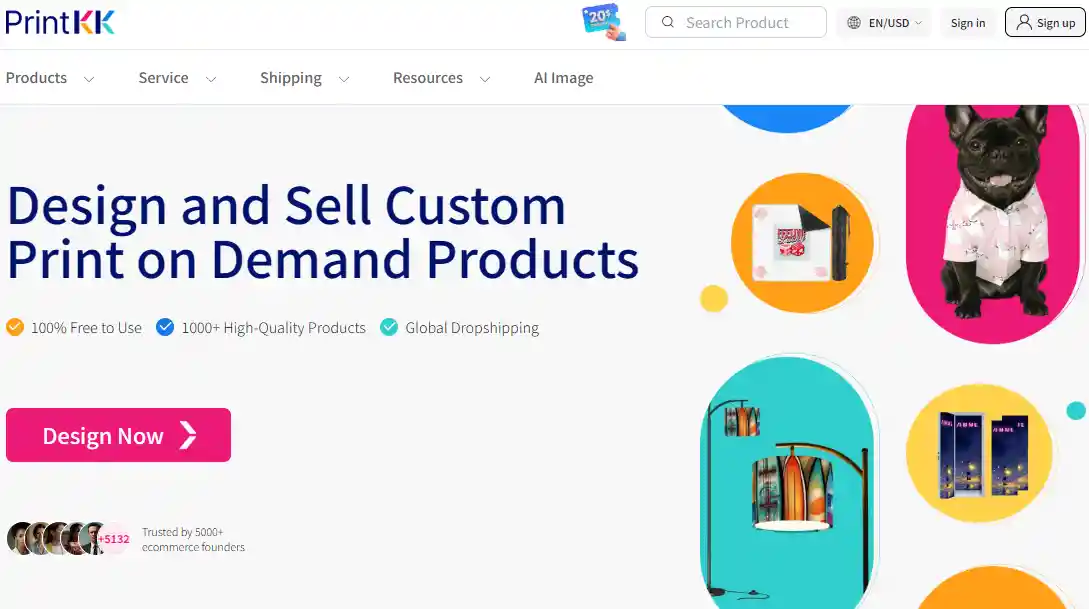
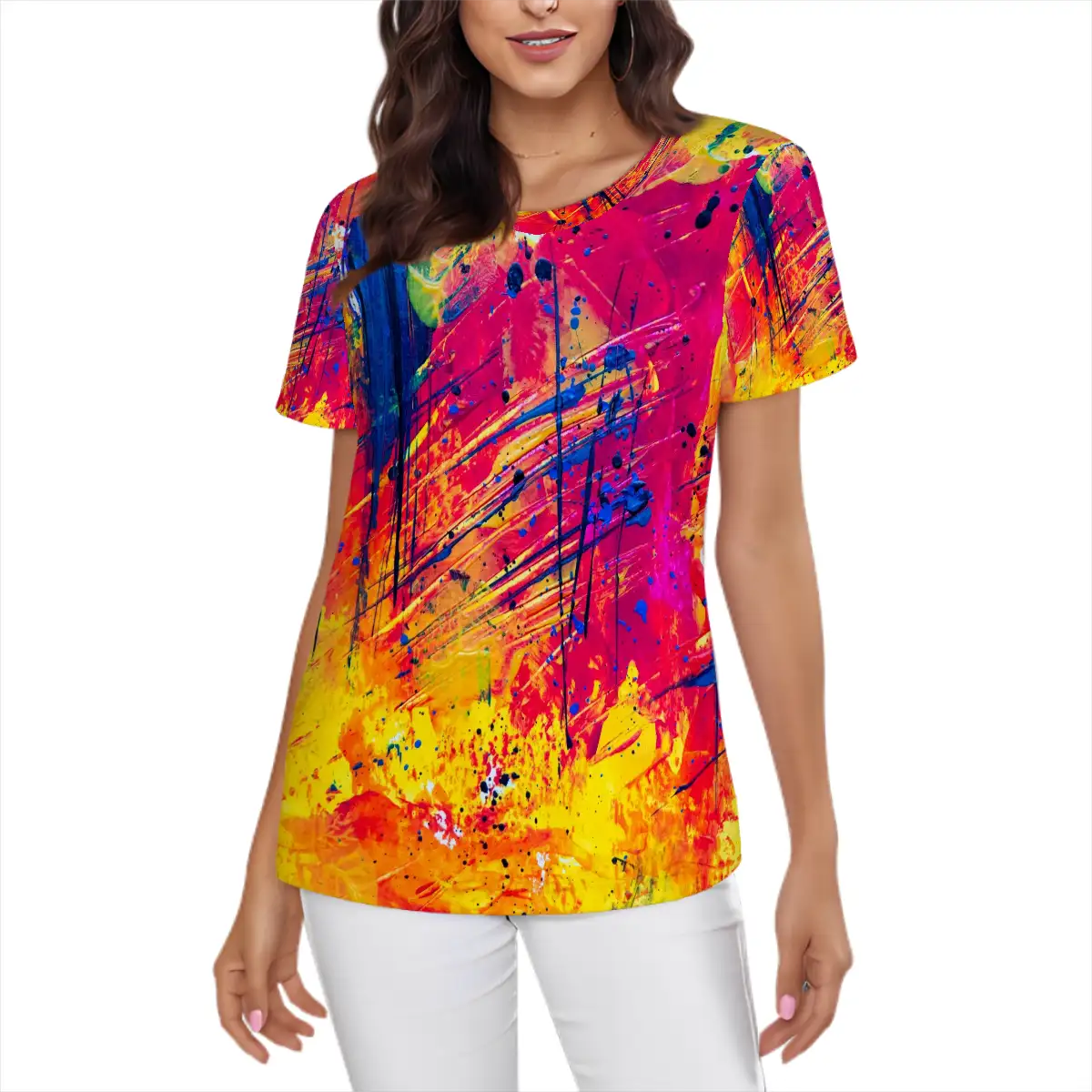
PrintKK is a print-on-demand service that focuses on custom apparel and accessories. It works as an all-in-one platform for stores on multiple channels.
Pros:
- Low product costs help with higher profits.
- Fast fulfillment in many cases.
- Good support for Shopify and other platforms.
Cons:
- Limited customization options for packaging and branding.
- Fewer color options on some designs.
Price: Low base costs on most items. No monthly fee to start. The cheapest plan starts at just $9.99.
Zazzle
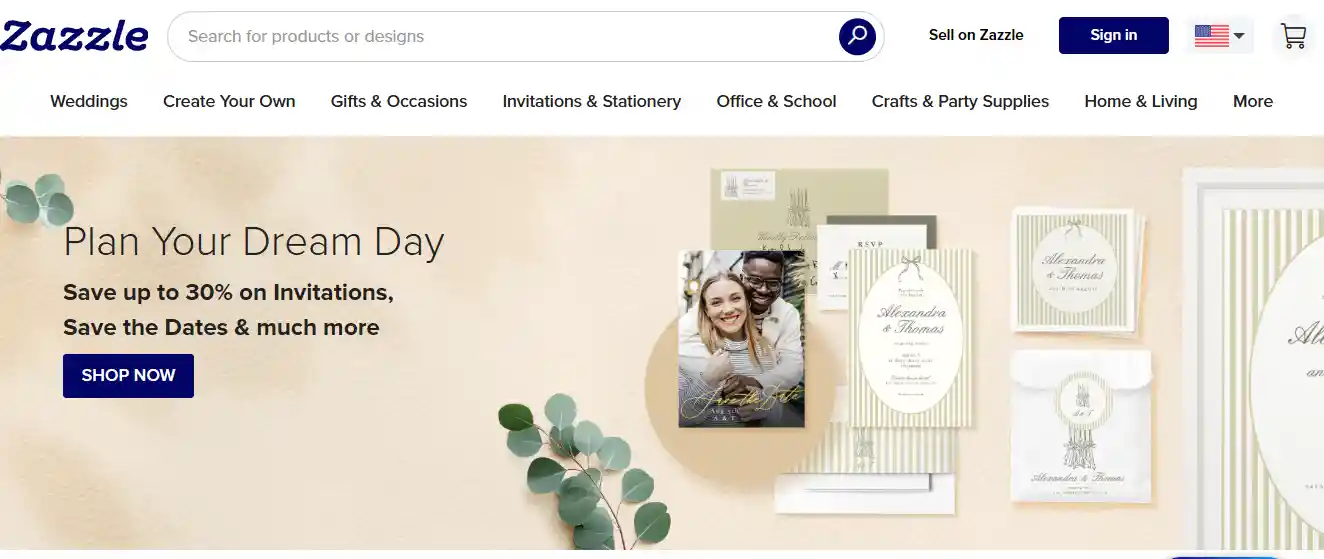
Zazzle is an online marketplace for custom products. Designers upload designs, and customers buy directly from the site or customize items.
Pros:
- Very large range of products beyond just tees.
- Built-in traffic from the marketplace.
- Customers can add their own changes to designs.
Cons:
- Less control over your brand and store look.
- Lower profit margins due to marketplace fees.
- No easy integration with your own Shopify or Etsy store.
Price: Base costs vary by product. Marketplace takes a cut from sales. No monthly fee.
Podbase
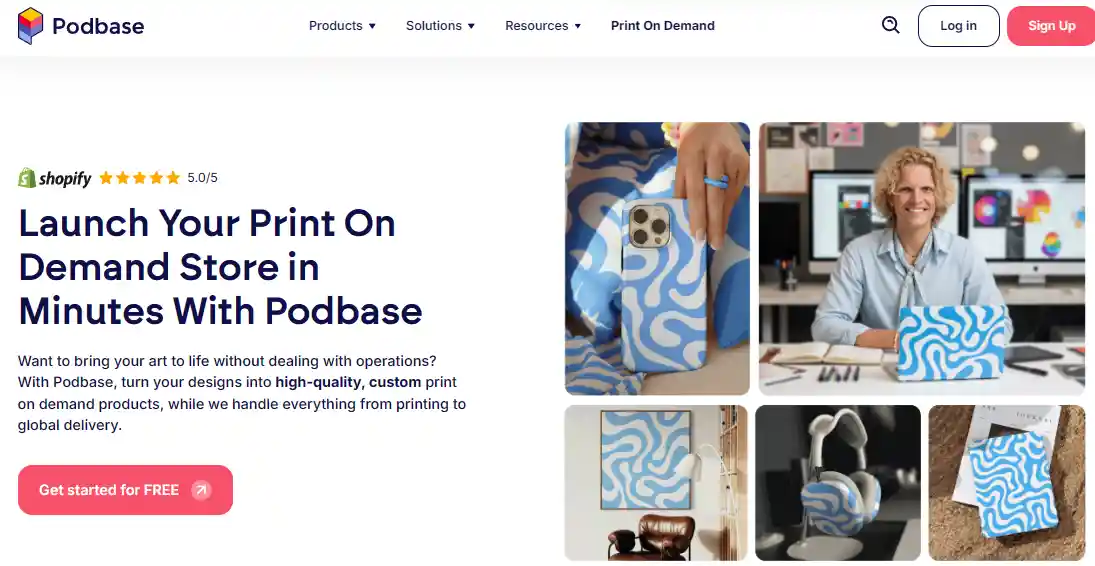
Podbase specializes in custom tech accessories like phone cases, laptop covers, and AirPods items. It connects to stores for dropshipping with no inventory.
Pros:
- Strong focus on high-quality tech products.
- Fast 24-hour fulfillment for many orders.
- Free to start with good Shopify and Etsy links.
Cons:
- Limited to tech and select items, not full apparel range.
- Best for niche stores, not general custom tees.
Price: Competitive base prices on tech items. No monthly fee.
Printful
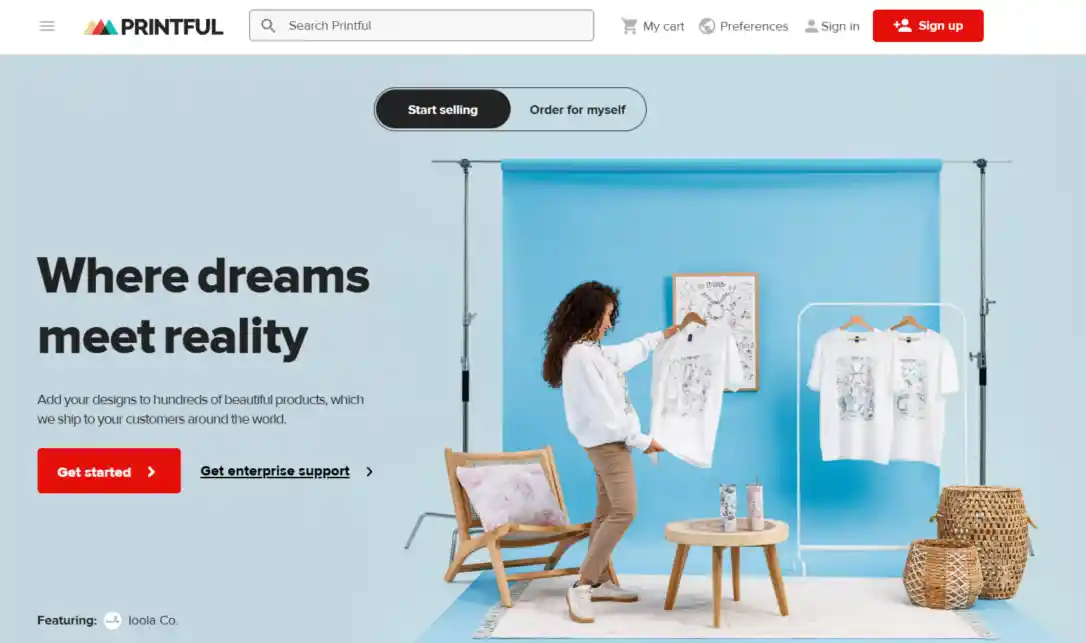
Printful is a leading print-on-demand company. It handles printing, packing, and shipping for custom apparel and many other items.
Pros:
- High product quality and consistent prints.
- Full branding options like custom labels and packaging.
- Works well with Shopify, Etsy, and other stores.
Cons:
- Higher base prices than some competitors.
- Shipping times can vary by location.
Price: Base prices start around $9–$13 for basic tees (higher than some rivals). Free plan available. Growth plan costs $24.99 per month for discounts (up to 33% off base prices) and becomes free at $12K yearly sales.
Fourthwall
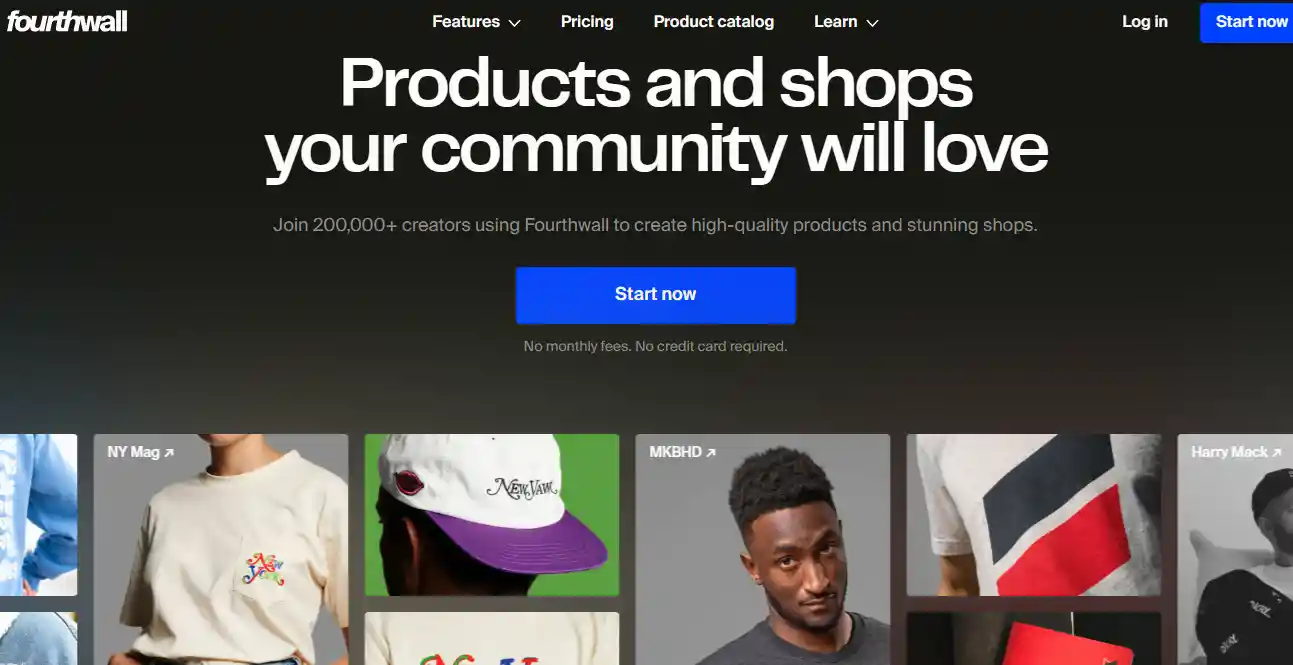
Fourthwall is a platform built for creators. It lets you sell merch, digital products, and memberships from one storefront.
Pros:
- Easy setup for creators with built-in store tools.
- Good options for custom merch and fan support.
- Handles fulfillment without needing extra setup.
Cons:
- More focused on creators than large-scale ecommerce.
- Product range is solid but not the widest available.
Price: No monthly fee on the free plan (5% fee on digital products). Pro plan costs $19 per month for unlimited products, no digital fees, and extra features.
Gelato
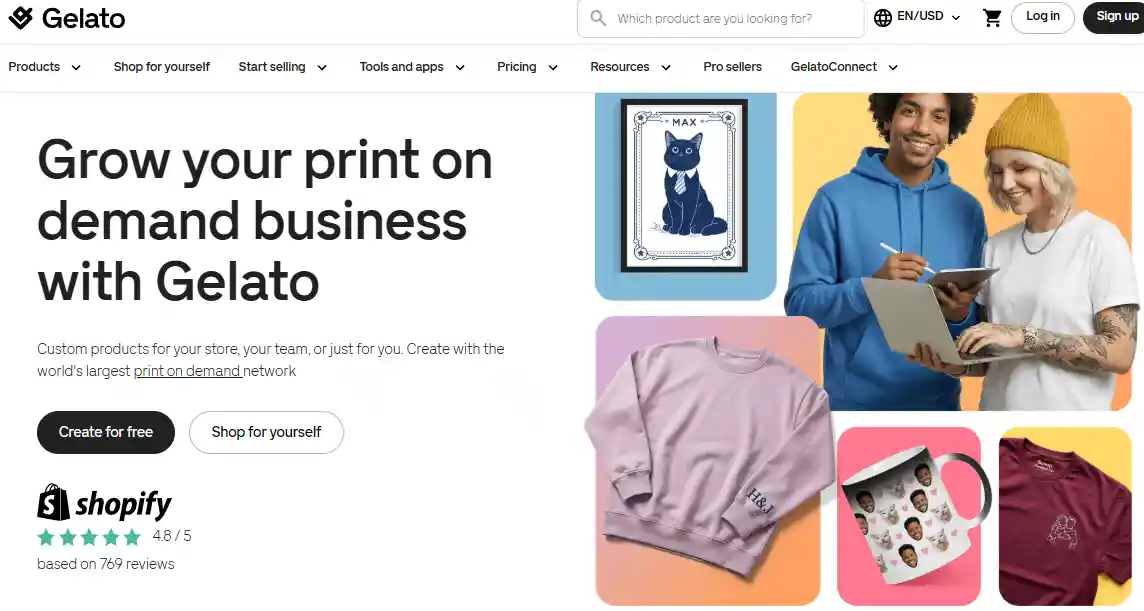
Gelato is a global print-on-demand platform with local production in many countries. It focuses on fast shipping by printing closer to customers.
Pros:
- Local printing leads to quicker delivery and lower shipping costs in many regions.
- Wide product range including apparel, wall art, and home goods.
- Easy integrations with Shopify, Etsy, and other platforms.
Cons:
- Product quality can vary by local printer.
- Base prices are sometimes higher than network-based competitors.
Price: Free to start with no monthly fee on the basic plan. Gelato+ costs $23.99 per month (or $19.99 billed annually) for up to 35% off products, better tools, and branded options.
Redbubble
Redbubble is a large online marketplace forcustom products. Artists upload designs, and the platform handles sales, printing, and shipping.
Pros:
- Huge built-in audience and traffic from the marketplace.
- Very wide selection of products like stickers, apparel, and home items.
- Simple to start—no need to build your own store.
Cons:
- Limited control over branding and customer experience.
- Platform takes a cut, and fees can reduce earnings.
- High competition makes it hard to stand out.
Price: Free to use. Redbubble takes platform fees (up to 50% on earnings for some accounts) plus excess markup fees if you set margins over 20%. You set your own artist margin.
Society6
Society6 is a marketplace for artist-designed products. It offers prints, home decor, apparel, and accessories with a focus on art and decor.
Pros:
- Strong emphasis on wall art, prints, and home items.
- Built-in marketplace traffic helps with visibility.
- Platform handles all fulfillment and customer service.
Cons:
- Low fixed royalties (around 5-10% on most products).
- Little control over pricing or branding.
- Recent updates limit artist flexibility and earnings.
Price: Free to join. Society6 sets base prices and pays fixed royalties (5-10% markup on most items). No monthly fee.
Sellfy
Sellfy is an e-commerce platform for creators. It supports digital products, subscriptions, and print-on-demand merch in one store.
Pros:
- All-in-one store for digital, physical, and POD items.
- No transaction fees on paid plans.
- Built-in tools like discount codes and email marketing.
Cons:
- Requires a monthly subscription to sell.
- POD features are solid but not as deep as dedicated providers.
- Annual sales limits on lower plans.
Price: Starts at $22 per month (Starter plan, billed annually) for up to $10K yearly sales. Higher plans cost $59 or $119 per month (annual).
Printify
Printify is a print-on-demand network that connects you to many print providers around the world. It gives you choices for price, location, and speed.
Pros:
- Low base prices on many items.
- Huge product catalog with over 1,000 options.
- Easy links to Shopify, Etsy, and other stores.
Cons:
- Quality can change depending on the provider you pick.
- More work to manage samples and provider choices.
Price: Free to start with no monthly fee. Premium plan costs $29 per month (or $24.99 billed yearly) for up to 20% off products and extra features.
Gooten
Gooten is a print-on-demand service with a wide mix of products. It uses partners for printing and focuses on flexible options.
Pros:
- Large selection including apparel, home goods, and unique items.
- Good global reach through partner network.
- Supports custom branding on some products.
Cons:
- Shipping times vary by partner.
- Less control over exact print quality.
Price: Free to use. No monthly fee. Base prices are competitive, but you pay per order.
Fine Art America
Fine Art America is a marketplace for artists to sell prints, wall art, and custom products. It focuses on framed prints, canvases, and home decor with artist uploads.
Pros:
- Huge focus on wall art and fine prints.
- Built-in marketplace with buyer traffic.
- Wide options for framing and materials.
Cons:
- Limited control over branding.
- Lower royalties and fixed base prices.
- Quality issues reported by some buyers.
Price: Free to join. Artists set markup on base prices set by the platform. Optional premium membership costs $30 per year for marketing tools and better features.
Teelaunch
Teelaunch is a print-on-demand service with a mix of apparel and unique items like drinkware and wall art. It connects to stores for dropshipping.
Pros:
- Competitive prices with a price match promise.
- Good for niche products and accessories.
- Easy setup with Shopify, Etsy, and WooCommerce.
Cons:
- Quality can vary by partner.
- Smaller catalog than the biggest names.
- Shipping times longer in some cases.
Price: Free to use. No monthly fee. Pay per order with mid-range base costs (around $11–$12 for basic tees).
Threadless
Threadless is an artist community and marketplace. Designers submit work, and the platform sells custom apparel and items through its site or artist shops.
Pros:
- Strong artist community and voting system.
- Built-in traffic from the marketplace.
- Options for your own artist shop storefront.
Cons:
- Limited control over pricing in some cases.
- Competition is high for visibility.
- Lower margins on marketplace sales.
Price: Free to join. Platform sets base prices; you add markup for profit. Artist Shops let you set prices or use auto-pricing. No monthly fee.
Apliiq
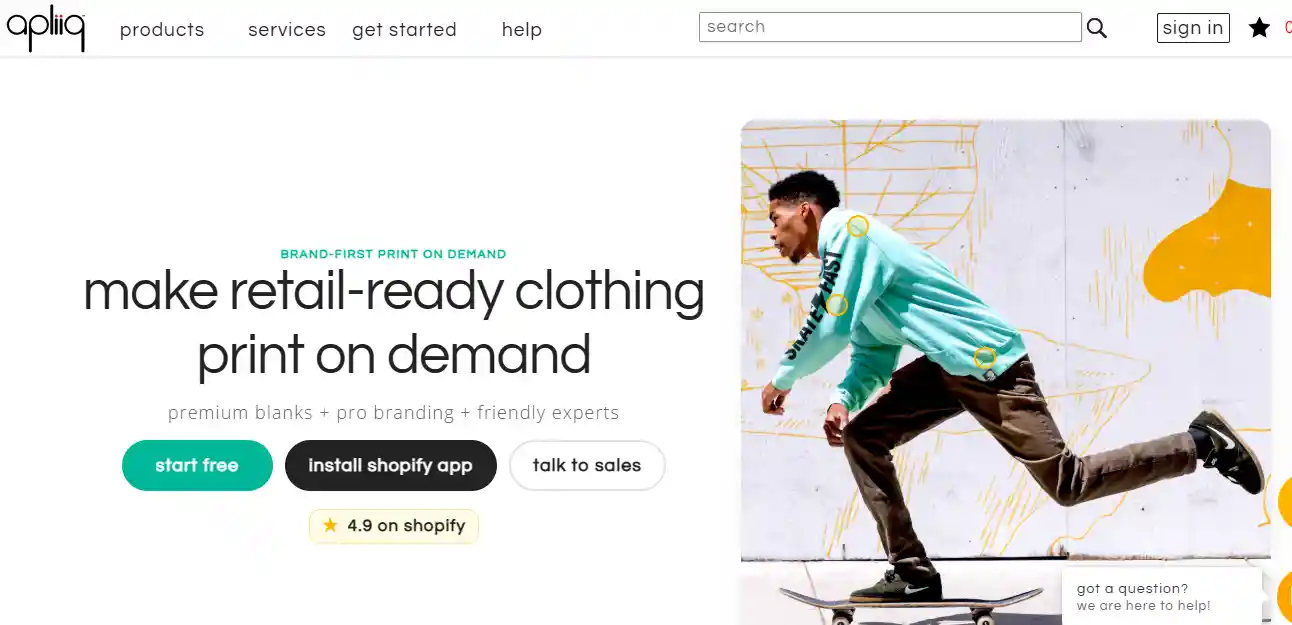
Apliiq focuses on premium apparel with deep branding. It offers custom labels, embroidery, patches, and private-label options for streetwear and fashion brands.
Pros:
- High-quality blanks and materials.
- Full branding like woven tags and neck prints.
- Bulk discounts for larger orders.
Cons:
- Higher base prices.
- Slower fulfillment (7–10 days for branded items).
- Limited to apparel and accessories.
Price: Free to start. No monthly fee. Base costs higher (e.g., $7–$12 for tees, $20–$30 for hoodies). Pay per order plus extras for branding.
CustomCat
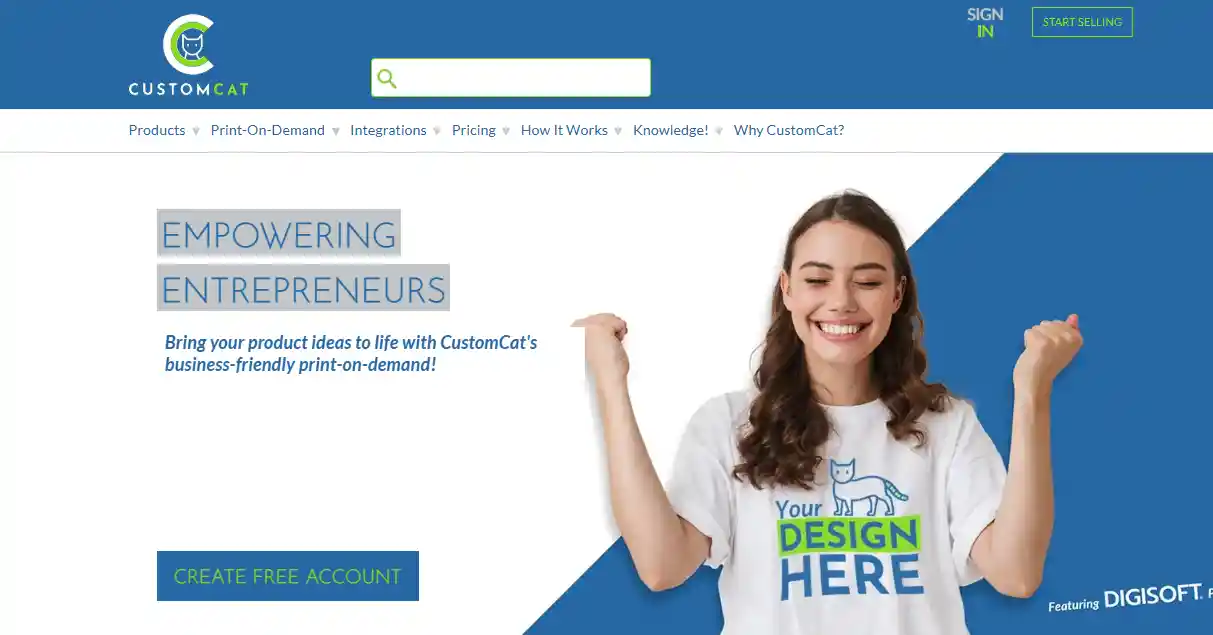
CustomCat is a print-on-demand provider with a large catalog of apparel, accessories, and home items. It offers fast US production and integrations.
Pros:
- Low to mid-range prices with volume discounts.
- Wide product selection including branded goods.
- Quick turnaround (2–6 days for most orders).
Cons:
- Quality varies on some items.
- Slower international shipping.
- Basic design tools.
Price: Free plan available. Pro plan costs $30 per month for 20–40% off base prices and better support. Base costs competitive (e.g., around $9–$11 for tees on paid plan).
How to Choose the Best Alternative for your POD business
Your Product Needs and Niche Fit
Focus on what you sell most. If you do streetwear or branded apparel, pick platforms with strong quality blanks and customlabels. For mugs, posters, or phone cases, go for ones with deep catalogs in those areas.
Order samples right away—feel the fabric, check print vibrancy after washing. A long product list means nothing if the items look cheap or fade fast.
Look Hard at Print Quality and Consistency
Bad prints kill trust. Some platforms keep things steady with their own facilities, while others rely on partner networks, which can mean great prices but uneven results. Check recent seller reviews from 2026.
Ask: Will this hold up during big sales seasons? Consistency turns buyers into repeat customers.
Check Shipping Speed and Global Reach
Fast delivery keeps customers happy. Choose providers with local printing in your main markets for 3–7 day shipping. Global sellers should look for networks that reduce customs delays and costs. Test real shipping to your top countries. Lower landed costs (price + shipping) often beat the cheapest base price.
Compare Pricing, Margins, and Hidden Fees
Base costs are just the start. Paid plans can cut prices by 20–40%, which boosts your margins a lot. Watch for monthly fees, sales cuts, or branding extras. Run quick math on a typical $25 sale. Pick one that lets you keep more as you grow.
Think About Branding Control and Store Setup
Your brand should feel like yours. Look for custom packaging, neck tags, or hang tags—these make unboxings memorable.
Easy integrations with Shopify, Etsy, or WooCommerce save time. Built-in storefronts work well for creators; full control suits bigger brands.
Factor in Support and Scalability
Good support matters when prints go wrong or orders delay. Test their response time early. Choose a platform that handles growth—volume discounts, reliable rush orders, or easy scaling. The best one feels dependable, not stressful.
Test a couple platforms with small orders. The right fit makes running your POD business easier and more profitable.

Things to Keep in Mind When Switching POD Platforms
Check Product Quality First
Order a few samples before you commit. Prints might look good online but fade after washing, or colors can change on fabric.
Test your main designs like tees or hoodies. Skipping this step often leads to bad reviews later. Samples help you spot issues early and protect your brand.
Look at Profit Margins Closely
Compare base prices and fees for your top products, plus shipping to your customers. What looks cheaper can hide extra costs or slow payouts.
Run quick numbers from your recent Spring sales. Better margins let you spend more on ads or discounts while still making money.
Think About Branding and Control
Check if the platform offers custom labels, inserts, or tags. These small details help customers remember your brand instead of the POD site.
Good integration with Shopify or Etsy also saves time on orders. More control turns casual buyers into repeat fans.
Plan the Move Step by Step
Avoid deleting old listings too soon.
- Add new designs and test links quietly.
- Update your bio, emails, or pins slowly.
- Keep old products live until new ones sell well.
- Tell your fans about the switch.
A gradual move keeps sales steady and prevents confusion.
Watch Shipping and Support
Look for fast delivery with local printing in your main markets. Read recent reviews about support speed – quick help matters when orders go wrong.
In 2026, reliable shipping and good support cut refunds and build better reviews. Pick what fits your current setup.
Tips to Match Your Merch Strategy to Your Niche
Know Your Audience Inside Out
Pin down exactly who buys from you—their age range, hobbies, daily routines, and favorite platforms like TikTok or Reddit.
For example, if your niche is urban gardeners, note they care about eco-friendly materials and practical items. This detail shapes every decision so your merch feels made for them, not generic.
Match Products to What They Prefer
Figure out if your group wants tees, hats, tote bags, or phone cases more. Look at their design tastes—clean minimalist for one niche, bold graphics for another—and check price points they accept without hesitation.
Aligning here means fewer returns and designs that sell faster because they fit real wants.
Pick Products That Suit Their Life
Build around core everyday items like comfy hoodies for cozy niches, then add limited drops tied to events or seasons.
Offer bundles that solve small problems, like a mug plus sticker set for coffee-loving creators. Choose pieces that match their habits—durable for active groups or collectible for fandoms.
Decide on Sales Channels Carefully
Go direct-to-fan with your own store if your niche values personal connection and custom touches. Use marketplaces for quick exposure if reach matters more.
Prioritize platforms with fast shipping to your main locations since slow delivery kills trust in niche communities.
Tailor Promotion and Test Often
Promote where your audience already spends time—short clips on one platform, detailed posts on another. Tie launches to community events or trends they follow.
Run small tests on designs or pricing, track what gets engagement and sales, then adjust quickly based on actual results to keep things working.
Read More:
- Redbubble vs Teespring: Which Is Best for Your Business?
- 17 Best Printify Alternatives for Print on Demand Business
Expert Tips
You now have a solid list of Teespring alternatives to explore in 2026. Each one brings something useful—whether it's lower costs, faster shipping, better quality, or easier branding.
Test a few products. See what works for your audience.
The right choice makes selling merch feel smooth and fun. You get more control, happier customers, and better profits over time.
Go ahead and try one today. Your next drop could be your best yet. You've got this.
FAQs
Is Teespring worth selling on?
Teespring (now Spring) works well if you have a big audience already. It's easy to start, but low profits and slow support make it less ideal for long-term growth.
Do you actually make money with Teespring?
Yes, many sellers earn money, especially with strong promotion. Profits stay small due to high base costs and fees. Better margins come from other platforms as you scale.
What is the best Teespring alternative?
There is no single best one. It depends on your niche. PrintKK, Redbubble, and Gelato often stand out for quality, pricing, and fast shipping in 2026.
Is it better to sell on Redbubble or Teespring?
Redbubble gives you more passive reach and handles everything. Teespring offers better control over pricing. Choose Redbubble for ease or Teespring for active fan sales.
What is the best platform to sell shirts on?
The top choice varies by your goals. Printify or Printful lead for custom control and profits. Shopify with POD integration often wins for building your own brand.


 Global Shipping
 Made in USA
 Free shipping