





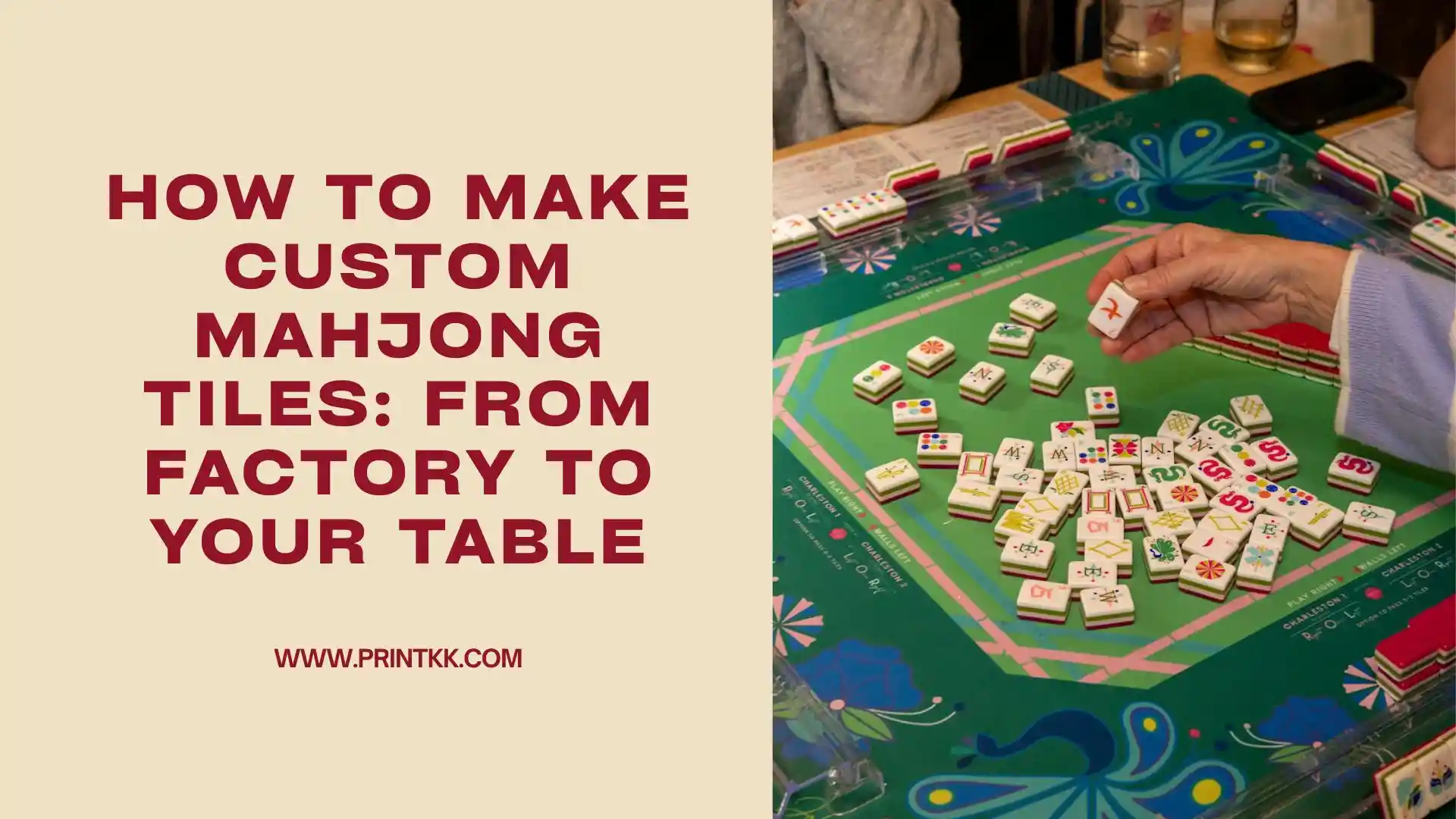
There's something about that clean, sharp click of tiles knocking together at the start of a game. The weight of each piece settling into your hand, the smooth slide across the table, the satisfying clack as you stack the wall. If you've played on a great set, you know that feeling stays with you.
Maybe you've started thinking about a set of your own, with colors, characters, or a family logo that means something to you.
This guide walks you through how to make custom mahjong tiles, from choosing the right material at the factory to holding the finished set in your hands at home.
How to Make Custom Mahjong Tiles: Every Step Explained
Step 1: Pressing and Molding (About 1 Day)
This is where your tiles begin their life. Before anything fancy happens with colors or designs, we need to build a strong, stable base.
A weak blank tile means problems down the road—warping, cracking, or uneven surfaces that ruin the finished product. Get it wrong here, and nothing you do later can fix it.
The exact method depends on which material you pick:
- Melamine tiles are made with high-temperature heat pressing. The material gets molded into one solid piece in a single shot, which makes them super dense and tough.
- Acrylic tiles start as flat sheets that get cut and shaped into tile blanks. This gives them that clean, modern look people love.
Either way, the goal is the same: a perfect, uniform base ready for the next step.
Step 2: Printing (About 1 Day)
Once the blank tiles are ready, it's time to bring your custom design to life. We use UV printing to lay down your artwork directly on the tile surface with super sharp detail. This is a bigger deal than it sounds.
Some cheap factories take a shortcut and just slap stickers on top of plain tiles—and stickers peel, fade, and start looking tacky after just a few games.
At PrintKK, we do it the right way with our "print first, then cut" method. That means your design becomes part of the tile itself, not a thin layer stuck on the surface.
The colors come out bright and accurate, the edges never peel, and the finish holds up game after game. Years from now, your tiles will still look like the day you got them.
Step 3: Layer Bonding and Curing (About 2 Days)
Now the tile and its printed design need to become one solid piece. This step is all about locking everything together so your tiles never come apart, no matter how many times they get shuffled, stacked, or slammed down during a heated game.
Rushing this step is the number one reason cheap mahjong sets start peeling or chipping after a few months—and it's exactly why we give it a full two days.
For melamine, heat pressing fuses the print and the material into a single bonded piece. For acrylic, we use a mix of bonding adhesive and UV curing to seal the layers together.
Then the tiles sit and fully cure. Done right, this is what makes the difference between tiles that last for years and tiles that fall apart by next Thanksgiving.
Step 4: Cutting (About 1 Day)
With printing and bonding done, the big molded blocks or sheets get cut down into individual tiles.
It sounds like the simplest step, but this is what decides how neat your tiles look when lined up on the table. If even one tile is a hair too big or too small, the whole wall looks crooked when you build it—and you'll notice it every game.
To be honest, tiny cutting errors are something every mahjong factory deals with—it's just the nature of the craft. What sets us apart is how seriously we take it.
PrintKK works hard to keep those errors as small as possible, because that uniform feel is one of the quiet details that separates a premium custom set from a cheap import.
Step 5: Polishing (5-7 Days)
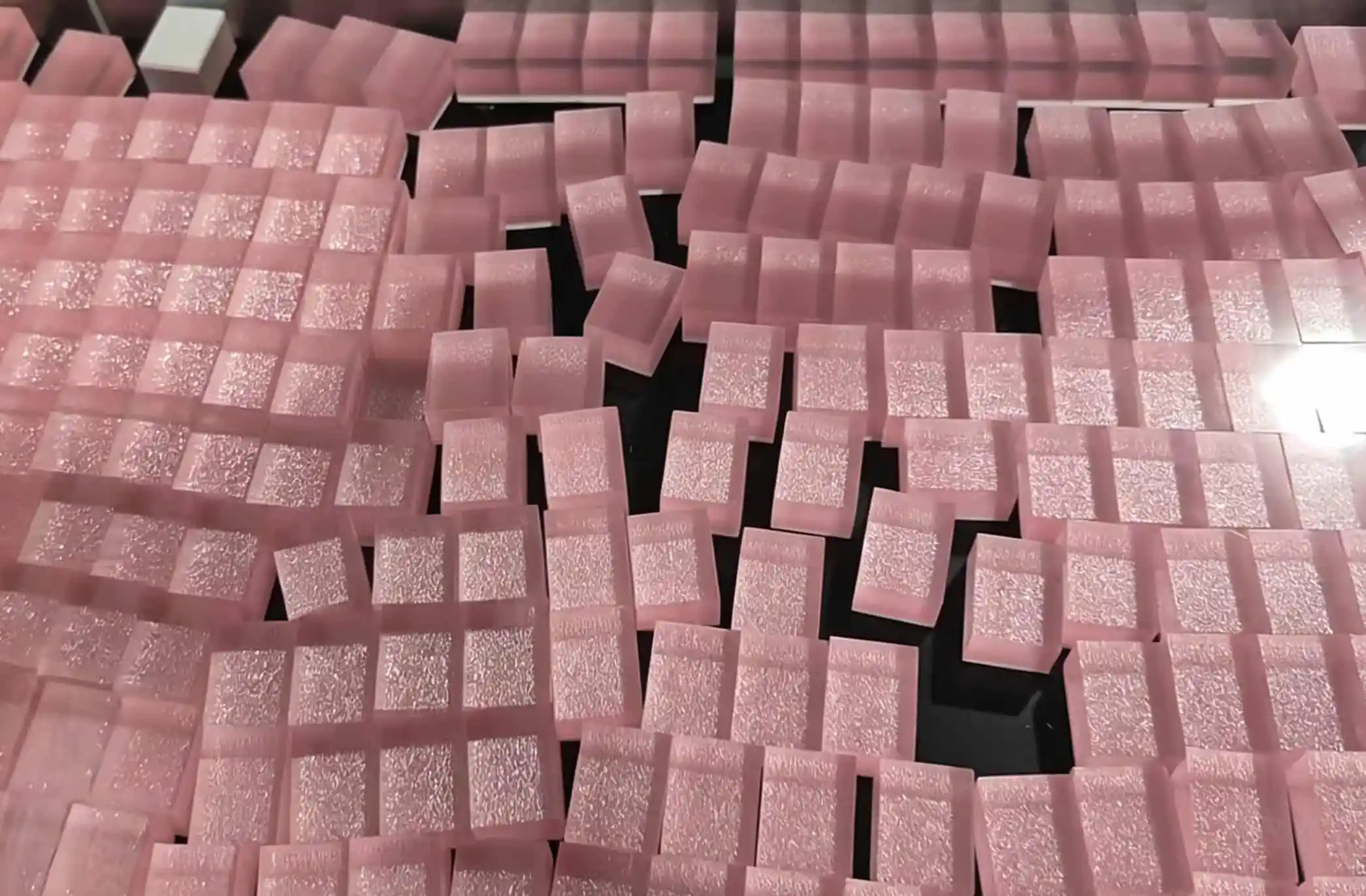
This is the longest step in the whole process—and for good reason. Polishing is what gives mahjong tiles that smooth, warm feel that makes you want to keep touching them. Rush it, and you end up with sharp edges and tiles that just don't feel good in your hand.
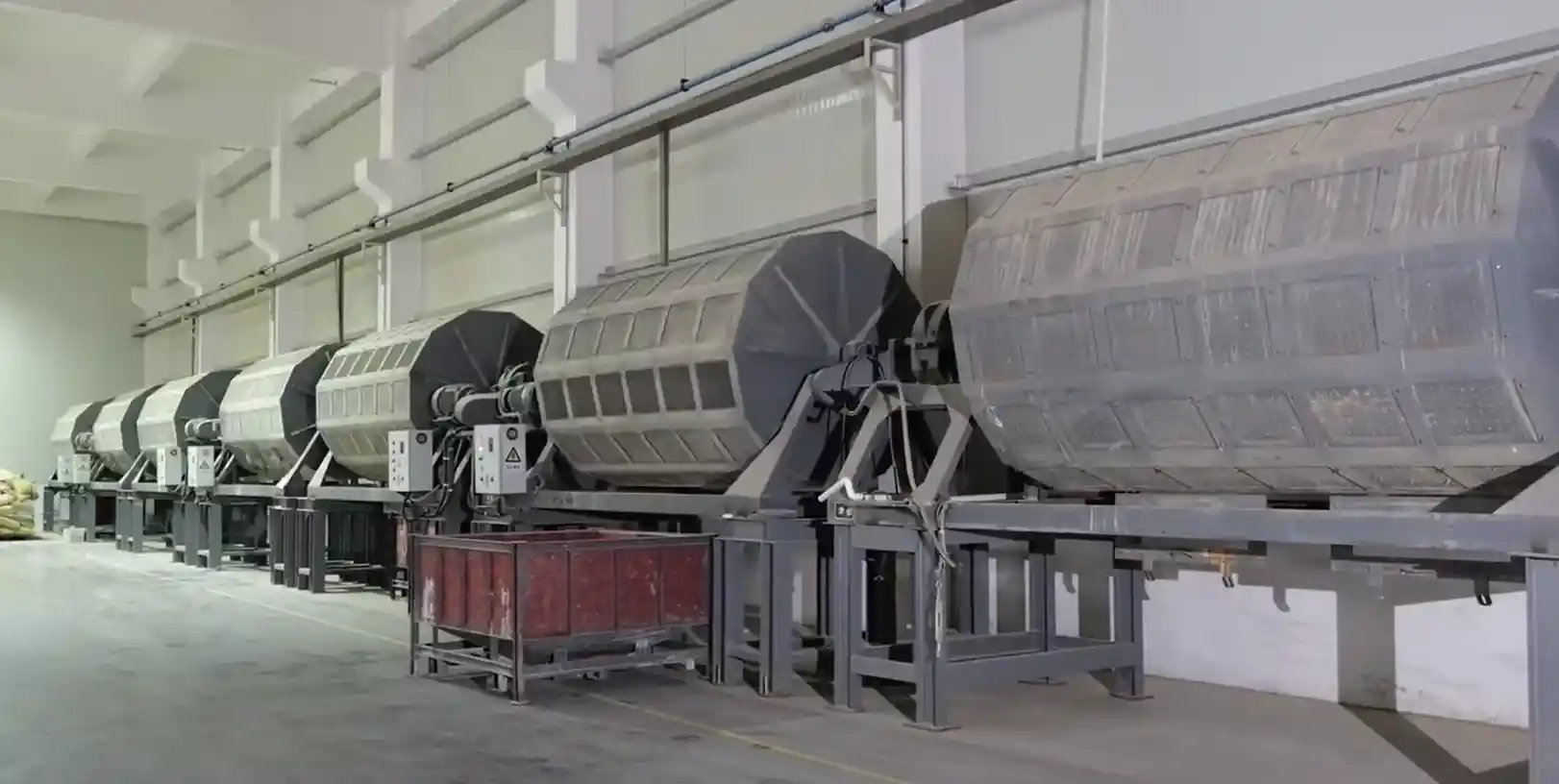
The industry calls this "tumble polishing." Tiles go into a giant rotating drum along with polishing media—ceramic chips, walnut shells, and polishing wax. The drum spins slowly, and the gentle friction smooths every edge through four stages: coarse, medium, fine, and a final gloss.
Some factories rush through this in 2-3 days. PrintKK takes a full 7. Why so much longer?
- The drum has to spin slowly. Too fast, and tiles smack into each other, leaving scratches and chipped corners.
- Consistency takes time. Every tile in the set needs to feel exactly the same—and patience is the only way to get there.
That extra time is exactly why our tiles feel different the moment you pick them up.
Step 6: Sorting (About 1 Day)
Here's a detail most people don't think about. Polishing happens in bulk, so your custom tiles get mixed in with everyone else's during the tumbling process.
Once polishing wraps up, someone has to physically pull each set back out and reunite it as one complete order.
This is also our first real quality check. As tiles get sorted, anyone with surface flaws, weird sizing, or other issues gets pulled out right there.
Only the tiles that look great move on to engraving. It's a small step, but it keeps problems from making it any further down the line.
Step 7: Engraving (1-2 Days)
Now we add the deeper details that make your tiles feel like real mahjong tiles—not just printed surfaces. We use laserengraving to carve the character outlines and design grooves into each tile with pinpoint accuracy. The depth of this engraving matters more than you'd think.
If the grooves are too shallow, the color you add next won't stick well and will wear off over time. Too deep, and the tile loses strength around the edges.
We carefully control depth and edge consistency on every tile so the characters look crisp and stay sharp for years. This is also what gives the tiles a slight tactile feel when you run your finger across the surface—that subtle texture that says "real quality."
Step 8: Coloring (1-2 Days)
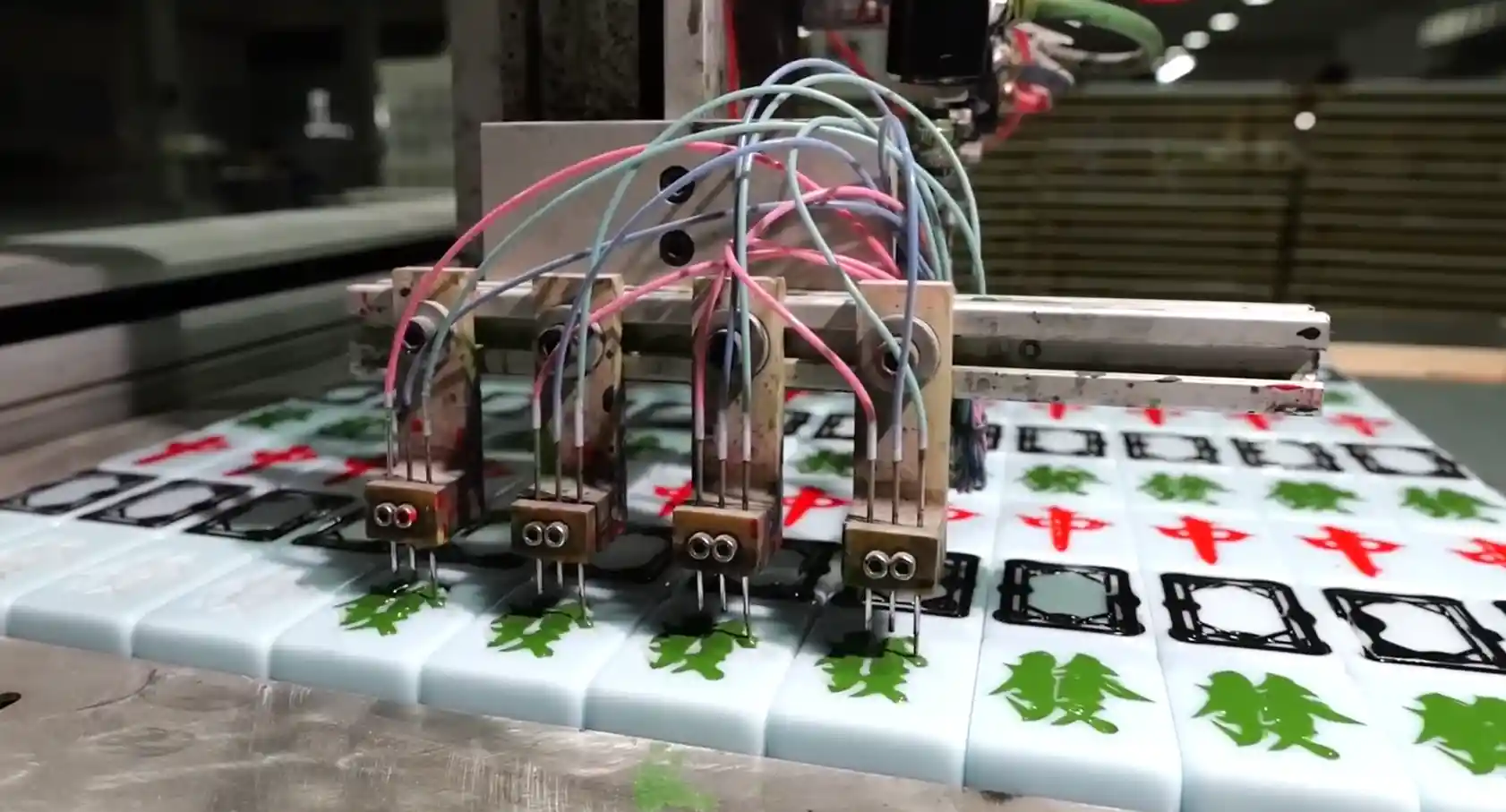
This is where the engraved characters and designs really come to life. Color fills get pressed into the engraved grooves, then locked in place with UV curing or oven baking.
Because the color sits inside the grooves instead of on top of the surface, it can't rub off or fade like a printed-on color would.
A final coat of polish oil seals everything in. The result is rich, sharp coloring that stays vivid through years of regular play.
No fading after a few months, no smudges from oily fingers, no flaking at the corners. Just clean, lasting color that looks as good on game night 500 as it did on day one.
Step 9: Quality Check and Packaging (1-2 Days)
Before your tiles head out the door, they go through not one but two rounds of quality checks. We'd rather catch a problem here than have you find it at home.
- First check (production team): Measures every set for size, weight, and visual consistency. Any tile that doesn't match its set perfectly gets pulled.
- Second check (order team): Reviews the set as a whole—are all 166 tiles there, are the patterns clear, is anything off? This is the final safety net.
If a tile fails either check, it's out. And if a whole set has problems, we'll remake it before shipping.
Once everything passes, the tiles get shrink-wrapped to keep them clean and scratch-free, then boxed up and labeled for shipping. From here, they're on their way to your table—ready for many years of great games.
What Makes a Mahjong Tile Feel Premium
1. A Smooth Touch
The smoothness of a premium tile comes from time in the polishing drum. Run your finger across it and it glides, with no tiny ridges to catch on.
Two tiles made from the same acrylic can feel completely different depending on how long they were polished. The material matters less than the finishing time.
2. A Clean, Solid Sound
Every material has its own sound. When two well-made tiles meet, the result is short and clean — one note, not a buzz. Cheap tiles often sound thin or hollow because of tiny air pockets or flaws inside the material.
Some experienced players can actually hear a cracked tile before they see it. Listen to a full shuffle. A premium set sounds like one steady rhythm, not a mix of mismatched parts.
3. The Right Amount of Weight
Weight isn't just about feeling expensive. It controls how the tile moves when you place it, flick it, or stack it. Too light, and the tile drifts when you tap it. Too heavy, and your wrist gets tired by hour two.
Premium sets are weighted within a narrow range — sometimes within fractions of a gram — so every tile responds to your hand the same way. That's what makes a set feel professional before you can explain why.
4. Smooth, Rounded Edges
Edges do more than feel nice under your thumb. They decide how tiles behave when they slide against each other. Rounded edges let tiles glide and self-align as you shuffle, which is why a quality set sounds rhythmic and stays neat on the table.
Sharp or uneven edges catch and scatter. The exact curve is shaped during polishing, and the longer the tiles tumble, the more refined that radius becomes.
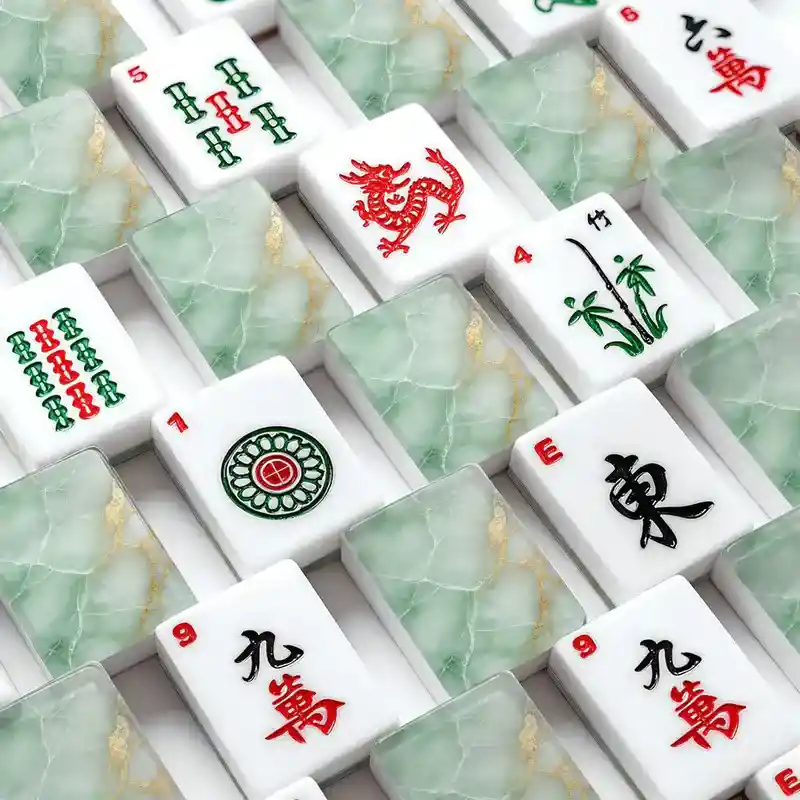
Custom Printed on Demand Mahjong Tiles Set (Double-Sided Design) - Games & Crafts - PrintKK
The Advantages of Acrylic for Custom Mahjong Sets
Cast Acrylic Is Built for the Job
Ask your factory for cast acrylic, not extruded. Cast acrylic holds tighter tolerances, usually within 0.1mm, so every tile in your set lines up when you build the wall. With 166 tiles per set, tiny size differences add up fast.
The Sound Matters More Than You'd Guess
Mahjong players care about the click. Acrylic in the 20-26mm thickness range gives you a clean, sharp sound, somewhere between dull wood and harsh ABS. If you're picky about this, ask the factory for a sound sample before committing.
Two-Color Engraving Opens Up Real Customization
This is where acrylic does something most materials can't. You can order two-layer tiles, like a white top with a red core. When the factory engraves the character, the cut reveals the second color underneath.
No paint, no ink, no fading. You pick the combo, which is how people get navy backs with gold characters or jade green with cream symbols.
CNC Cutting Handles Detailed Designs
If you want a family crest, logo, or custom art on the tile backs, acrylic takes CNC milling and laser engraving down to about 0.2mm of detail. Bone splinters at that level and ceramic chips. You can put a detailed dragon on a 20mm tile and still read every line.
It Holds Up to Mahjong-Specific Wear
Tiles get shoved across mats and knocked together thousands of times. Since the color runs all the way through acrylic, a scratch on a red tile still shows red. Ask for a 1-2mm bevel on the corners. It spreads impact and keeps the edges from chipping after heavy use.
Color Consistency Across a Full Set
A serious factory will run your whole order from one batch of acrylic, so all 166 tiles match. Dyed bone and stained wood often vary piece to piece. If you're matching a Pantone color or a family scheme, acrylic gets you closest.
Lower Cost Lets You Spend on Details
Acrylic costs less per tile than bone, resin composites, or hand-finished bamboo. That frees up budget for the parts of the set you'll actually notice day to day, like a custom case, thicker tiles, or upgraded engraving.
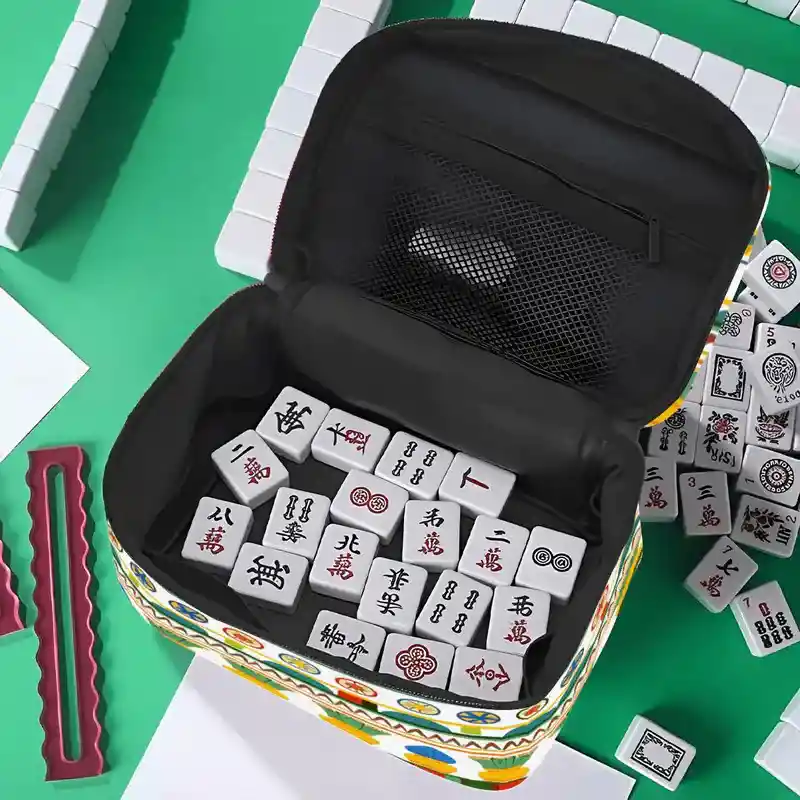
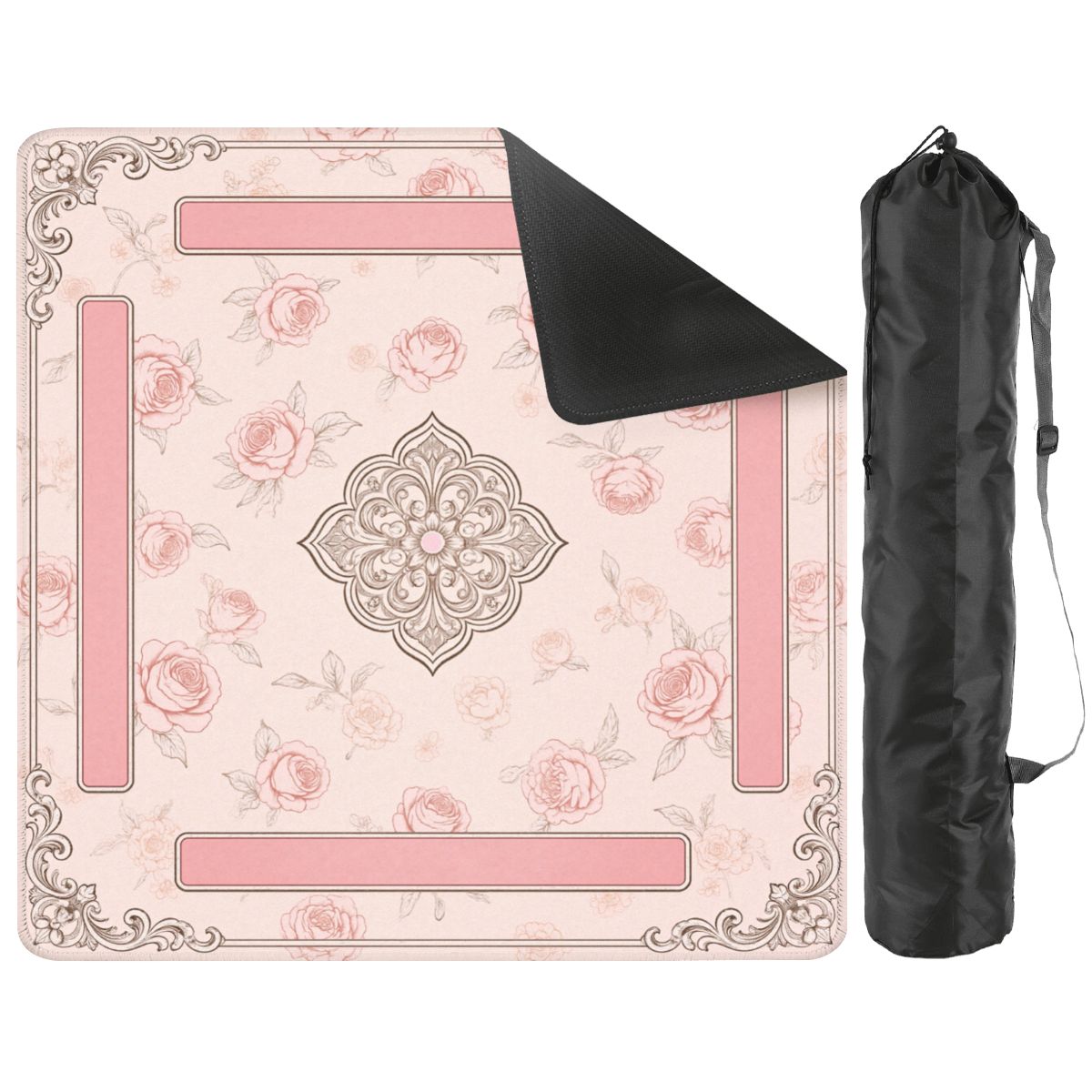
Custom All Over Print on Demand Portable Mahjong Bag - PrintKK
How PrintKK Applies Every Step to Your Order
Custom Designs, Not Cookie-Cutter Tiles
PrintKK handles full customization on patterns, text, and logos—family crests, company logos, wedding dates, or original artwork from scratch.
Because the design gets UV-printed directly into the tile (not stuck on as a sticker), it becomes part of the tile itself. No peeling, no fading.
Premium Acrylic as the Standard
PrintKK utilizes premium-quality acrylic coupled with UV printing and laser engraving, which make the best solutions for all problems associated with low-end mahjong tiles.
The use of premium acrylic makes the tiles look good, be heavy-weighted, and give a smooth surface. This material is not going to warp, scratch, and turn yellow, unlike cheap plastic materials which do.
Apart from that, UV printing prevents colors from fading while laser engraving ensures that all characters are equally deep on all 166 tiles.
Order Just One Set—Yes, Really
Most mahjong factories require minimum orders of 50, 100, or even 500 sets, which puts custom tiles out of reach for regular people who just want one nice set.
PrintKK is currently the only manufacturer offering single-set customization:
Single-sided customization: 1 set minimum—perfect for a gift, wedding favor, or personal collection.
That single-set option is what makes custom mahjong tiles accessible to real players, not just bulk buyers.
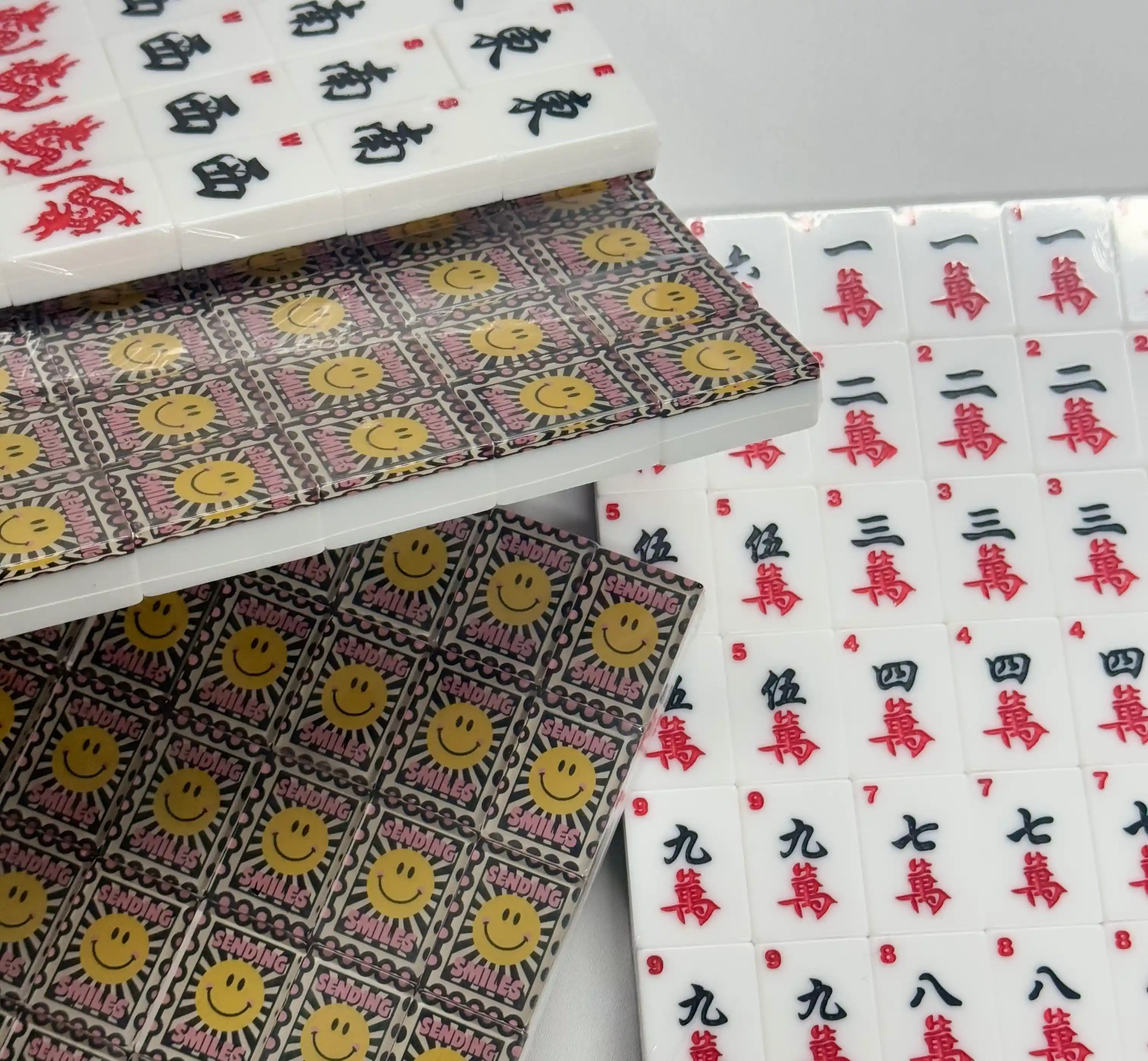
Custom Printed on Demand American Mahjong Tiles - Games & Crafts - PrintKK
Ready to Create Your Custom Mahjong Set?
Now you know what separates a good mahjong set from an average one. The smooth surface, the clean sound, the balanced weight, and the rounded edges all come from time, the right material, and careful finishing — not luck.
That's really what how to make custom mahjong tiles comes down to: understanding why each step matters before you order.
If you have a design in mind — a logo, a memory, a gift idea — PrintKK can build a set around it. Reach out to ask about samples, minimum orders, or just share your idea and see what's possible. A set made with this much care should be one you actually want to keep.
FAQs
Can I use my own logo or design for the tiles?
Yes, you can. Just send your logo or artwork to the factory. They'll print or engrave it right onto the tiles for a unique look.
What is the best material for mahjong tiles?
Acrylic is a top choice. It's lightweight, smooth, and easy to clean. Some also like resin or bamboo, but acrylic works great for custom sets.
Are custom acrylic mahjong sets durable?
Absolutely. Acrylic tiles resist cracks, chips, and fading. They stay bright and smooth even after many game nights with friends and family.
How long does it take to manufacture a custom acrylic mahjong set?
Usually 2 to 4 weeks. The factory needs time to carve or print your design, check quality, and pack the set before shipping it to you.
What is the minimum order quantity for custom acrylic mahjong sets?
PrintKK allows you to order just one set. That's perfect for personal gifts or family use. Larger orders might get you a better price per set.

 Global Shipping