






Voici le Guide du débutant 2026 pour vendre sur Walmart Marketplace.
Walmart Marketplace permet aux vendeurs tiers de répertorier des produits aux côtés de l'inventaire propre de Walmart, atteignant des millions de clients qui font confiance à la marque Walmart.
Il est particulièrement adapté aux vendeurs établis dans l'impression à la demande, les produits personnalisés et d'autres catégories de commerce électronique cherchant à étendre leur portée sur le marché américain.
Ce guide couvre la présentation de la plateforme, les exigences pour les vendeurs, le processus de candidature, les stratégies d'approbation et les étapes clés pour commencer.
Qu'est-ce que le Marketplace de Walmart ?
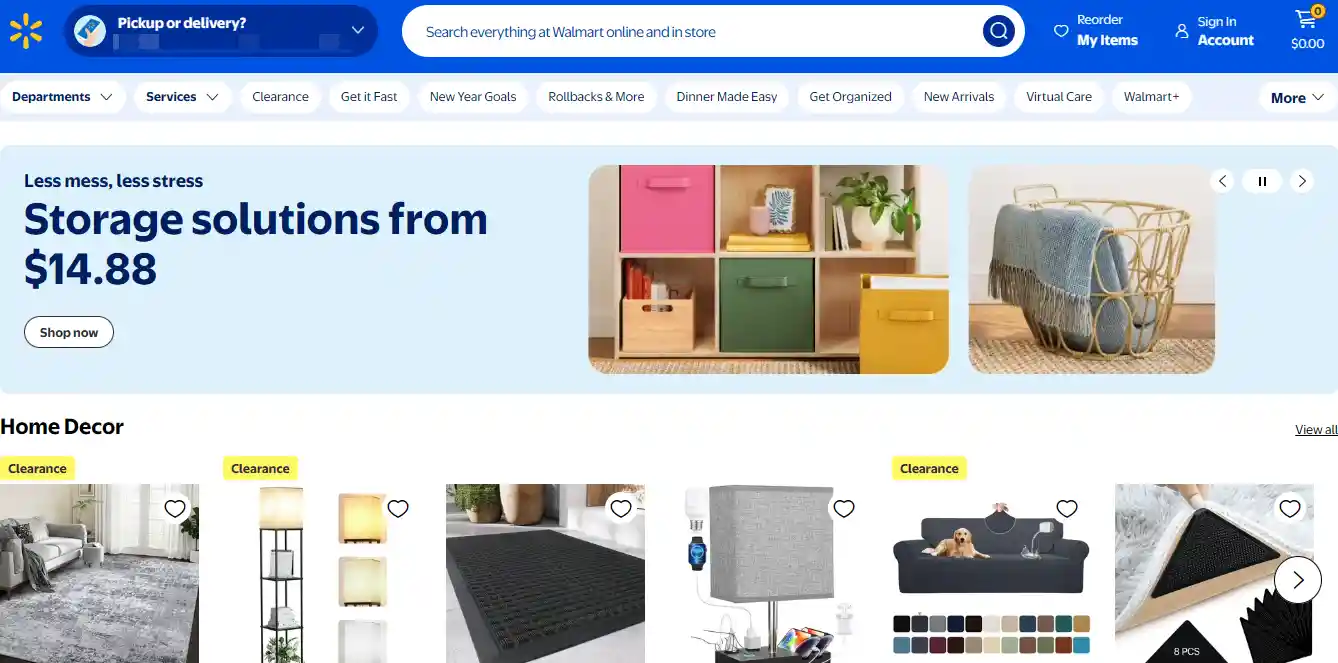
WalmartMarketplace est une plateforme en ligne dynamique où les entreprises peuvent vendre leurs produits aux côtés de l'inventaire propre de Walmart. C'est une arène numérique qui connecte les vendeurs à une clientèle vaste et diversifiée, offrant une large gamme de produits provenant de diverses catégories.
Ce marché est particulièrement attrayant pour les entrepreneurs et les propriétaires de petites entreprises, ainsi que pour les designers, les artistes et les grandes organisations, en raison de sa large portée et de la réputation de Walmart en tant que marque de vente au détail de confiance.
Pour ceux qui cherchent à développer leur présence en ligne, Walmart Marketplace offre une opportunité d’atteindre un large public engagé. Son intégration avec la logistique robuste et le service client de Walmart offre une expérience d’achat fluide, ce qui en fait une option lucrative pour les vendeurs.
La plateforme est particulièrement bénéfique pour ceux du secteur de l'impression à la demande, offrant un vaste marché pour des produits uniques et personnalisés.
Pourquoi vendre vos produits sur Walmart Marketplace ?
Vendre vos produits sur Walmart Marketplace offre plusieurs avantages stratégiques, en particulier pour les entreprises du secteur de l'impression à la demande.
La vaste et diverse clientèle de Walmart représente une opportunité en or pour augmenter les ventes et la visibilité de la marque. En référençant des produits sur cette plateforme, vous pouvez atteindre un large public qui pourrait ne pas être accessible par d'autres canaux.
La réputation de Walmart en tant que géant de la distribution digne de confiance confère de la crédibilité à vos produits. Ce facteur de confiance peut être déterminant pour convaincre les clients de choisir vos offres plutôt que celles des concurrents.
Walmart Marketplace offre un environnement structuré mais flexible permettant aux vendeurs de développer leur activité. Grâce à l'accès aux analyses approfondies et aux informations clients de Walmart, vous pouvez prendre des décisions éclairées pour optimiser vos stratégies de vente et vos offres de produits.
Cet environnement est propice aux entrepreneurs, aux concepteurs et aux propriétaires de petites entreprises qui cherchent à étendre leur portée dans le paysage du commerce électronique.
Comment fonctionne la Marketplace Walmart ?
Les vendeurs du marché sur Walmart sont des entreprises indépendantes utilisant le trafic massif de clients et l'infrastructure de la plateforme Walmart pour l'ensemble de la plateforme.
Une fois répertoriés et approuvés, les produits sont rendus visibles aux acheteurs sur Walmart.com et l'application Walmart, où les clients peuvent passer des commandes directement via le système de paiement fourni par Walmart.
Les vendeurs sont responsables de la gestion de leurs annonces, de la fixation des prix, de la gestion des stocks et des retours d’expédition, ainsi que de la fourniture du service client.
Les commandes peuvent être traitées via les propres systèmes logistiques du vendeur ou par l'utilisation des services de traitement Walmart (WFS), qui gèrent l'entreposage, l'expédition et les retours au nom du vendeur.
Walmart soutient les opérations quotidiennes avec des tableaux de bord de performance, des analyses de ventes et des outils de gestion des stocks. Ces informations aident à optimiser les annonces, à maintenir des standards de niveau de service et à améliorer le taux de conversion.
Walmart se concentre sur la livraison rapide, des descriptions précises et la satisfaction client, ce qui fait de la cohérence opérationnelle un facteur de réussite.
Ce modèle permet aux vendeurs de l'impression à la demande et du commerce électronique de développer leurs activités sans dépendre du commerce de détail physique. Avec des partenaires de traitement fiables et des catalogues de produits conformes, les vendeurs peuvent étendre leur portée efficacement en respectant les normes strictes du marché de Walmart.
Quels sont les critères de Walmart pour inviter de nouveaux vendeurs ?
Walmart Marketplace a des critères spécifiques pour inviter de nouveaux vendeurs, en mettant l'accent sur la garantie d'une expérience d'achat de haute qualité pour ses clients. Les facteurs clés incluent :
- Qualité et conformité du produit: Les produits doivent répondre aux normes de qualité de Walmart et se conformer à toutes les réglementations pertinentes.
- Prix compétitifs: Les prix doivent être compétitifs, offrant de la valeur aux clients de Walmart.
- Excellence opérationnelle: Les vendeurs ont besoin de capacités opérationnelles robustes, y compris une exécution efficace des commandes, une gestion des stocks et un service client.
Walmart recherche des vendeurs ayant fait leurs preuves sur les places de marché et bénéficiant de retours clients positifs. Cela reflète l'engagement de Walmart à maintenir sa réputation en tant que plateforme de vente au détail de confiance.

Quelles sont les exigences pour rejoindre Walmart ?
Les vendeurs potentiels doivent avoir un historique de réussite sur les places de marché ou dans le commerce électronique. Walmart examine attentivement vos performances de ventes passées pour évaluer votre capacité à offrir un excellent service client et à exécuter les commandes avec une grande efficacité.
Votre entreprise doit maintenir l'intégrité de son catalogue de produits avec la conformité UPC pour tous les articles répertoriés. Cela garantit que les fiches produits sont exactes, améliorant ainsi l'expérience d'achat des clients.
Tous les candidats doivent disposer de systèmes de traitement des commandes robustes pour gérer efficacement les commandes. Walmart exige un historique de livraisons ponctuelles et une gestion professionnelle des retours, ce qui est essentiel pour maintenir la satisfaction des clients et respecter leurs normes de service.
Comment obtenir l'approbation pour vendre sur Walmart étape par étape ?
Obtenir l'approbation pour vendre sur Walmart Marketplace nécessite plus que de remplir une demande. Walmart accorde la priorité à la satisfaction client, à la fiabilité opérationnelle et à la qualité des vendeurs sur le long terme.
Pour réussir, les vendeurs doivent démontrer que leur entreprise répond aux normes de Walmart en matière de conformité, d'exécution et d'expérience client.
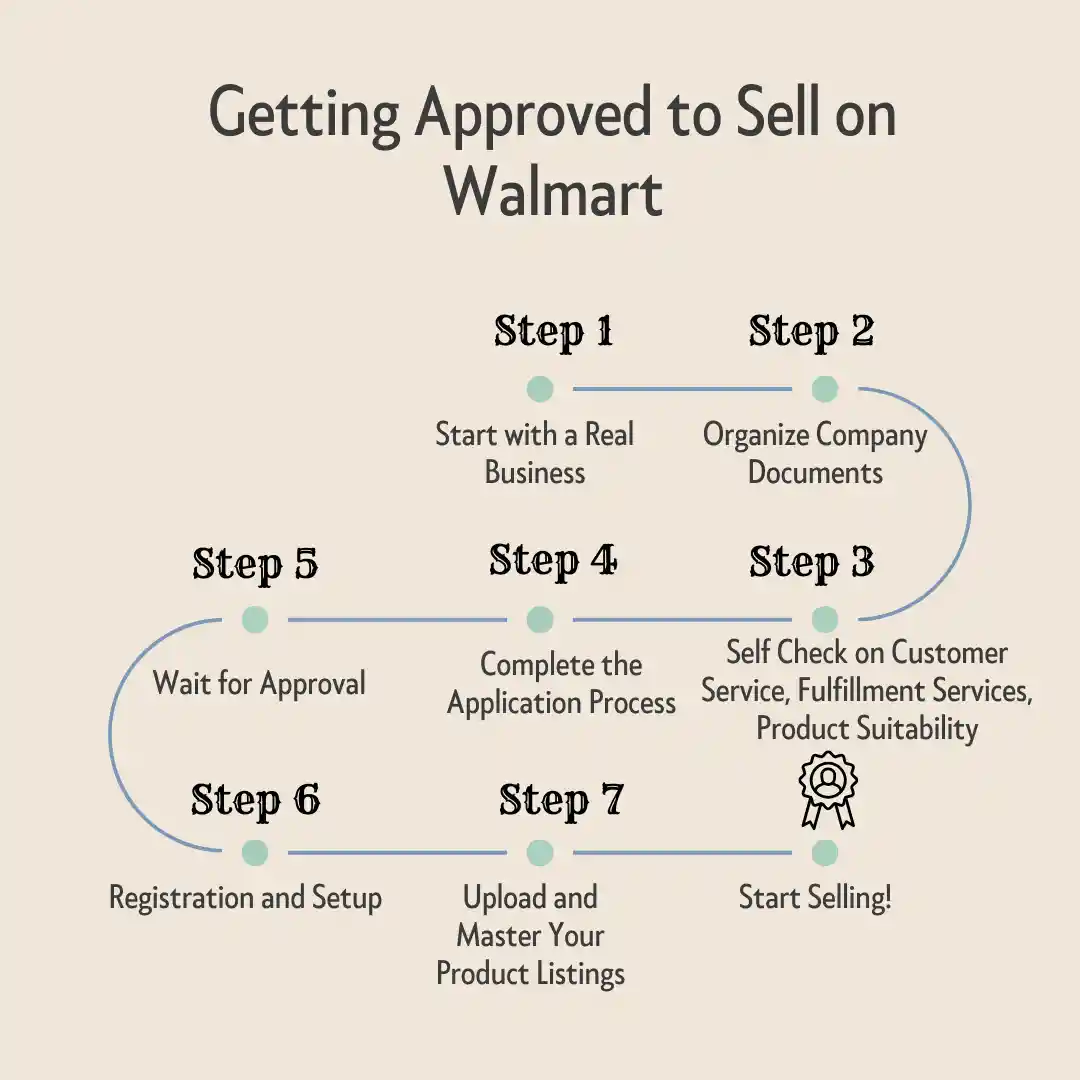
Ci-dessous se trouve une explication claire et pratiqueguide en huit étapespour vous aider à naviguer dans le processus d'approbation des vendeurs Walmart, de la préparation au lancement.
1. Commencez avec une véritable entreprise
Walmart Marketplace est conçu pour les entreprises établies, et non pour les vendeurs occasionnels ou individuels. Votre entreprise doit être légalement enregistrée, de préférence aux États-Unis. Au minimum, vous aurez besoin de :
- Un numéro d'identification fiscale d'entreprise américain
- Un formulaire W-9 rempli
- Une lettre de vérification EIN
Ces documents permettent à Walmart de vérifier l'identité de votre entreprise et votre conformité fiscale.
2. Organiser les documents de l'entreprise
Avant de postuler, assurez-vous que toutes les informations de votre entreprise sont exactes et cohérentes. Cela inclut :
- Nom commercial légal et structure
- Adresse commerciale américaine et adresse de l'entrepôt
- Informations fiscales et bancaires
Une documentation manquante ou incohérente est l'une des causes les plus courantes de retards ou de rejets de demandes.
3. Auto-vérification du service client, de l'exécution et de l'adéquation du produit
Avant de soumettre votre candidature, évaluez si vos opérations sont conformes aux attentes de Walmart :
- Service client :Coordonnées professionnelles dédiées et délais de réponse rapides
- Exécution:Logistique fiable répondant aux exigences d'expédition et de livraison de Walmart
- Adéquation du produit :Les produits doivent être à des prix compétitifs, de haute qualité et conformes à la politique sur les produits interdits de Walmart
Walmart privilégie les vendeurs capables d'offrir en permanence une expérience client fluide et fiable.
4. Terminez le processus de candidature
Soumettez votre candidature via le Centre des vendeurs du Walmart Marketplace. Fournissez des informations détaillées et précises sur votre entreprise, vos opérations et vos produits. Prenez votre temps—des erreurs ou des omissions à cette étape peuvent ralentir considérablement le processus d'approbation.
5. Attendez l'approbation
Après la soumission, Walmart examinera votre candidature. Le processus d'approbation prend généralement2–4 semaines. Pendant cette période, Walmart peut vous contacter pour des documents supplémentaires ou des clarifications. Des réponses rapides et professionnelles peuvent aider à maintenir le bon déroulement du processus.
6. Inscription et création de compte
Une fois approuvé, terminez la configuration de votre compte vendeur en :
- Ajout des informations de paiement et de taxe
- Configuration des paramètres d'expédition et de retour
- Compléter le profil de votre partenaire
Cette étape garantit que votre compte est entièrement opérationnel et prêt à répertorier des produits.
7. Téléchargez et optimisez vos fiches produits
Utilisez les outils de téléchargement en masse de Walmart ou l'API pour télécharger vos produits. Assurez-vous que chaque annonce inclut :
- Titres de produits clairs et précis
- Images de haute qualité
- Descriptions détaillées et spécifications
Des annonces bien optimisées améliorent non seulement les résultats d'approbation, mais augmentent également les taux de conversion une fois que vos produits sont en ligne.
8. Commencez à vendre sur Walmart Marketplace
Après avoir terminé la configuration et le téléchargement des produits, votre boutique est prête à être lancée. Commencez à vendre sur Walmart Marketplace tout en surveillant de près les indicateurs de performance, les retours des clients et la conformité opérationnelle. L’optimisation continue est essentielle pour réussir sur le long terme sur la plateforme.
Comment augmenter vos chances d'être approuvé ?
Pour augmenter vos chances d'être approuvé pour vendre sur Walmart Marketplace en 2024, il est crucial de vous concentrer sur plusieurs aspects stratégiques de votre entreprise :
- Maintenir des normes de produit supérieures: Veiller à ce que vos offres dépassent les attentes de qualité de Walmart et respectent pleinement les exigences réglementaires est fondamental.
- Démontrer la fiabilité de l'entreprise: Illustrez la fiabilité de votre entreprise grâce à un historique cohérent d’avis clients positifs et de chiffres de ventes stables. Cet aspect rassure Walmart sur votre capacité à maintenir leur niveau de satisfaction client.
- Adoptez des prix compétitifs et un service client exceptionnel: Walmart valorise les vendeurs capables d’offrir des prix compétitifs sans compromettre la qualité du service. Trouver un équilibre entre l’accessibilité et un support client de haute qualité peut vous donner un avantage lors du processus d’approbation.
De plus, Walmart accorde de l'importance aux vendeurs capables d'offrir une gamme de produits unique ou de combler une lacune dans leur inventaire existant. Mettre en avant la façon dont vos produits peuvent améliorer l'offre actuelle de Walmart peut constituer un avantage considérable.
Quels produits peuvent être mieux approuvés par Walmart ?
Lorsqu'il s'agit de déterminer quels produits sont les plus susceptibles d'être approuvés par Walmart, tenez compte à la fois des tendances générales du marché et des normes spécifiques de Walmart.
Produits très demandés
Les produits qui comblent les lacunes actuelles de l'inventaire chez Walmart sont plus susceptibles d'être approuvés. Il s'agit notamment de produits consommables et de produits de première nécessité qui répondent à la demande continue des consommateurs, tels quedésodorisantset des masques.
De même, les appareils domotiques qui offrent une commodité de vie accrue sont de plus en plus populaires et susceptibles d'être pris en considération.

Qualité et conformité
Produits pour bébéqui sont non toxiques et répondent à des normes de sécurité strictes sont des exemples d’articles que Walmart peut privilégier.
Tout complément de santé approuvé par la FDA et indiquant clairement tous les ingrédients pourrait également avoir de meilleures chances d'être accepté en raison de sa conformité aux réglementations sanitaires et de sécurité.

Bodies bébé personnalisés tout imprimé Print on Demand (manches courtes) - PrintKK
Que faire si votre demande est rejetée par Walmart ?
Lorsqu'on fait face à un refus de la part de Walmart, il est essentiel de ne pas le considérer comme un revers mais comme une opportunité d'affiner et d'améliorer votre approche. Voici ce que vous pouvez faire si votre demande pour vendre sur Walmart n'est pas approuvée au départ :
Comprendre les raisons du refus
Examinez attentivement les commentaires de Walmart. En général, ils fourniront des raisons spécifiques pour lesquelles votre candidature n'a pas été retenue. Cela peut concerner votre stratégie de tarification, vos catégories de produits, des problèmes de conformité ou vos capacités opérationnelles. Comprendre ces points est essentiel pour les traiter efficacement.
Améliorez vos opérations commerciales
Utilisez les commentaires comme guide pour améliorer les aspects de votre entreprise qui n'ont pas répondu aux critères de Walmart. Cela pourrait impliquer d'améliorer la qualité des produits, de mettre à jour la logistique de votre chaîne d'approvisionnement ou d'assurer de meilleures pratiques de service client. Il pourrait également être bénéfique d'améliorer votre présence en ligne ou les avis des clients afin de renforcer la fiabilité et la réputation de votre entreprise.
Postulez à nouveau en toute confiance
Une fois les améliorations apportées, préparez vos documents et soumettez à nouveau votre demande. Assurez-vous de mettre en avant les changements et les améliorations que vous avez mis en œuvre en fonction des commentaires de Walmart. Présentez un récit clair de croissance et d'adaptation dans votre nouvelle demande afin d'augmenter vos chances d'approbation.
Que dire des frais du Marketplace Walmart ?
Frais du Marketplace Walmartsont une considération importante pour les vendeurs. Contrairement aux plateformes avec des abonnements mensuels, Walmart utilise unmodèle basé sur la commissionsans frais mensuels, de configuration ou d'inscription—vous ne payez que lorsqu'un article est vendu.
Frais de recommandation (Commission)
Il s'agit d'un pourcentage du prix de vente total, incluant le prix de l'article, la livraison, la manutention, l'emballage cadeau et d'autres frais. Les taux varient selon la catégorie et vont généralement de 5% à 15%, bien que certaines catégories—comme certains niveaux de bijoux—puissent atteindre 20%.
De nombreuses catégories utilisent une tarification par paliers basée sur le prix de l'article. Par exemple :
- Vêtements : 5 % pour les articles à 15 $ ou moins, 15 % pour les articles de plus de 20 $
- Bijoux : 20 % pour les articles à 250 $ ou moins, 5 % pour les articles de plus de 250 $
Pas de frais mensuels
Cela le rend particulièrement attrayant pour les entreprises ayant des volumes de ventes variables ou en croissance. Des coûts supplémentaires peuvent s'appliquer si vous utilisez les services d'exécution Walmart (WFS) pour le stockage ou l'expédition.
Frais supplémentaires d'exécution
Les vendeurs utilisant les services d’exécution Walmart (WFS) peuvent encourir des frais supplémentaires pour les articles standards, surdimensionnés et volumineux selon le poids et les dimensions.
Comment vendre des produits dans les magasins Walmart ?
Vendre des produits dans les magasins Walmart offre une opportunité incroyable de visibilité et de croissance. Cependant, il est important de comprendre le processus pour placer vos produits sur leurs étagères. Voici un guide étape par étape pour naviguer dans ce parcours :
- Postuler pour la Marketplace Walmart: Commencez par postuler en ligne pour le Walmart Marketplace. Cette étape implique de fournir des informations commerciales détaillées, y compris votre historique, vos chiffres de ventes et les détails de vos produits. Walmart est sélectif et recherche des partenaires qui correspondent à sa clientèle et à ses valeurs d'entreprise.
- Présentez vos offres uniques: Mettez en avant ce qui distingue vos produits. Walmart recherche des articles capables soit de combler une lacune dans leur inventaire existant, soit de surpasser les offres actuelles en termes de qualité ou de prix. Les produits uniques et innovants ont plus de chances d’attirer leur attention.
- Préparez-vous aux normes de conformité et de qualité: Walmart maintient des normes élevées en matière de qualité et de conformité. Assurez-vous que vos produits respectent toutes les normes de sécurité et réglementations pertinentes. Vous pourriez avoir à fournir une preuve de conformité et à suivre un processus d'assurance qualité.
- Optimiser pour des prix compétitifs et la logistique: Des prix compétitifs sont essentiels. Analysez le marché et fixez le prix de vos produits de manière compétitive. De plus, Walmart accorde de l'importance à une logistique efficace. Démontrez votre capacité à gérer de grosses commandes et à maintenir des niveaux de stock constants.
- Participez au processus d'intégration: Une fois approuvé, vous suivrez un processus d'intégration. Cela inclut la configuration de votre compte, la participation à des sessions de formation et l'intégration de votre catalogue de produits au système de Walmart. Prenez cette phase au sérieux car elle pose les bases de votre succès sur la plateforme.
En suivant ces étapes, vos produits peuvent trouver une place dans le vaste paysage de la vente au détail de Walmart. N'oubliez pas que la persévérance et l'attention aux détails sont essentielles dans ce processus. La plateforme de Walmart peut propulser votre marque vers de nouveaux sommets, rendant l'effort bien mérité.
Lire la suite :
Laissez PrintKK perfectionner votre entreprise Walmart
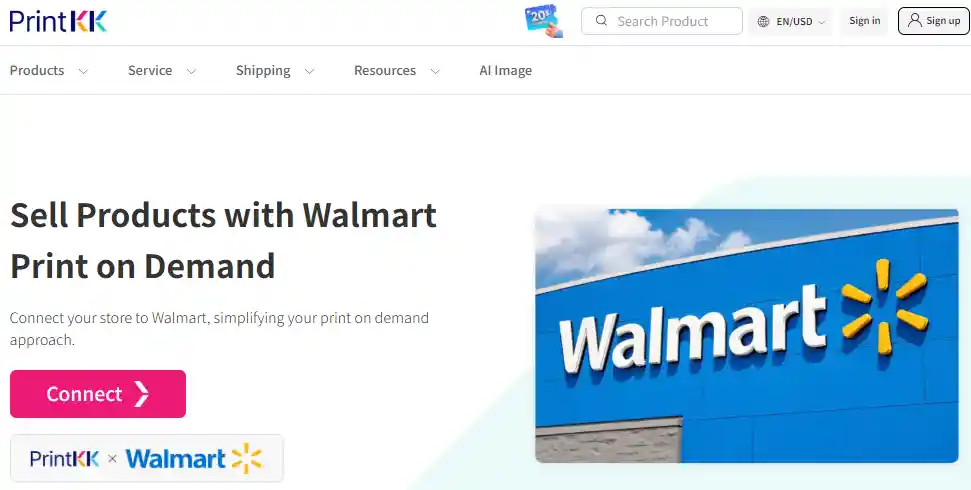
PrintKKles services amélioreront considérablement vos chances d'être approuvé pour l'opportunité de vendre chez Walmart. En plus du soutien offert, PrintKK propose de nombreux articles différents qui peuvent être personnalisés, aidant le vendeur à développer des idées efficaces pour les produits.
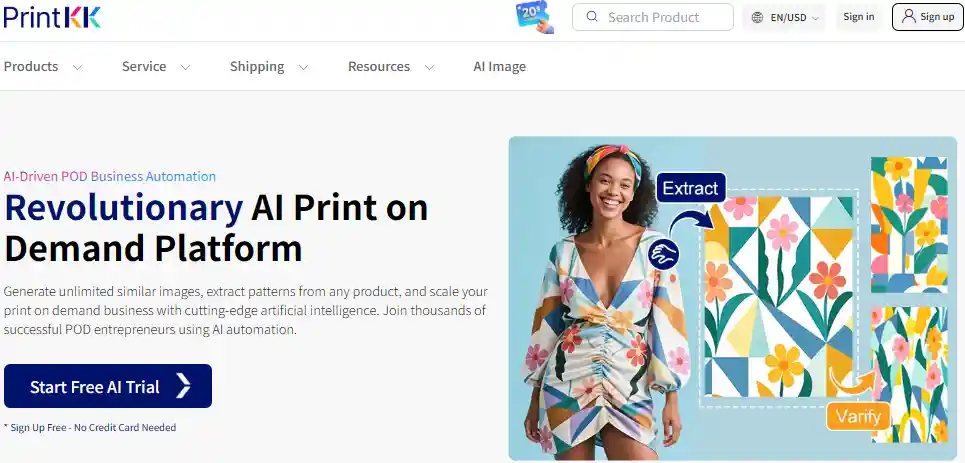
Annonces rationalisées & conformité
Le PrintKK vous aidera à garantir que vos produits respectent les directives de Walmart grâce à des images de haute qualité et à un contenu riche. En même temps, vous trouverez plus facile de gérer les questions de conformité et de qualité.
Support opérationnel
PrintKK propose également des services de logistique et d'exécution, et optimise la gestion des stocks et l'exécution des commandes. Être capable de prouver l'efficacité opérationnelle et une chaîne d'approvisionnement évolutive est un atout majeur pour obtenir l'approbation de Walmart.
Flexibilité & Créativité
Avec des produits variés etOutils d'IApour concevoir, les vendeurs peuvent explorer rapidement de nouveaux concepts, s'adapter aux tendances du marché et développer des produits différenciés qui se distinguent — tout en restant dans le cadre légal et en accord avec ce que Walmart souhaite.
Conclusion
En 2026, Walmart Marketplace reste un canal de croissance puissant pour les vendeurs e-commerce, en particulier dans l'impression à la demande et les produits personnalisés.
Le succès nécessite une entreprise américaine enregistrée, un historique éprouvé, des produits conformes, une exécution fiable et un service client solide. Bien que l'approbation soit sélective, la préparation et la persévérance portent leurs fruits — de nombreux vendeurs obtiennent désormais une approbation plus rapide qu'auparavant.
Collaborez avec des plateformes comme PrintKK pour rationaliser les annonces, assurer la conformité et développer les opérations. Commencez fort, optimisez en continu et faites de Walmart un pilier clé de votre entreprise.
FAQ
Qui peut rejoindre Walmart ?
Walmart Marketplace accueille les entreprises et les marques établies ayant un historique de ventes. Les vendeurs doivent respecter les normes de qualité et de service. Les petites entreprises, les startups et les grandes entreprises sont toutes éligibles si elles respectent les exigences de Walmart.
Les particuliers peuvent-ils vendre sur Walmart ?
Walmart travaille principalement avec des entreprises enregistrées, pas avec des vendeurs individuels. Pour rejoindre, vous avez besoin d'une entité commerciale légale, d'un numéro d'identification fiscale et de la documentation appropriée. Les particuliers sans structure d'entreprise ne peuvent généralement pas vendre directement sur la plateforme.
Est-il difficile d'obtenir l'approbation pour vendre sur Walmart ?
L'approbation peut être difficile car Walmart se concentre sur la qualité, les prix et la fiabilité. Les vendeurs doivent démontrer une gestion solide, un bon service client et des produits qui répondent aux normes du marché. Une préparation minutieuse augmente les chances d'approbation.
Pourquoi la demande de vendeur Walmart est-elle refusée ?
Les candidatures sont généralement rejetées si les produits ne respectent pas la conformité, si les prix ne sont pas compétitifs ou si les capacités opérationnelles sont insuffisantes. L'absence de documents ou de mauvaises performances de ventes passées peuvent également entraîner un refus, il est donc essentiel de prêter attention aux détails.
Combien de temps Walmart prend-il généralement pour approuver un vendeur ?
Le processus de vérification et d'approbation prend généralement de deux à quatre semaines. Cela dépend de la complétude de votre demande, des exigences d'examen du produit et de l'évaluation par Walmart de votre entreprise et de votre préparation opérationnelle.
Est-il rentable de vendre chez Walmart ?
La vente sur Walmart peut être rentable grâce à sa large base de clients. Le succès dépend de prix compétitifs, de la sélection des produits et d'une exécution efficace des commandes. Une planification minutieuse et le respect des normes de Walmart aident à maintenir des ventes stables.



 Global Shipping